
Hacking Write For Us

The word hack is well known in the context of computing, since it defines the action of entering abruptly and without permission into a computer system or network. The person who performs this action is called a hacker.
Types of Hacking
Trojans via text messaging, this hack consists of setting up a program with a Trojan or Trojan horse, as many know it, alluding to Greek mythology. It has the ability not to be seen and it is forbidden to use it since through it you can read, delete, and modify any file.
A very particular feature of the Trojan is that once it is loaded into the instant messaging program, the hacker will know when the user is online, at which time the intruder can steal the information. The transfer of data from the infected computer to that of the intruder is carried out because instant messaging opens a communication tunnel, which is used by the hacker.
Phishing, this is another method to hacking, is to deceive users who have bank accounts through emails. Its modus operandi begins when the cyber criminal impersonates a trusted person or body, beginning an apparent electronic communication, usually through emails, text messages, or phone calls.
How to Submit Your Articles?
To Write for Us, you can email us at contact@computertechreviews.com
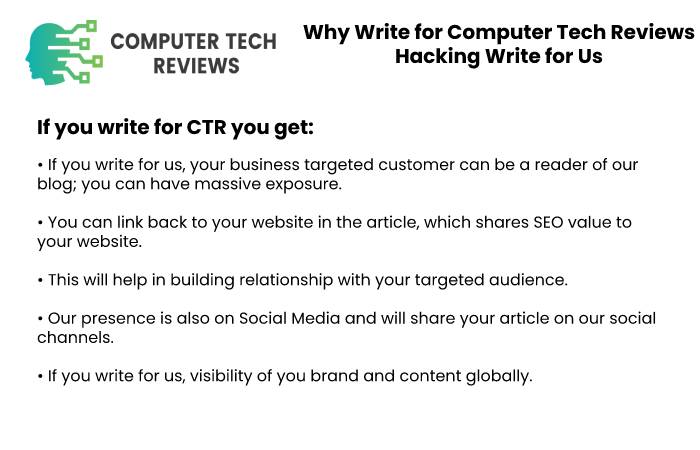
Why Write for Computer Tech Reviews – Hacking Write for Us
 Search Terms Related to Hacking Write for Us
 Search Terms Related to Hacking Write for Us
Hacking
Phreaking
Cryptovirology
Hacking of consumer electronics
Hacker culture & ethic
Black hat
Hackerspace
Hackathon
Hacktivism
Maker culture
Black Hat Briefings
Chaos Communication Congress
DEF CON
Grey hat
Hackers on Planet Earth
Computer crime
White hat
Crimeware
Hacker Manifesto
List of computer criminals
Script kiddie
Hacking tools
Forensics OS
Vulnerability
Exploit
Payload
Social engineering
Practice sites
HackThisSite
Zone-H
Rootkit
Application security
Backdoor
Trojan horse
Worm
Ransomware
Logic bomb
Botnet
Keystroke logging
HIDSWeb shell
Guidelines of the Article – Hacking Write for Us
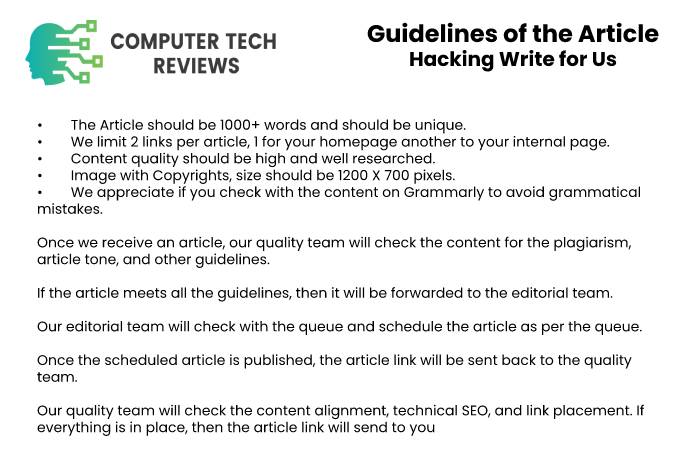
You can send your article to contact@computertechreviews.com
Related Pages:
Accounting Software Write For Us
Ccleaner Write For Us
Cdma Write For Us
Chip Write For Us
C Plus Plus Write For Us
Cryptocurrency Write For Us
Data Transmitter Write For Us
Desktop Computer Write For Us
Dongles Write For Us
Ergonomics Write For Us
Finance Write For Us
Gateway Write For Us
Laser Printers Write For Us
Memory Card Write For Us
Multimedia Write For Us
Optical Drives Write For Us
Portable Devices Write For Us
Saas Write For Us
Security Information Write For Us
Subscription Write For Us
Triode Write For Us
Ups Write For Us
Virtual Write For Us
Washable Vr Headset Protector Write For Us

AI Automation & Agents: The Complete Guide (2026)
AI Automation & Agents AI automation has divided itself into two very different camps. At one end is old-school automation…

What Should You Look for in a Scam Detection App: Scamless Provides a Practical Guide to Choosing the Right Protection
What Should You Look for in a Scam Detection App Summary: Scamless explains what users should look for in a…