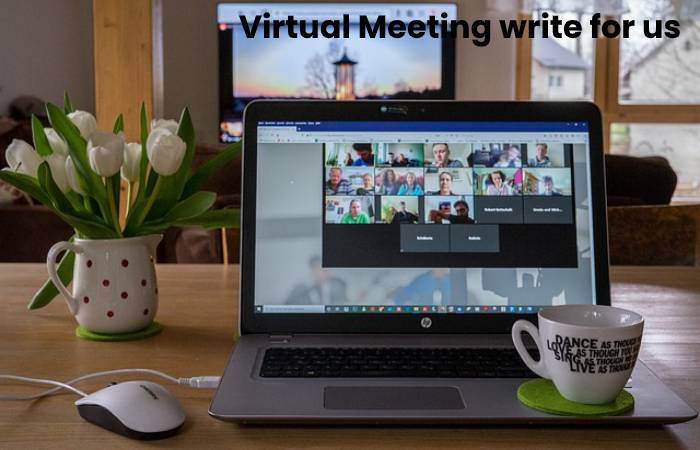
Virtual Meeting Write for Us – Submit a Guest Post
Virtual meetings allow people to communicate, teach, present, review work, interview candidates, support customers, and make decisions without sharing the same physical room. A successful meeting depends on more than selecting a video-conferencing platform. Audio quality, camera placement, internet reliability, accessibility, security, preparation, facilitation, and follow-up all influence whether participants can contribute effectively.
Computer Tech Reviews welcomes original contributions from remote-work professionals, IT administrators, meeting-platform specialists, educators, event organizers, audiovisual engineers, security practitioners, accessibility professionals, and experienced team leaders. Through our Virtual Meeting Write for Us section, contributors can share practical guides, technical explanations, platform evaluations, hybrid-room advice, and responsible workplace recommendations.
This contributor page forms part of our broader Technology Write for Us hub, which covers workplace platforms, digital collaboration, connected devices, engineering, creative technology, and emerging tools.
What Is a Virtual Meeting?
A virtual meeting is a scheduled or spontaneous interaction conducted through digital communication technology. Participants may join with audio, video, text chat, screen sharing, collaborative documents, presentations, polls, or other supported features.
Virtual meetings may be used for:
- Team discussions and project updates
- Client and customer meetings
- Remote interviews
- Training and virtual classrooms
- Webinars and public presentations
- Technical support
- Design and engineering reviews
- Grant and application panels
- Creative demonstrations and workshops
- Conferences and hybrid events
A virtual meeting is not automatically a webinar or webcast. Meetings usually allow more interaction among participants, while webinars and webcasts may place greater emphasis on one-way or moderated presentation. Platform terminology varies, so writers should describe the actual participant experience.
Virtual Meeting Topics We Welcome
We accept original explainers, setup guides, platform comparisons, workplace case studies, accessibility advice, technical troubleshooting, security discussions, and first-hand evaluations.
Suitable topics include:
- Video-conferencing platforms
- Hybrid meeting-room design
- Cameras, microphones, speakers, and headsets
- Internet and bandwidth requirements
- Audio and video troubleshooting
- Meeting security and participant privacy
- Recording and transcription
- Accessibility and inclusive meetings
- Virtual classrooms and webinars
- Remote interviews and review panels
- Screen sharing and collaborative documents
- AI-assisted meeting notes
- Virtual meeting etiquette
- Connected meeting-room equipment
- Platform reviews and comparisons
Virtual Meetings, Webinars, and Webcasts
Meetings, webinars, and webcasts can use similar technology but support different communication patterns.
Virtual Meetings
Virtual meetings commonly support discussion among several participants. Attendees may use audio, video, chat, reactions, screen sharing, collaborative documents, or breakout rooms.
Webinars
Webinars are often structured around presenters and a larger audience. Attendee participation may be limited to moderated questions, polls, chat, or selected speaking access.
Webcasts
Webcasts emphasize broadcasting content to an audience. Interaction may be limited, delayed, or managed through a separate platform.
Articles should not assume that every platform supports the same participant count, interaction model, moderation features, or streaming scale.
Audio Quality Comes First
Participants may tolerate an imperfect camera image, but poor audio can make a meeting difficult to follow. Echo, background noise, low volume, distortion, interruptions, and multiple people speaking at once can reduce comprehension.
Audio-focused articles may discuss:
- USB and wireless headsets
- Built-in and external microphones
- Speakerphones and conference-room audio
- Microphone placement
- Echo cancellation
- Noise suppression
- Room acoustics
- Mute controls and speaking practices
- Audio monitoring and testing
AI-based noise suppression can reduce selected sounds but may also alter speech or remove intended audio. Reviews should explain the test conditions rather than promising perfect background-noise removal.
Cameras, Lighting, and Video
A clear video image depends on camera quality, positioning, framing, lighting, connection speed, compression, and platform settings.
Useful video guidance may include:
- Placing the camera near eye level
- Using balanced front lighting
- Avoiding strong backlighting
- Selecting an appropriate field of view
- Protecting private background information
- Using virtual backgrounds responsibly
- Checking autofocus and exposure
- Understanding resolution and frame-rate trade-offs
Higher resolution does not automatically improve a meeting. It may increase bandwidth and processing requirements while providing little benefit on a small participant tile.
Internet Connectivity and Bandwidth
Virtual meeting quality depends on more than advertised internet speed. Upload capacity, download capacity, latency, packet loss, jitter, network congestion, wireless signal quality, device performance, and platform routing can all affect the experience.
Connectivity articles may examine:
- Wi-Fi and wired Ethernet
- Upload and download requirements
- Latency, jitter, and packet loss
- Mobile-network participation
- Reducing video quality when necessary
- Audio-only fallback
- Network prioritization
- Backup connection planning
Writers should use current platform documentation when discussing bandwidth requirements because settings, codecs, meeting modes, and product capabilities can change.
Hybrid Meeting Rooms
A hybrid meeting includes people in a physical room and remote participants. The main challenge is providing comparable opportunities to see, hear, speak, share information, and take part in decisions.
A hybrid room may include:
- One or more cameras
- Table, ceiling, or array microphones
- Room speakers
- Displays for participants and shared content
- A room computer or conferencing appliance
- Touch controllers
- Document or presentation cameras
- Occupancy and environmental sensors
- Lighting and acoustic treatment
Installing more devices does not automatically produce a better meeting. Equipment must suit the room size, seating arrangement, acoustic environment, platform, support model, and participant needs.
IoT and Connected Meeting Rooms
Meeting rooms may use connected cameras, microphones, displays, room schedulers, lighting controls, occupancy sensors, environmental sensors, and device-management systems.
Connected-room articles may discuss:
- Automatic device configuration
- Room booking and calendar integration
- Occupancy and utilization monitoring
- Remote firmware and health monitoring
- Energy management
- Network segmentation
- Device identity and authentication
- Sensor privacy
- Secure retirement of meeting equipment
Occupancy and usage information can become sensitive when it is linked to named employees, teams, or meeting subjects. Organizations should define why the data is collected and who may access it.
Writers focusing on sensors, connected devices, edge computing, device management, smart buildings, and IoT security can visit our IoT Write for Us page.
Digital Engineering and Virtual Design Reviews
Engineering teams may use virtual meetings to review requirements, models, drawings, simulations, software, test results, manufacturing issues, and proposed design changes.
A useful engineering review should make it clear:
- Which model or document version is being reviewed
- Who has approval authority
- Which requirements and evidence apply
- How comments and actions are recorded
- Where the final decision is stored
- How confidential information is protected
A recording of a design review does not replace controlled decisions, configuration records, change approvals, or action tracking.
Contributors focusing on CAD, simulation, digital twins, model-based engineering, product lifecycle management, digital threads, and engineering collaboration can explore our Digital Engineering Write for Us section.
Screen Sharing and Collaborative Work
Screen sharing can help participants review documents, demonstrate software, troubleshoot problems, or work through a presentation. It can also reveal notifications, personal messages, browser tabs, passwords, customer records, or confidential information.
Responsible screen-sharing practices may include:
- Sharing one window instead of the entire desktop
- Closing unrelated applications and documents
- Disabling unnecessary notifications
- Checking the displayed account and profile
- Avoiding entry of visible passwords
- Ending sharing when the task is complete
- Confirming who may control the shared device
Collaborative documents should have appropriate access permissions, version history, and ownership after the meeting ends.
Participant Profiles and Meeting Identity
A participant profile may display a name, photograph, organization, job title, role, contact information, and meeting status. Accurate profiles help people identify one another and understand who is authorized to participate.
Meeting-profile topics may include:
- Display names and organization details
- Guest and external-participant labels
- Profile photographs and avatars
- Host, presenter, and attendee roles
- Preventing participant impersonation
- Protecting telephone and email information
- Profile visibility in recordings
- Removing obsolete organization details
Writers focusing on digital profiles, professional identity, verification, privacy, impersonation prevention, portfolios, and account information can visit our Profile Write for Us page.
Virtual Meeting Security
Virtual meetings may involve confidential business information, personal data, educational records, customer conversations, financial discussions, or unpublished project material.
Security-focused submissions may cover:
- Meeting passwords and waiting rooms
- Authenticated participant access
- Host and presenter permissions
- Screen-sharing controls
- File-transfer restrictions
- Meeting locks
- Participant removal and reporting
- Software and firmware updates
- End-to-end encryption claims
- Administrative logging
Security settings vary by platform, plan, meeting type, administrator policy, and software version. Articles should use current documentation and describe what a protection actually covers.
Privacy and Recording Consent
Meeting platforms may process names, contact information, video, voice, messages, files, attendance, device data, transcripts, and recordings.
Responsible articles should discuss:
- Giving clear recording notice
- Obtaining consent where required
- Providing alternatives when appropriate
- Restricting access to recordings
- Defining retention periods
- Handling chat and transcript data
- Protecting children and vulnerable participants
- Identifying the relevant legal jurisdiction
A platform’s recording indicator may not explain every separate recording, transcription, note-taking, or external capture method being used.
AI Notes, Transcription, and Meeting Summaries
AI-assisted features can create transcripts, summaries, action items, chapters, translations, or searchable meeting records. These tools may reduce manual note-taking, but they can misidentify speakers, miss context, invent conclusions, or expose information to additional services.
Writers evaluating AI meeting tools should explain:
- Which data the tool accesses
- Whether participants receive notice
- Where recordings and transcripts are stored
- How long data is retained
- Whether data is used to improve models
- How accuracy was tested
- Who verifies actions and decisions
- How users can correct errors
An AI-generated summary should not become the authoritative record of a legal, financial, engineering, employment, or grant decision without appropriate human verification.
Accessibility and Inclusive Meetings
Accessible meetings allow people with different hearing, vision, mobility, language, cognitive, and connection needs to participate meaningfully.
Inclusive practices may include:
- Live captions
- Accurate transcripts
- Keyboard-accessible controls
- Screen-reader support
- Sign-language interpretation
- Readable presentation materials
- Verbal descriptions of important visual content
- Materials shared before the meeting
- Dial-in or low-bandwidth alternatives
- Breaks during long sessions
Automatic captions can be useful but may make errors with names, accents, technical language, and overlapping speech. Important information should be reviewed and corrected when accuracy matters.
Virtual Grant Reviews and Approval Meetings
Grant, scholarship, loan, and application review panels may meet virtually to discuss eligibility, scoring, conflicts of interest, supporting evidence, and final recommendations.
A controlled virtual review should address:
- Reviewer identity and authorization
- Conflict-of-interest declarations
- Secure access to application documents
- Scoring and decision criteria
- Recording and confidentiality
- Decision and action records
- Accessibility for applicants and reviewers
- Retention and deletion of meeting information
Printing Meeting Documents
Some meetings still require printed agendas, drawings, training materials, name cards, application packs, reports, certificates, or signed records. Printed materials should be controlled when they contain confidential or personal information.
Meeting-document topics may include:
- Secure print release
- Document version control
- Readable charts and presentation handouts
- Color and monochrome printing decisions
- Distributing accessible document formats
- Collecting or securely disposing of confidential copies
Writers focusing on laser printing, toner cartridges, page yields, connected printers, print quality, document security, and troubleshooting can explore our Toners Write for Us section.
Virtual Art Classes and Creative Demonstrations
Virtual meetings can support painting demonstrations, pastel workshops, critique sessions, artist interviews, and collaborative creative projects. The setup should show hand movement, color, tools, and the working surface clearly.
Paintbrush Demonstrations
An overhead or angled camera can help viewers see brush loading, pressure, stroke direction, mixing, and surface interaction. Lighting should reproduce colors clearly without creating excessive glare.
Contributors focusing on brush shapes, bristle materials, painting techniques, care, manufacturing, and product reviews can visit our Paint Brushes Set Write for Us page.
Oil Pastel Workshops
Oil pastel demonstrations may require close-up views that show layering, pressure, blending, scraping, texture, and surface selection. Instructors should share material and safety information before the session.
Writers focusing on oil pastel materials, surfaces, blending, mixed media, storage, digitization, and product comparisons can explore our Oil Pastels Set Write for Us section.
Running a Productive Virtual Meeting
A meeting should have a clear purpose that justifies the participants’ time. Not every update needs a live call.
A practical meeting process may include:
- Define the outcome: Explain whether the meeting is intended to decide, review, teach, solve, or coordinate.
- Invite the right participants: Include people who must contribute or understand the outcome.
- Share preparation material: Provide an agenda, documents, and questions in advance.
- Test the technology: Check audio, video, permissions, and presentation material.
- Facilitate participation: Manage speaking order, questions, chat, and accessibility.
- Record decisions: Capture conclusions, owners, deadlines, and unresolved issues.
- Follow up: Share the agreed record and track actions outside the call.
A longer or larger meeting is not automatically more valuable. Articles should focus on outcomes rather than maximizing attendance or screen time.
Reviewing a Virtual Meeting Platform
A useful platform review should identify the plan, version, device, participant count, network environment, and features tested.
A balanced review may examine:
- Audio and video quality
- Connection stability
- Screen sharing and collaboration
- Host and participant controls
- Security settings
- Recording and transcription
- Accessibility
- Mobile and browser support
- Calendar and workplace integrations
- Administration and reporting
- Data location and privacy
- Pricing and participant limits
Contributors must disclose supplied subscriptions, sponsorships, affiliate relationships, employer connections, and vendor involvement. Product marketing should not be presented as independent testing.
What Makes a Strong Virtual Meeting Article?
A useful article helps readers select a platform, improve a setup, secure a meeting, facilitate participation, solve a technical problem, or evaluate a feature.
Strong submissions should:
- Identify the meeting type and intended audience.
- Name the platform, plan, and version where relevant.
- Describe devices, network conditions, and testing methods.
- Discuss accessibility, privacy, and security.
- Include practical examples or first-hand experience.
- Separate platform claims from independently observed results.
- Acknowledge limitations and trade-offs.
- Use current sources for features, limits, and pricing.
- Disclose commercial relationships.
- Protect participant and organizational information.
Virtual Meeting Article Ideas You Can Pitch
- Designing a hybrid meeting room for equal participation
- Diagnosing echo, delay, and unstable video
- Securing a confidential virtual meeting
- Evaluating AI meeting notes for accuracy and privacy
- Making virtual meetings more accessible
- Running an effective remote design review
- Setting up an overhead camera for an art class
- Managing conflict-of-interest declarations in grant panels
- Protecting participant profiles from impersonation
- Comparing meeting platforms using repeatable tests
Content We Are Unlikely to Accept
We do not accept articles created mainly to promote a meeting platform, audiovisual supplier, remote-work service, course, or backlink. We may also reject copied product descriptions, outdated participant limits, invented platform tests, unsupported productivity claims, or generic lists of meeting tips.
AI-assisted writing is not automatically disqualified, but the author must verify every platform feature, price, participant limit, security claim, privacy statement, source, and testing result.
Editorial Guidelines
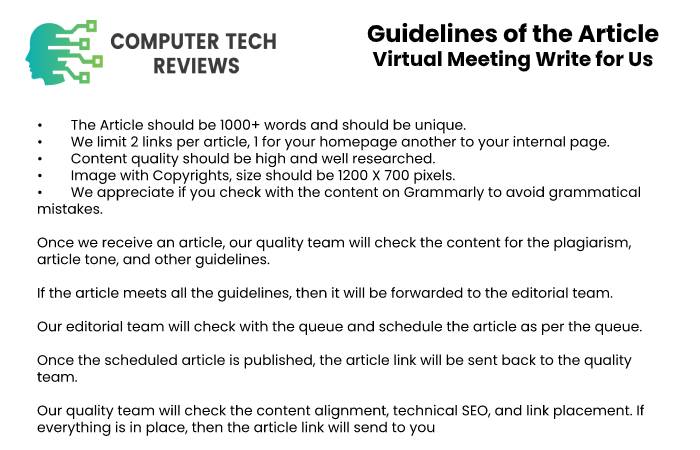
- Submit original content that has not been published elsewhere.
- Write a minimum of 800 words for a standard article.
- Use a clear title, introduction, headings, and short paragraphs.
- Identify the meeting platform, plan, version, and tested environment.
- Support feature, security, and performance claims with current sources.
- Discuss accessibility, privacy, consent, and data retention where relevant.
- Obtain permission before publishing meeting screenshots or recordings.
- Remove participant names, messages, credentials, and confidential information.
- Disclose subscriptions, sponsorships, and vendor relationships.
- Avoid promotional language and unsupported productivity claims.
- Proofread the article for accuracy, clarity, and grammar.
- Our editorial team may edit submissions for clarity and formatting.
How to Submit a Virtual Meeting Article
Before sending a complete draft, you may email a focused pitch containing:
- Your proposed title
- A short explanation of the article
- The intended reader and meeting type
- A proposed outline
- Links to relevant writing samples
- Your remote-work, audiovisual, platform, security, education, or event experience
- Details of any vendor, employer, client, or product connected to the topic
Send your proposal or completed article to contact@computertechreviews.com. Use “Virtual Meeting Write for Us” as the subject line so your submission can be directed to the appropriate editor.
Explore Related Technology and Creative Topics
Frequently Asked Questions
Do you accept virtual meeting articles from new contributors?
Yes. Previous publishing experience is useful but not required. We value practical knowledge, originality, accurate testing, and the ability to explain collaboration technology clearly.
Can I review a specific virtual meeting platform?
Yes, provided the review is based on genuine testing and remains balanced. Identify the plan, software version, devices, participant count, network conditions, and any commercial relationship with the vendor.
Can I publish meeting screenshots?
Only when you have permission. Remove participant names, profile images, messages, email addresses, meeting links, access codes, confidential documents, and other sensitive information.
Can I write about AI meeting assistants?
Yes. Explain which data the tool processes, how participants are notified, how accuracy was tested, where information is stored, and who verifies the generated transcript, summary, and action items.
Can I submit an AI-assisted article?
AI tools may assist with organization or drafting, but the author must verify every platform feature, security statement, privacy claim, participant limit, price, and source. Invented testing or personal experience is not acceptable.
Recent Posts
M4A vs MP3 for Transcription: What Actually Changes the Transcript
M4A vs MP3 for Transcription Comparing M4A vs MP3 for transcription is close to a non-question, and the reason is…
The Patch Window Problem: Why Small IT Teams Fall Behind on Updates
The Patch Window Problem This Article is a part of Cybersecurity Guides and Best Practices Every breach report that mentions…