
Multiplex Write for Us – Submit a Multiplexing Guest Post
Communication systems often need to carry information from many users, applications, devices, or services across a limited set of physical resources. Multiplexing makes this possible by combining multiple signals or data streams for transmission over a shared communication channel.
Computer Tech Reviews welcomes telecommunications professionals, network engineers, electronics specialists, optical-network researchers, radio engineers, educators, and experienced technology writers to contribute to our Multiplex Write for Us section.
We are interested in original and technically accurate articles about multiplexing, demultiplexing, communication channels, time and frequency allocation, optical networks, radio systems, digital transmission, synchronization, testing, and troubleshooting.
This contributor page forms part of our broader Networks Write for Us hub, which covers connectivity, network architecture, transmission, internet infrastructure, wireless systems, and network operations.
What Is Multiplexing?
Multiplexing is a technique for combining several signals, channels, or data streams so they can share a communication resource. At the receiving side, demultiplexing separates the combined transmission into the appropriate outputs.
A basic multiplexed system may include:
- Input sources: The devices or services producing information
- Multiplexer: The component or process combining the inputs
- Shared channel: The physical or logical resource carrying the combined transmission
- Demultiplexer: The component or process separating the combined information
- Destinations: The receivers or applications using the recovered streams
Multiplexing does not create unlimited physical capacity. Instead, it organizes and shares available resources more efficiently according to the selected technology and allocation method.
Multiplexing Topics We Welcome
We accept beginner-friendly explanations, technical tutorials, architecture discussions, standards-based comparisons, laboratory guides, troubleshooting articles, and responsible industry analysis.
Suitable topics include:
- Time-division multiplexing
- Statistical multiplexing
- Frequency-division multiplexing
- Wavelength-division multiplexing
- Code-based multiplexing and multiple access
- Orthogonal frequency-division techniques
- Spatial multiplexing
- Multiplexers and demultiplexers
- Digital transmission hierarchies
- Fiber-optic communication
- Radio and cellular systems
- Voice and video transmission
- Synchronization and framing
- Channel capacity and utilization
- Multiplexing tests and troubleshooting
How Multiplexing Works
A multiplexer accepts information from several inputs and assigns each one a distinguishable share of a common communication resource. The separation may be based on time, frequency, wavelength, code, space, addressing, or another characteristic.
The receiver must know how to identify and recover the intended information. Depending on the system, this may require:
- Clock synchronization
- Frame or slot boundaries
- Frequency filters
- Wavelength-selective equipment
- Codes or identifiers
- Channel-state information
- Packet headers
- Error detection and correction
If allocation or synchronization fails, data may be lost, delayed, misdirected, or incorrectly reconstructed.
Time-Division Multiplexing
Time-division multiplexing, or TDM, allows several inputs to share a communication channel by assigning transmission opportunities at different times.
Synchronous TDM
In synchronous TDM, capacity is divided into recurring time slots. A source may retain its assigned slot even when it has no information to send. This arrangement can provide predictable timing but may leave some slots unused.
Statistical TDM
Statistical or asynchronous TDM allocates transmission opportunities according to actual demand. It can use available capacity more efficiently when sources transmit irregularly, but it requires information that identifies the source or destination and may introduce variable delay.
Articles should explain whether time slots are fixed, dynamically assigned, or scheduled according to traffic demand. The term TDM should not be used for every system that processes events sequentially.
Frequency-Division Multiplexing
Frequency-division multiplexing, or FDM, divides the available frequency range into separate channels. Multiple signals can then be transmitted at the same time using different frequency portions.
A frequency-division system may require filters, guard bands, frequency stability, and suitable modulation. Inadequate separation or nonlinear equipment behavior can create interference between channels.
FDM has been used in radio broadcasting, cable systems, telephony, satellite communication, and other analog and digital transmission environments.
Wavelength-Division Multiplexing
Wavelength-division multiplexing, or WDM, carries multiple optical signals through the same fiber using different wavelengths of light. At the receiving side, optical components separate the wavelengths into the appropriate channels.
WDM discussions may cover:
- Coarse wavelength-division multiplexing
- Dense wavelength-division multiplexing
- Optical transmitters and receivers
- Multiplexers and demultiplexers
- Optical amplifiers
- Insertion loss
- Dispersion
- Wavelength stability
- Optical power budgets
- Fiber capacity planning
WDM can increase the amount of information carried by existing fiber infrastructure, but its design must account for optical loss, equipment compatibility, nonlinear effects, distance, and cost.
Code-Based Techniques
Code-based systems distinguish transmissions through assigned or derived codes. Multiple users or streams may share time and frequency resources while receivers use the appropriate code and signal-processing methods to recover the intended information.
Code-division multiple access is closely related to multiplexing, but “multiplexing” and “multiple access” describe different perspectives. Multiplexing often concerns combining streams within a coordinated system, while multiple access concerns how several independent users or devices share a common medium.
Articles about spreading codes, CDMA-based cellular systems, legacy mobile networks, and migration can be submitted through our CDMA Write for Us page.
Orthogonal Frequency-Division Techniques
Orthogonal frequency-division techniques divide a channel into many closely spaced subcarriers. Information is distributed across those subcarriers while their mathematical relationship allows efficient use of the available spectrum under suitable synchronization conditions.
Writers may examine:
- Subcarrier spacing
- Orthogonality
- Symbol duration
- Cyclic prefixes
- Channel estimation
- Equalization
- Intercarrier interference
- Peak-to-average power ratio
- Frequency and timing errors
The presence of many subcarriers should not be described as identical to separate independent physical connections.
Spatial Multiplexing
Spatial multiplexing uses multiple transmit and receive paths to carry more than one data stream over the same general time and frequency resources. It is commonly associated with multiple-input multiple-output systems.
Performance depends on channel conditions, antenna arrangement, signal processing, interference, device capability, and the ability of the receiver to separate the streams. Adding more antennas does not guarantee a proportional increase in real-world throughput.
Multiplexing and Data Transmitters
A transmitter prepares and sends information through a communication medium. A multiplexing system may combine inputs before transmission, while a transmitter converts the combined information into an electrical, optical, or radio signal.
Articles about wired, optical, and wireless transmitters, modulation, encoding, antennas, telemetry, and transmission testing can be submitted through our Data Transmitter Write for Us section.
Signals and Channel Separation
Multiplexed systems depend on the receiving equipment’s ability to distinguish the intended channels or streams. Noise, attenuation, distortion, interference, timing errors, wavelength drift, and inadequate filtering can make separation more difficult.
Signal strength alone does not establish the quality of a multiplexed link. Engineers may also examine signal-to-noise ratio, error rate, frequency accuracy, timing, crosstalk, optical power, and channel isolation.
Contributors covering signals, attenuation, interference, propagation, modulation, amplification, filtering, and measurement can visit our Signal Write for Us page.
Multiplexing in 5G and Cellular Systems
Cellular systems use a combination of time, frequency, code, and spatial techniques to share radio resources among users and services. The exact allocation depends on the cellular generation, spectrum, radio conditions, scheduler, device capability, and network configuration.
Articles about 5G devices, spectrum, radio performance, connected applications, fixed wireless access, and practical troubleshooting can be submitted through our 5G Write for Us page.
Contributors should avoid claiming that any single multiplexing technique explains the complete operation of a modern cellular system.
Multiplexing in Wi-Fi and Wireless Networks
Modern Wi-Fi systems can use multicarrier transmission, multiple antennas, channel allocation, and scheduling techniques. Performance depends on the Wi-Fi generation, channel width, client capability, interference, signal quality, access-point configuration, and local demand.
Articles about Wi-Fi standards, channels, access points, roaming, security, mesh systems, and wireless performance can be submitted through our WiFi Write for Us page.
Broader discussions of radio architecture, spectrum, antennas, fixed wireless, site surveys, point-to-point links, and wireless-network planning belong in our Wireless Network Write for Us section.
Writers focusing specifically on equipment operating across the 2.4 GHz and 5 GHz Wi-Fi bands can visit our Dual-Band Router Write for Us page.
Multiplexing in ISP Networks
Internet service providers use shared infrastructure to carry traffic for many customers, applications, and destinations. Physical and logical resources may be shared through different multiplexing, scheduling, switching, and routing mechanisms.
Shared infrastructure does not mean every customer’s traffic is placed into one simple multiplexed signal. Contributors should identify the access, transport, optical, packet, or radio system being discussed.
Articles about broadband access, fiber, cable, DSL, fixed wireless, satellite, peering, transit, and provider operations can be directed to our ISP Write for Us section.
Multiplexing and Bandwidth Caps
Multiplexing helps communication systems share available resources, while a data cap is a provider policy limiting the quantity of data a subscriber may transfer during a specified period. The two concepts should not be treated as equivalent.
A network can use multiplexing without imposing customer data caps, and a provider can apply a usage allowance regardless of the underlying multiplexing method.
Articles about data allowances, fair-use policies, throttling, deprioritization, overage fees, and usage measurement can be submitted through our Bandwidth Cap Write for Us page.
Multiplexing, Modems, and Access Equipment
A modem performs the modulation, demodulation, and related signaling required by a communication system. Some modem technologies use multicarrier or multiplexing techniques internally, but modem and multiplexer are not interchangeable terms.
A multiplexer combines or separates streams or channels. A modem converts information into a form appropriate for a particular access medium and recovers information from the received signal.
Articles about DSL, cable, cellular, and satellite modems, synchronization, signal levels, and access technologies can be submitted through our Modem Write for Us section.
Gateways, Routers, and Multiplexers
A gateway connects different network or application environments and may perform routing, translation, security, or policy enforcement. A router forwards packets between IP networks. A multiplexer combines multiple streams or signals so they can share a resource.
These functions may exist within the same broader platform, but they should be explained separately.
Contributors covering default gateways, residential gateways, protocol conversion, API gateways, and security gateways can visit our Gateway Write for Us page.
Articles about routing tables, packet forwarding, NAT, firmware, and home or enterprise routers belong in our Router Write for Us section.
Network Adapters and Multiplexed Links
A network adapter connects a device to a supported network medium. Depending on the technology, it may transmit and receive frames through a system that uses several channels, queues, antennas, or data streams.
The link rate reported by an adapter does not necessarily equal application throughput. Protocol overhead, contention, scheduling, retransmissions, and processing can reduce useful performance.
Articles about network interface cards, Ethernet adapters, wireless adapters, drivers, link negotiation, offloading, and hardware troubleshooting can be directed to our Network Adapter Write for Us page.
Multiplexing in WAN and SD-WAN Environments
WAN infrastructure may use multiplexing in physical, optical, and provider transport systems. However, combining several WAN connections through software-defined policies is not necessarily physical-layer multiplexing.
Articles about carrier connectivity, branch networks, hybrid WANs, resilience, traffic engineering, and long-distance network design can be submitted through our WAN Write for Us page.
SD-WAN selects or distributes application traffic across one or more underlying connections according to policy and observed conditions. This is commonly described as path selection, traffic steering, or load distribution rather than signal multiplexing.
Contributors covering encrypted overlays, centralized policy, application-aware routing, and failover can visit our SD-WAN Write for Us section.
Multiplexing in Voice and Media Systems
Voice and media systems may carry many calls or streams across shared communication infrastructure. Earlier telephony systems often used fixed channel or time-slot arrangements, while IP networks commonly transport voice as packets alongside other traffic.
Voice quality can depend on codec selection, latency, jitter, packet loss, congestion, and quality-of-service policies. Multiplexing alone does not guarantee acceptable call quality.
Articles about SIP, RTP, codecs, call routing, hosted telephony, unified communications, and voice quality can be submitted through our VoIP Write for Us page.
IoT Gateways and Shared Communication Channels
An IoT gateway may collect messages from multiple devices and forward selected data through a shared connection. It may also translate protocols, filter events, buffer information, and run local applications.
This aggregation may use multiplexing or ordinary packet-based communication depending on the architecture. Writers should identify the actual technique rather than labeling every many-to-one data flow as multiplexing.
Detailed articles about device aggregation, edge computing, MQTT, industrial protocols, gateway security, and offline operation can be directed to our IoT Gateway Write for Us section.
Name Services and Multiplexed Networks
Name services help clients locate systems and applications. DNS queries and responses travel through network infrastructure that may use multiplexing, switching, and routing, but DNS itself is not a multiplexing method.
Articles about DNS records, recursive and authoritative resolution, caching, private DNS, DNS security, service discovery, and troubleshooting can be submitted through our Name Service Write for Us page.
Network Hubs and Shared Media
A traditional Ethernet hub creates a shared communication environment by repeating incoming signals to its other ports. That does not make the hub a general-purpose multiplexer.
A hub, switch, router, and multiplexer perform different functions. Historical Ethernet discussions should explain shared collision domains and media access rather than treating all shared infrastructure as multiplexing.
Contributors covering repeaters, collision domains, legacy Ethernet, and hub-versus-switch comparisons can visit our Network Hubs Write for Us section.
Multiplexing Performance and Efficiency
Multiplexing can improve utilization by allowing several sources to share a resource, but it also introduces engineering considerations.
Relevant factors may include:
- Channel capacity
- Allocation efficiency
- Framing and protocol overhead
- Guard bands or guard intervals
- Synchronization requirements
- Buffering and queueing
- Latency and jitter
- Crosstalk and interference
- Error rate
- Failure isolation
A design that provides predictable timing may use resources less efficiently, while a dynamic design may improve utilization but introduce variable delay or greater control complexity.
Multiplexing Testing and Troubleshooting
Testing methods depend on whether the system is electrical, optical, radio based, circuit oriented, or packet based.
A responsible test report should identify:
- The multiplexing method
- The transmitter and receiver equipment
- The communication medium
- The channel count and allocation
- The data or symbol rate
- The synchronization method
- The test equipment and calibration status
- The measured loss, error rate, latency, or interference
- The software or firmware version
- The physical and environmental conditions
Contributors should not test production communication systems, licensed spectrum, or safety-critical equipment without authorization.
Multiplexing Monitoring and Management
Operators may monitor channel utilization, optical power, error rates, synchronization, alarms, traffic distribution, equipment health, and capacity. Monitoring helps distinguish a multiplexing failure from a transmitter, receiver, medium, routing, or application problem.
Articles about telemetry, observability, capacity planning, fault detection, configuration management, automation, and network operations can be submitted through our Network Management Write for Us page.
Multiplexing Security
Multiplexing does not provide confidentiality, authentication, or integrity protection by itself. Several streams sharing infrastructure may require isolation, encryption, access controls, secure configuration, and monitoring.
Security-focused articles may examine:
- Separation between channels or customers
- Encryption in transit
- Authentication and key management
- Management-interface security
- Misconfiguration and data leakage
- Traffic-analysis risks
- Physical access to transmission equipment
- Logging and anomaly detection
- Availability and denial-of-service risks
- Responsible vulnerability disclosure
Security submissions must focus on authorized testing and defensive practices.
What Makes a Strong Multiplexing Article?
A strong article identifies what is being combined, how the streams remain distinguishable, which resource they share, and how they are separated at the destination.
Good submissions should:
- Identify the multiplexing method and communication medium.
- Explain both multiplexing and demultiplexing.
- Distinguish multiplexing from routing, switching, aggregation, and multiple access.
- Define time slots, frequencies, wavelengths, codes, or spatial streams accurately.
- Explain synchronization and framing requirements.
- Discuss overhead, latency, errors, interference, and capacity.
- State the equipment, standards, and software versions used.
- Explain formulas and diagrams clearly.
- Support technical claims with reliable sources.
- Present design trade-offs instead of declaring one method universally best.
Suggested Multiplexing Guest Post Ideas
- How multiplexing and demultiplexing work
- Synchronous and statistical TDM compared
- FDM, TDM, and WDM differences
- How WDM increases the use of optical fiber
- Multiplexing versus multiple access
- How OFDM divides a radio channel
- Spatial multiplexing and multiple-antenna systems
- Why synchronization matters in multiplexed communication
- Multiplexer, switch, router, and gateway differences
- Common causes of crosstalk between channels
- Testing optical multiplexer insertion loss
- How voice channels share telecommunications infrastructure
- Multiplexing techniques used in cellular communication
- Channel capacity, efficiency, and overhead explained
- Security considerations for shared communication channels
Content We Are Unlikely to Accept
- Copied definitions or lightly rewritten textbooks
- Keyword-stuffed content with no educational value
- Articles that treat multiplexing as identical to routing or switching
- Claims that multiplexing creates unlimited physical capacity
- Content that ignores the demultiplexing process
- Unsupported capacity, speed, or error-rate claims
- Fabricated calculations, citations, diagrams, or test results
- Promotional equipment descriptions disguised as tutorials
- Unsafe testing instructions for live or licensed systems
- Configuration examples containing private network information
AI-Assisted Writing Policy
Contributors may use AI tools to organize ideas, check grammar, or support preliminary research. However, submitted content must reflect human knowledge, technical verification, and editorial judgment.
Authors are responsible for checking formulas, terminology, standards, diagrams, equipment specifications, measurements, and sources. We do not accept fabricated citations, invented test results, technically invalid comparisons, or generic AI-generated filler.
Multiplexing Guest Post Guidelines
- Submit original content that has not been published elsewhere.
- Aim for at least 800 words when the subject requires detailed coverage.
- Use a clear title, descriptive headings, and readable paragraphs.
- Define abbreviations and technical terminology on first use.
- Identify the multiplexing method, medium, and application.
- Explain both the transmitting and receiving sides.
- Support technical claims with reliable and preferably primary sources.
- Explain formulas, diagrams, laboratory setups, and testing methods.
- Disclose sponsorships, affiliations, and equipment relationships.
- Do not provide instructions that facilitate unauthorized interception or disruption.
- Check calculations, specifications, links, and grammar before submission.
How to Submit Your Multiplexing Article
Email your proposed title, a short summary, and either an outline or completed article to contact@computertechreviews.com. Use “Multiplex Write for Us” as the subject line so your proposal can be directed to the appropriate editor.
Include a short author biography and explain your experience with telecommunications, networking, electronics, fiber optics, radio systems, or another relevant field. If the article contains calculations or test results, provide the equipment, configuration, environment, and measurement method.
Frequently Asked Questions
Is a multiplexer the same as a network switch?
No. A multiplexer combines inputs so they can share a communication resource. A network switch forwards frames or packets according to addressing and switching information.
Is multiplexing the same as multiple access?
Not exactly. The concepts are closely related, but multiple access generally describes how separate users or devices share a medium, while multiplexing describes how several streams or channels are combined within a communication system.
Can I submit a fiber-optic multiplexing article?
Yes. Identify the wavelength plan, optical equipment, fiber type, power budget, distance, insertion loss, and testing method.
Can I include multiplexing calculations?
Yes. Define each variable, state the assumptions, show the method, and verify the result. Explain what the calculation represents in the real system.
Can telecommunications vendors contribute?
Yes, provided the article is educational rather than promotional. Authors must disclose their relationship with any company, product, or equipment mentioned.
Explore Related Networking Contributor Topics
Recent Posts
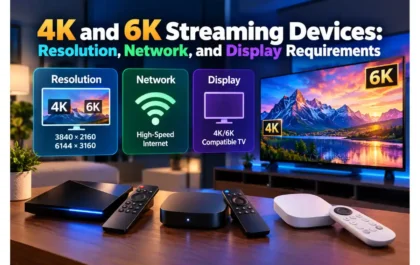
4K and 6K Streaming Devices: Resolution, Network, and Display Requirements
4K and 6K Streaming Devices High-resolution streaming has changed the way people experience movies, sports, documentaries, and other digital entertainment…

Creative Photo Editing: How Small Digital Details Make Images More Engaging
Introduction Digital photography has quietly become part of the way people talk to one another. They take pictures to hold…