Subscribe Now

Trending News

Hard Drive Write for Us – Submit a Data Storage Guest Post

Hard drives remain an important part of computer storage, providing high-capacity space for operating systems, applications, documents, media files, backups, archives, and business data. Although solid-state storage has become common in modern systems, hard disk drives continue to be widely used where capacity, cost per gigabyte, long-term storage, or large data collections matter.

Computer Tech Reviews welcomes original contributions from technology writers, PC enthusiasts, IT professionals, storage specialists, system builders, technicians, reviewers, and contributors with practical experience selecting, installing, testing, maintaining, or troubleshooting hard drives.

Our Hard Drive Write for Us opportunity is intended for useful articles that help readers understand hard drive technology, compare storage options, evaluate capacity and performance, maintain drive health, solve storage problems, and make better purchasing or upgrade decisions.

This contributor section is part of the wider Gadgets Write for Us hub. Writers covering solid-state storage, removable storage, memory cards, or optical media can also use the related contributor sections listed below.

Hard Drive Topics We Welcome

We welcome hard drive explainers, HDD comparisons, storage buying guides, interface guides, reliability articles, backup strategies, maintenance content, upgrade tutorials, performance analysis, drive-health guides, and practical troubleshooting articles.

A strong hard-drive article should help readers understand how the storage device affects capacity, performance, reliability, compatibility, and long-term use rather than simply repeating product specifications.

Hard Disk Drive Technology

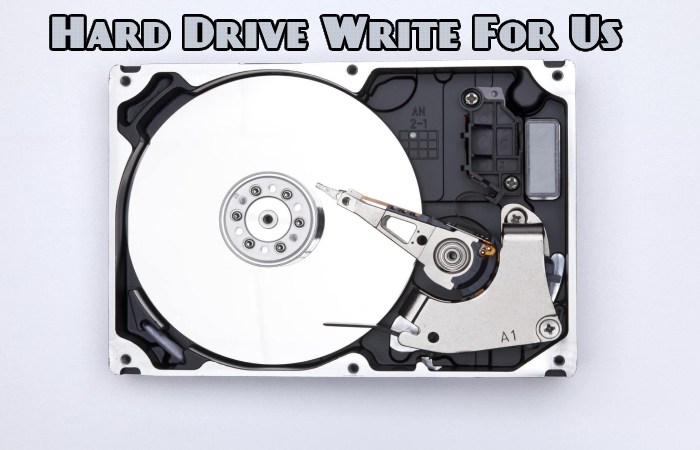
Hard disk drives store data magnetically on spinning platters and use mechanical components to read and write information. Their design differs significantly from solid-state storage and influences speed, noise, durability, power use, and capacity.

We welcome articles explaining platters, read/write heads, spindle speeds, cache, seek time, data density, sectors, drive controllers, and how HDD technology works in practical terms.

Hard Drive Capacity

Storage capacity is one of the main reasons users choose hard disk drives, particularly for large media libraries, backups, surveillance systems, archives, and data-heavy applications.

We welcome articles explaining how to choose hard drive capacity, usable storage, formatting overhead, backup planning, storage growth, and how much space different workloads may require.

Hard Drive Performance

Hard drive performance can depend on rotational speed, platter density, cache, interface, workload type, file size, fragmentation, and system configuration.

We welcome articles about sequential transfer speeds, random access, seek behavior, workload differences, benchmarking, and how HDD performance compares with other storage technologies.

Performance claims should be supported by documented specifications or reproducible testing rather than broad assumptions.

Hard Drive Interfaces

Hard drives can use different interfaces depending on the computer, storage enclosure, server, or external device involved.

We welcome articles about SATA, SAS where relevant, USB-connected hard drives, storage enclosures, adapters, cables, controllers, and compatibility.

Interface guides should distinguish the maximum capability of the connection from the real-world performance of the drive itself.

Internal and External Hard Drives

Internal hard drives are installed inside computers or storage systems, while external drives typically connect through USB or another external interface.

We welcome balanced comparisons involving performance, portability, capacity, backup use, installation, durability, power requirements, and convenience.

Articles focused specifically on internally installed drives can also use our Internal Hard Drives Write for Us section.

Hard Drives for Backup and Archiving

Hard drives are commonly used for local backups because they can provide large amounts of storage at a relatively accessible cost.

We welcome articles about backup drives, rotating backups, offline storage, data archives, drive organization, backup verification, and practical storage planning.

Backup articles should make clear that keeping a single copy of important data on one hard drive is not the same as having a complete backup strategy.

Hard Drive Reliability and Lifespan

Hard drives contain moving parts and can fail for mechanical, electrical, environmental, or operational reasons.

We welcome articles about drive health, SMART data, operating temperatures, vibration, workload, age, warning signs, backups, and responsible replacement planning.

Reliability articles should avoid claiming an exact universal lifespan because real-world drive life varies considerably by model, workload, environment, and usage.

Explore Related Storage Write for Us Pages

If your proposed article focuses primarily on another storage technology or removable-media format, choose the contributor section that most closely matches the subject.

Hard Drive vs. SSD

Hard disk drives and solid-state drives use fundamentally different storage technologies. HDDs use magnetic platters and moving parts, while SSDs use flash memory and have no mechanical read/write mechanism.

We welcome practical comparisons involving:

  • Performance
  • Capacity
  • Cost per gigabyte
  • Noise
  • Power consumption
  • Durability
  • Boot and application performance
  • Large-file storage
  • Backups
  • Gaming
  • Content creation
  • Long-term storage

The better choice depends on the workload. Many computers use both technologies, with an SSD handling the operating system and frequently used applications while a hard drive provides larger-capacity storage.

Articles focused primarily on solid-state storage can use our SSD Write for Us page.

Internal Hard Drives

Internal hard drives are installed directly inside desktops, workstations, servers, storage appliances, and some other systems. They may be used as primary storage, secondary storage, backup capacity, or large media libraries.

We welcome articles about selecting internal drives, SATA connectivity, mounting, power connections, capacity, performance, airflow, partitioning, formatting, and replacing older storage.

More narrowly focused articles can be submitted through our Internal Hard Drives Write for Us section.

External Hard Drives

External hard drives provide portable or easily removable storage for backups, media files, documents, data transfer, and archival use.

We welcome articles about external drive enclosures, USB connections, power requirements, portability, backup workflows, transfer speeds, compatibility, and troubleshooting.

External storage articles should distinguish between the performance of the internal drive and the limitations of the enclosure or external connection.

Hard Drives vs. USB Flash Drives

Hard drives and USB flash drives can both provide removable storage, but they serve different purposes.

Hard drives generally offer much larger capacities, while flash drives emphasize portability, convenience, and small physical size.

We welcome comparisons covering:

  • Capacity
  • Transfer speed
  • Portability
  • Durability
  • Backup use
  • File transfer
  • Long-term storage
  • Cost

Articles focused mainly on portable flash storage can use our USB Flash Drive Write for Us page.

Hard Drives and Memory Cards

Memory cards are designed primarily for compact electronics such as cameras, phones, drones, handheld devices, and embedded systems, while hard drives are generally intended for larger-capacity computer and storage applications.

We welcome articles that compare these technologies in the context of backup workflows, photography, video production, data transfer, capacity, and long-term storage.

Memory-card-specific submissions can use our Memory Card Write for Us section.

Hard Drives and Optical Storage

Optical media such as DVDs use a very different storage method from magnetic hard drives. Although optical storage is less common for general computer storage today, it can still appear in media collections, legacy systems, software distribution, and archival workflows.

We welcome articles comparing magnetic and optical storage, migration from older media, backup workflows, legacy compatibility, and transferring data from discs to modern storage systems.

Articles focused on optical hardware can use our Optical Drives Write for Us page, while disc-specific topics can use our DVD Write for Us section.

Hard Drive Buying Guides

A useful hard drive buying guide should begin with the intended workload rather than simply recommending the highest-capacity model.

When comparing hard drives, contributors may consider factors such as:

  • Storage capacity
  • Drive type
  • Internal or external use
  • Interface
  • Rotational speed
  • Cache
  • Form factor
  • Workload rating where applicable
  • Noise
  • Power consumption
  • Operating temperature
  • Compatibility
  • Warranty
  • Price per gigabyte
  • Backup requirements
  • Expected workload

Recommendations should explain why a particular type of drive suits the intended application.

Hard Drives for Desktop Computers

Desktop computers often provide enough physical space and connections for multiple storage devices, making hard drives useful for high-capacity secondary storage.

We welcome articles about adding hard drives to desktops, combining HDDs and SSDs, managing storage volumes, backups, media libraries, and upgrading capacity.

Hard Drives for Gaming

Modern games can require substantial storage space, making capacity an important consideration for gaming PCs.

We welcome articles about using hard drives for game libraries, combining HDD and SSD storage, installation planning, load-time differences, backups, and moving games between drives.

Gaming articles should distinguish capacity benefits from the performance advantages typically associated with faster solid-state storage.

Hard Drives for Content Creation

Video, photography, audio, animation, and other creative workflows can generate large volumes of data.

We welcome articles about hard drives for media libraries, project archives, backups, raw footage, large file collections, and multi-drive storage strategies.

Recommendations should consider transfer speed, working storage, backup requirements, and archival needs separately.

Hard Drives for Business and Office Use

Businesses may use hard drives for local storage, workstations, backups, archives, surveillance systems, shared storage, and other operational requirements.

We welcome articles about capacity planning, replacement cycles, drive health, backup procedures, encryption, data organization, and selecting storage for different business workloads.

Hard Drive Performance and Benchmarking

Hard drive testing should reflect the intended workload. Sequential transfers, random access, small files, large files, sustained writes, and mixed workloads can produce very different results.

If presenting benchmark results, provide relevant details such as:

  • Drive model
  • Capacity
  • Interface
  • Rotational speed where applicable
  • Computer or test platform
  • Operating system
  • File system
  • Connection method
  • Test software
  • Test file sizes
  • Drive fill level where relevant
  • Testing methodology

Avoid presenting one synthetic benchmark result as a complete representation of real-world storage performance.

Hard Drive Health and SMART Monitoring

Many hard drives expose SMART information that can help users monitor certain operating conditions and drive-health indicators.

We welcome articles explaining SMART data, temperature monitoring, reallocated sectors, error indicators, drive diagnostics, health software, and when users should consider replacing a drive.

SMART data can provide useful information but should not be presented as a guarantee that a drive will or will not fail.

Hard Drive Backup Strategies

A hard drive can be part of a strong backup strategy, but the drive itself is not automatically a backup if it contains the only copy of important data.

We welcome practical articles covering:

  • Local backups
  • External backup drives
  • Backup rotation
  • Offline backups
  • Versioned backups
  • Backup verification
  • Multiple-copy strategies
  • Combining local and cloud backups
  • Backup schedules
  • Data-restoration testing

Hard Drive Installation and Upgrades

Installing or replacing a hard drive can involve physical mounting, power connections, data cables, BIOS or UEFI detection, partitioning, formatting, operating-system configuration, and data migration.

We welcome practical guides explaining how to:

  • Add a hard drive to a desktop computer
  • Replace an existing hard drive
  • Move data to a new drive
  • Initialize a new drive
  • Create partitions
  • Format storage
  • Assign drive letters where applicable
  • Check whether the drive is detected
  • Verify SATA connections
  • Configure storage safely

Hard Drive Troubleshooting and How-To Articles

Hard drive problems can involve the drive itself, power, cables, controllers, interfaces, the operating system, file systems, partitions, or other parts of the computer.

We welcome practical troubleshooting guides addressing issues such as:

  • A hard drive not being detected
  • A drive not appearing in the operating system
  • A new hard drive not being initialized
  • Unexpectedly slow transfer speeds
  • A drive disconnecting intermittently
  • Unusual hard drive noises
  • SMART warnings
  • Bad-sector warnings
  • File-system errors
  • Insufficient storage space
  • Partition problems
  • External hard drive connection problems
  • USB storage problems
  • Problems after replacing a drive
  • Data migration issues

Where relevant, identify the drive model, interface, computer, operating system, connection method, file system, and symptoms involved.

Hard Drive Noise and Vibration

Because hard disk drives contain moving components, they can produce normal operating sounds and vibration. However, unusual noises can sometimes indicate mechanical problems.

We welcome articles explaining normal HDD sounds, vibration, mounting, acoustic behavior, and warning signs that may justify backing up data and investigating the drive.

Articles should avoid diagnosing a specific mechanical failure based only on a written description of a sound.

Hard Drive Data Recovery

Storage failures and accidental deletion can lead users to search for ways to recover important files.

We welcome responsible articles explaining basic data-recovery concepts, backups, deleted-file recovery, damaged file systems, and when professional recovery services may be appropriate.

Articles should emphasize avoiding unnecessary writes to a failing or accidentally erased drive where additional activity could reduce the chance of successful recovery.

Hard Drive Security and Data Protection

Hard drives can contain personal information, business documents, passwords, financial records, photographs, and other sensitive data.

We welcome defensive articles about drive encryption, access control, secure backups, operating-system security, physical protection, and responsible disposal of storage devices.

Articles about selling, recycling, or disposing of hard drives should explain that simply deleting files may not be sufficient for protecting sensitive information.

Hard Drive Maintenance and Longevity

Good storage practices can help reduce avoidable problems and provide earlier warning of potential drive issues.

We welcome articles about:

  • Monitoring drive health
  • Checking operating temperatures
  • Maintaining backups
  • Protecting drives from shocks
  • Managing vibration
  • Maintaining sufficient free space
  • Checking cables and connections
  • Replacing aging drives
  • Testing backups

No maintenance routine can guarantee that a drive will never fail, so reliable backups should remain part of any important storage strategy.

What Makes a Strong Hard Drive Article?

A strong hard-drive article should help readers understand storage technology, select a drive, improve a storage setup, solve a problem, protect data, or make a better purchasing decision.

We prefer submissions based on practical experience, technical knowledge, documented research, reproducible testing, or clearly explained observations.

Your article should:

  • Address a specific hard-drive or storage question.
  • Identify the intended workload.
  • Identify the drive model when device-specific information matters.
  • Explain technical terminology when necessary.
  • Distinguish capacity from performance.
  • Verify interface and compatibility information.
  • Explain practical advantages, limitations, and trade-offs.
  • Describe testing methodology when benchmark results are included.
  • Support technical claims and statistics with reliable sources.
  • Avoid promising that any drive is immune to failure.
  • Clearly distinguish personal testing from research-based conclusions.
  • Disclose relevant relationships with manufacturers, retailers, developers, or products.

Hard Drive Article Ideas You Can Pitch

  • How hard disk drives work
  • Hard drive vs. SSD
  • Internal vs. external hard drive
  • How to choose the right hard drive capacity
  • How hard drive RPM affects performance
  • How hard drive cache works
  • How SATA hard drives work
  • How to choose a hard drive for backups
  • How to choose a hard drive for a desktop PC
  • How to choose a hard drive for gaming storage
  • How to choose storage for video editing
  • Hard drive vs. USB flash drive
  • Hard drive vs. memory card
  • Hard drive vs. optical storage
  • How to add a hard drive to a desktop computer
  • How to initialize a new hard drive
  • How to partition and format a hard drive
  • How to migrate data to a new hard drive
  • How SMART hard drive monitoring works
  • How to check hard drive health
  • How to troubleshoot a hard drive that is not detected
  • Why a hard drive may become slow
  • What unusual hard drive noises can mean
  • How to protect data before a hard drive fails
  • How to securely prepare a hard drive for disposal
  • What to check before buying a used hard drive

Content We Are Unlikely to Accept

We are not looking for articles created primarily to advertise a hard drive, storage manufacturer, retailer, software product, recovery service, or backlink. Products and services can be discussed when genuinely relevant, but the article should provide independent value to readers.

We may reject submissions that simply reproduce drive specifications, rewrite manufacturer descriptions, contain unsupported reliability claims, promise guaranteed data recovery, repeat keywords unnaturally, or recommend storage without explaining why it suits the intended workload.

Do not claim that you personally tested a hard drive unless you actually used it. Research-based articles are welcome, but they should clearly distinguish documented information from first-hand experience.

AI tools may assist with research, planning, organization, or drafting, but authors remain responsible for the final article. Hard drive specifications, capacity information, benchmark results, compatibility claims, reliability data, quotations, statistics, and factual statements should be independently verified before submission.

Unedited or unverified AI-generated articles will not be accepted.

Editorial Guidelines

  • Submit original content that has not been published elsewhere.
  • Write a minimum of 800 words for a standard article.
  • Use a clear title, introduction, descriptive headings, and short paragraphs.
  • Write naturally for readers rather than search engines.
  • Avoid unnecessary promotional or sales-focused language.
  • Verify drive models, capacities, interfaces, and compatibility information.
  • Support factual claims, performance figures, reliability data, and statistics with reliable sources.
  • Clearly distinguish personal testing from research-based conclusions.
  • Explain benchmark methodology when performance results are included.
  • Avoid making guarantees about drive lifespan or data recovery.
  • Disclose relevant commercial, sponsorship, employment, or product relationships.
  • Use original or properly licensed photographs, diagrams, charts, and screenshots.
  • Proofread and fact-check the complete article before submission.
  • Our editorial team may edit submissions for accuracy, clarity, formatting, and readability.

How to Submit a Hard Drive Guest Post

Before submitting a complete article, you may send us a short proposal explaining what you want to cover and why the topic would be useful to Computer Tech Reviews readers.

Your proposal can include:

  • Your proposed article title
  • A brief explanation of the topic
  • The intended audience or workload
  • The drive models or technologies involved
  • The question or problem the article will address
  • A proposed outline
  • The connection or interface where relevant
  • The testing methodology if performance results are included
  • Whether you personally tested the storage device discussed
  • Links to relevant writing samples
  • Details of any commercial relationship connected to the submission

Send your proposal or completed article to contact@computertechreviews.com.

For solid-state storage topics, visit our SSD Write for Us section. Articles specifically about installed HDDs can use our Internal Hard Drives Write for Us page, while removable-storage topics can be directed to our USB Flash Drive Write for Us or Memory Card Write for Us sections.

Frequently Asked Questions

Can I submit a hard drive guest post?

Yes. We welcome original articles about HDD technology, storage capacity, performance, interfaces, backups, reliability, maintenance, upgrades, security, and troubleshooting.

Can I write about internal hard drives?

Yes. Articles can cover installation, SATA connectivity, capacity, performance, desktop storage, backups, upgrades, and troubleshooting. Highly specific internal-drive topics can also use our Internal Hard Drives contributor page.

Can I compare hard drives and SSDs?

Yes. Comparisons can cover speed, capacity, price, power consumption, durability, noise, gaming, backups, content creation, and other practical workloads.

Can I write about external hard drives?

Yes. We welcome articles about USB-connected drives, external enclosures, backups, portability, transfer speeds, compatibility, and troubleshooting.

Can I write about hard drive reliability?

Yes. Articles can discuss SMART monitoring, temperature, age, workload, vibration, warning signs, backups, and replacement planning, provided they avoid unsupported lifespan guarantees.

Can I write about hard drive data recovery?

Yes. Responsible articles about backups, deleted-file recovery, file-system problems, failing drives, and when professional recovery may be appropriate are welcome.

Can I write about hard drives for backups?

Yes. Articles can cover external backup drives, backup schedules, multiple copies, offline backups, verification, rotation, and combining local and cloud storage.

Can I submit hard drive troubleshooting articles?

Yes. Troubleshooting guides are encouraged when they use a logical process to identify whether the issue involves the drive, cable, power connection, interface, file system, operating system, or other hardware.

Do I need to personally test the hard drive I write about?

Not for every type of article. Research-based explainers can use reliable documentation and credible sources. However, you should never describe a hard drive as personally tested or reviewed if you have not actually used it.

Can I submit AI-assisted content?

AI tools may assist with research, planning, or drafting, but the author remains responsible for the finished article. Drive specifications, performance figures, compatibility information, reliability claims, test results, quotations, statistics, and factual statements should be independently verified before submission.