
Video cards play an important role in how computers generate, process, and deliver visual output to monitors, televisions, projectors, and other displays. Modern video hardware can support everything from everyday desktop environments and high-resolution video playback to multiple monitors, gaming, content creation, and graphics-intensive professional applications.
Computer Tech Reviews welcomes original contributions from technology writers, PC enthusiasts, hardware reviewers, IT professionals, system builders, creators, technicians, and contributors with practical experience installing, configuring, testing, or troubleshooting video hardware.
Our Video Card Write for Us opportunity is intended for useful articles that help readers understand video cards, display output, monitor compatibility, video connections, drivers, multi-monitor configurations, media acceleration, and common display problems.
This contributor section is part of our broader Computer Write for Us section and the wider Gadgets Write for Us hub. Articles primarily focused on GPU performance, gaming benchmarks, VRAM, rendering, or GPU architecture may be better suited to our Graphics Card Write for Us page.
Video Card Topics We Welcome
We welcome practical tutorials, hardware explainers, display guides, video-card comparisons, monitor-compatibility articles, driver troubleshooting, multi-monitor setup guides, connectivity articles, and first-hand experiences with video hardware.
A strong video-card article should help readers understand how graphics hardware interacts with displays and software rather than simply reproducing specifications.
Video Cards and Display Output
A video card converts processed graphics data into output that can be displayed through compatible monitors, televisions, projectors, and other devices.
We welcome articles explaining video output, display controllers, supported resolutions, refresh rates, multiple displays, color formats, and how video hardware communicates with display devices.
Technical articles should explain practical limitations instead of assuming that every output connector automatically supports every possible resolution or refresh rate.
Video Card Ports and Connections
Video cards can include different display connections depending on the hardware generation and intended market. The connection used can influence resolution, refresh rate, audio support, adaptive synchronization, and other display capabilities.
We welcome articles about HDMI, DisplayPort, USB-C display functionality where relevant, adapters, cables, monitor inputs, and selecting an appropriate connection for a particular display.
Articles should distinguish the physical connector from the underlying specification because visually similar ports or cables may support different capabilities.
Video Cards and Monitor Compatibility
Connecting a monitor to a computer involves more than matching the shape of a connector. Resolution, refresh rate, available outputs, cable capabilities, display inputs, operating-system settings, and driver support can all affect the result.
We welcome articles that help readers determine whether a video card can properly support a particular monitor or display configuration.
Compatibility guides should identify the video card, display model, connection type, target resolution, and refresh rate where relevant.
Resolution and Refresh Rates
Display resolution determines how many pixels are shown, while refresh rate describes how frequently the display can update its image. Both can influence visual quality, responsiveness, bandwidth requirements, and video-card workload.
We welcome articles explaining common display resolutions, refresh rates, bandwidth requirements, high-refresh-rate monitors, scaling, and choosing appropriate display settings.
Articles should avoid assuming that a video card’s ability to output a particular resolution means it can provide high application or gaming performance at that resolution.
Multi-Monitor Video Card Setups
Multiple monitors are commonly used for productivity, development, financial applications, content creation, communication, monitoring systems, and other professional workflows.
We welcome articles about configuring two or more displays, identifying available outputs, arranging displays, selecting resolutions, matching refresh rates, extending desktops, troubleshooting detection problems, and understanding hardware limitations.
Multi-monitor guides should identify whether displays connect directly to the video card, integrated graphics, docking hardware, or another display solution.
Video Playback and Hardware Acceleration
Modern graphics hardware can accelerate video decoding, encoding, playback, streaming, conferencing, and media-processing workloads.
We welcome articles about video acceleration, media engines, supported formats, CPU versus GPU processing, streaming, video editing, playback efficiency, and troubleshooting hardware-acceleration problems.
Articles should identify the relevant hardware, application, video format, resolution, and software configuration when discussing acceleration capabilities.
Video Cards for Content Creation
Video hardware can affect editing timelines, effects, rendering, encoding, color workflows, multiple displays, and high-resolution media production.
We welcome articles for video editors, designers, photographers, streamers, animators, and other creators who need help selecting or configuring graphics hardware.
Recommendations should consider the actual applications being used because hardware acceleration and software support can vary between programs.
Video Card Drivers
Drivers allow the operating system and applications to communicate with graphics hardware. Driver problems can affect display detection, resolution, refresh rates, video playback, stability, hardware acceleration, and application compatibility.
We welcome articles about installing video drivers, updating them, performing clean installations, rolling back problematic updates, configuring display settings, and diagnosing driver-related problems.
Explore Related Computer Hardware Write for Us Pages
If your proposed article focuses primarily on GPU performance, processors, motherboards, a particular computer type, or peripherals, choose the contributor section that most closely matches the subject.
Video Card vs. Graphics Card
The terms video card and graphics card are frequently used interchangeably, particularly when referring to a dedicated expansion card responsible for graphics processing and display output.
Rather than creating an artificial technical distinction between the terms, articles should explain the context in which they are being used.
For Computer Tech Reviews contributor topics, we use our Graphics Card Write for Us section primarily for GPU architecture, gaming performance, VRAM, rendering, AI workloads, benchmarking, cooling, and graphics performance.
This Video Card contributor section focuses more heavily on display output, monitor configurations, video connectivity, resolutions, refresh rates, media acceleration, drivers, and display troubleshooting. This separation helps contributors select the most relevant page for their proposed topic.
Dedicated Video Cards vs. Integrated Graphics
Some processors include integrated graphics capable of providing display output without a separate graphics card. Dedicated video cards provide separate graphics hardware and typically include dedicated video memory.
We welcome practical comparisons involving:
- Display support
- Multiple monitors
- Video playback
- Hardware acceleration
- Gaming
- Content creation
- Power consumption
- System cost
- Cooling
- Upgradeability
The article should explain which option is appropriate for different workloads rather than assuming every computer requires a dedicated video card.
Video Cards for Multiple Monitors
Users building multi-monitor systems should consider the number and type of video outputs, supported display configurations, resolution, refresh rates, operating-system support, and application requirements.
We welcome guides for dual-monitor, triple-monitor, and other multi-display configurations.
Useful topics include:
- Checking how many monitors a video card supports
- Connecting monitors with different inputs
- Using different resolutions
- Using different refresh rates
- Configuring extended desktops
- Choosing the primary display
- Display orientation
- Troubleshooting monitors that are not detected
- Managing high-resolution multi-monitor setups
- Selecting video hardware for productivity workstations
Video Cards for High-Resolution Displays
Higher-resolution displays can provide more workspace and greater image detail, but they can also increase bandwidth and graphics-processing requirements.
We welcome articles explaining video-card requirements for high-resolution monitors, televisions, and other displays.
Guides should distinguish between simply outputting a high-resolution desktop and delivering demanding real-time graphics performance at that resolution.
Video Cards and High-Refresh-Rate Monitors
High-refresh-rate displays can provide smoother motion and greater responsiveness, but achieving the intended refresh rate requires compatible graphics hardware, connections, cables, display settings, and software.
We welcome articles explaining how to configure high-refresh-rate monitors, diagnose unexpectedly low refresh rates, choose appropriate display connections, and understand the relationship between refresh rate and application performance.
Video Card Connectivity and Adapters
Adapters can help connect older or different display standards, but they do not automatically provide every feature supported by either device.
We welcome practical articles about video adapters, active and passive conversion, cable selection, compatibility, resolution limitations, refresh-rate limitations, and troubleshooting display connections.
Articles should avoid implying that connector shape alone determines the capabilities of an adapter or cable.
Video Card Installation and Upgrades
Installing a dedicated video card requires checking motherboard support, case dimensions, available expansion slots, power-supply capacity, power connectors, cooling, and display connections.
We welcome upgrade guides covering:
- PCIe compatibility
- Motherboard slots
- Case clearance
- Card dimensions
- Power-supply requirements
- Power connectors
- Cooling and airflow
- Driver preparation
- Monitor connections
- BIOS or firmware considerations
Upgrade articles should explain the complete compatibility picture before recommending that readers purchase or install new hardware.
Video Card and Motherboard Compatibility
A dedicated video card generally connects to the motherboard through PCI Express, but motherboard compatibility is only one part of the installation process.
We welcome articles that explain PCIe slots, lane configurations, firmware considerations, card dimensions, power requirements, and other factors readers should check before installing a video card.
A card can be compatible with the motherboard while still being unsuitable for the case, power supply, display configuration, or intended workload.
Video Card Troubleshooting and How-To Articles
Display problems can originate from the video card, drivers, monitor, cable, adapter, motherboard, power supply, operating system, or application. Good troubleshooting articles should help readers isolate the likely cause before replacing hardware.
We welcome practical guides addressing problems such as:
- A video card not being detected
- No display after installing a video card
- A black screen after startup
- A second monitor not being detected
- Incorrect screen resolution
- Refresh rate options missing
- Screen flickering
- Display artifacts
- Intermittent signal loss
- Incorrect colors
- Video playback problems
- Hardware acceleration not working
- Driver installation problems
- Problems after a driver update
- DisplayPort connection problems
- HDMI connection problems
- Problems using adapters
- Multiple monitors behaving unexpectedly
Where relevant, identify the video card, driver version, operating system, monitor model, connection type, cable or adapter, motherboard, and power supply involved.
Video Card Performance and Testing
Performance testing should reflect the purpose of the article. A video-card test focused on media playback or display support may require a very different methodology from a gaming GPU benchmark.
We welcome testing involving video playback, encoding, decoding, multiple displays, application acceleration, display output, and other relevant workloads.
If presenting test results, provide appropriate details such as:
- Video card model
- Processor
- Motherboard
- Memory
- Operating system
- Driver version
- Application version
- Monitor model
- Resolution
- Refresh rate
- Connection type
- Video format where relevant
- Testing methodology
For extensive gaming, GPU-compute, or rendering benchmarks, our dedicated Graphics Card contributor section is generally the more appropriate destination.
Video Card Power and Cooling
Dedicated video cards can increase system power consumption and heat output. Requirements vary considerably according to the hardware involved.
We welcome articles explaining video-card power requirements, power connectors, cooling, airflow, temperatures, fan behavior, and how these factors affect system stability.
Power recommendations should consider the complete computer rather than only the video card.
Video Card Maintenance
Routine maintenance can help keep video hardware and the surrounding system operating reliably.
We welcome articles about dust management, airflow, temperature monitoring, fan behavior, driver maintenance, cable inspection, display connections, and recognizing signs of possible hardware problems.
Maintenance advice should distinguish safe user-level tasks from disassembly or repairs that may require specialist knowledge.
What Makes a Strong Video Card Article?
A strong video-card article should help readers understand display hardware, configure a monitor, solve a video problem, evaluate compatibility, improve a workstation, or make a better purchasing decision.
We prefer submissions based on practical experience, technical knowledge, documented research, reproducible testing, or clearly explained observations.
Your article should:
- Address a specific video-card or display-related question.
- Identify the intended audience and workload.
- Identify the video card and display where relevant.
- Explain technical terminology when necessary.
- Verify resolution and refresh-rate capabilities.
- Verify connection and cable requirements.
- Distinguish video output capability from graphics performance.
- Explain practical advantages, limitations, and trade-offs.
- Describe testing methodology when results are included.
- Support technical claims and statistics with reliable sources.
- Use current driver and hardware information where compatibility matters.
- Clearly distinguish personal testing from research-based conclusions.
- Disclose relevant relationships with manufacturers, retailers, developers, or products.
Video Card Article Ideas You Can Pitch
- How video cards work
- Video card vs. graphics card: is there a difference?
- Dedicated video card vs. integrated graphics
- How to choose a video card for multiple monitors
- How many monitors can a video card support?
- How to choose a video card for a high-resolution monitor
- How to configure a dual-monitor PC
- How to configure three monitors on a desktop computer
- How resolution affects video-card requirements
- How refresh rate affects display connectivity
- HDMI vs. DisplayPort for computer monitors
- How to choose the right display cable
- How video-card hardware acceleration works
- How GPUs accelerate video playback
- How video hardware affects video editing
- What to check before installing a video card
- How to check video-card and motherboard compatibility
- How to troubleshoot a video card with no display
- Why a second monitor may not be detected
- Why a monitor is not running at its maximum refresh rate
- How to troubleshoot screen flickering
- How to troubleshoot display artifacts
- Why hardware video acceleration may not work
- How to troubleshoot HDMI display problems
- How to troubleshoot DisplayPort problems
- What to check before buying a used video card
Content We Are Unlikely to Accept
We are not looking for articles created primarily to advertise a video card, monitor, cable, adapter, retailer, manufacturer, software product, service, or backlink. Products can be discussed when genuinely relevant, but the article should provide independent value to readers.
We may reject submissions that simply reproduce product specifications, rewrite manufacturer descriptions, contain unsupported compatibility claims, use outdated driver information, repeat keywords unnaturally, or recommend hardware without explaining why it is appropriate.
Do not claim that you personally tested a video card, monitor, or display configuration unless you actually used it. Research-based articles are welcome, but they should clearly distinguish documented information from first-hand experience.
AI tools may assist with research, planning, organization, or drafting, but authors remain responsible for the final article. Hardware specifications, display capabilities, connection standards, driver information, test results, quotations, statistics, and factual claims should be independently verified before submission.
Unedited or unverified AI-generated articles will not be accepted.
Editorial Guidelines
- Submit original content that has not been published elsewhere.
- Write a minimum of 800 words for a standard article.
- Use a clear title, introduction, descriptive headings, and short paragraphs.
- Write naturally for readers rather than search engines.
- Avoid unnecessary promotional or sales-focused language.
- Verify video-card models, display outputs, resolutions, refresh rates, and compatibility information.
- Verify cable, adapter, and connection capabilities where relevant.
- Support factual claims, performance figures, and statistics with reliable sources.
- Use current hardware and driver information where compatibility matters.
- Clearly distinguish personal testing from research-based conclusions.
- Explain testing methodology when results are included.
- Disclose relevant commercial, sponsorship, employment, or product relationships.
- Use original or properly licensed photographs, images, diagrams, charts, and screenshots.
- Proofread and fact-check the complete article before submission.
- Our editorial team may edit submissions for accuracy, clarity, formatting, and readability.
How to Submit a Video Card Guest Post
Before submitting a complete article, you may send us a short proposal explaining what you want to cover and why the topic would be useful to Computer Tech Reviews readers.
Your proposal can include:
- Your proposed article title
- A brief explanation of the topic
- The intended audience or workload
- The question or problem the article will address
- A proposed outline
- The video card and display hardware involved
- The connection type where relevant
- The complete test configuration if results are included
- Whether you personally tested the hardware discussed
- Links to relevant writing samples
- Details of any commercial relationship connected to the submission
Send your proposal or completed article to contact@computertechreviews.com.
For GPU architecture, gaming performance, VRAM, rendering, AI workloads, and extensive graphics benchmarking, visit our Graphics Card Write for Us section. For broader PC hardware topics, see our Computer Write for Us page, or explore the wider Gadgets Write for Us hub.
Frequently Asked Questions
Can I submit a video card guest post?
Yes. We welcome original articles about video cards, display output, monitors, resolutions, refresh rates, connectivity, drivers, hardware acceleration, compatibility, and troubleshooting.
What is the difference between the Video Card and Graphics Card contributor pages?
The terms themselves are often used interchangeably. For contributor organization, our Video Card section focuses primarily on display output, monitors, connectivity, media acceleration, drivers, and display troubleshooting. Our Graphics Card section is better suited to GPU architecture, gaming performance, VRAM, rendering, AI workloads, and graphics benchmarking.
Can I write about HDMI and DisplayPort?
Yes. Articles can explain connection capabilities, resolutions, refresh rates, cables, monitor compatibility, adapters, and troubleshooting.
Can I write about multi-monitor setups?
Yes. We welcome guides covering dual-monitor and multi-monitor configurations, display outputs, resolutions, refresh rates, operating-system settings, and troubleshooting.
Can I write about video cards for content creation?
Yes. Articles can cover video editing, media acceleration, encoding, decoding, multiple displays, high-resolution workflows, and application compatibility.
Can I write about integrated graphics?
Yes. Articles can compare integrated and dedicated graphics for display output, video playback, multiple monitors, productivity, content creation, gaming, and other workloads.
Can I submit video-card troubleshooting articles?
Yes. Troubleshooting guides are encouraged when they help readers determine whether a problem involves the video card, driver, monitor, cable, adapter, motherboard, power supply, or software.
Can I submit gaming GPU benchmarks?
Gaming benchmarks can be covered, but articles primarily focused on GPU gaming performance, VRAM, ray tracing, rendering, or extensive graphics benchmarking are better suited to our Graphics Card Write for Us section.
Do I need to personally test the video card I write about?
Not for every type of article. Research-based explainers can use reliable documentation and credible sources. However, you should never describe hardware as personally tested or reviewed if you have not actually used it.
Can I submit AI-assisted content?
AI tools may assist with research, planning, or drafting, but the author remains responsible for the finished article. Hardware specifications, display capabilities, connection standards, compatibility information, test results, quotations, statistics, and factual statements should be independently verified before submission.
Recent Posts
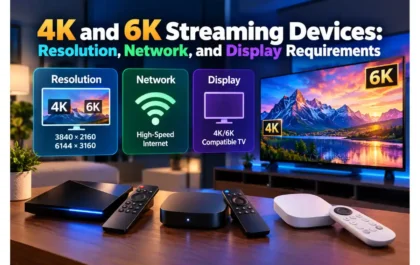
4K and 6K Streaming Devices: Resolution, Network, and Display Requirements
4K and 6K Streaming Devices High-resolution streaming has changed the way people experience movies, sports, documentaries, and other digital entertainment…

Creative Photo Editing: How Small Digital Details Make Images More Engaging
Introduction Digital photography has quietly become part of the way people talk to one another. They take pictures to hold…