
Wireless mice have become an important part of desktop, laptop, and portable computing setups, giving users greater freedom from cables while supporting everything from everyday browsing and office work to gaming, design, development, and multi-device workflows. Differences in sensors, wireless technology, battery life, shape, weight, buttons, software, and compatibility can significantly affect the user experience.
Computer Tech Reviews welcomes original contributions from technology writers, PC enthusiasts, gamers, IT professionals, developers, hardware reviewers, creators, and contributors with practical experience using, comparing, configuring, testing, or troubleshooting wireless mice.
Our Wireless Mouse Write for Us opportunity is intended for useful articles that help readers understand wireless mouse technology, compare connectivity options, evaluate sensors and performance, improve computer setups, solve common problems, and make better purchasing decisions.
This contributor section is part of our broader Computer Write for Us section and the wider Gadgets Write for Us hub. Writers covering another primary computer input device can also explore our Keyboard Write for Us page.
Wireless Mouse Topics We Welcome
We welcome technical explainers, buying guides, product comparisons, sensor guides, connectivity tutorials, gaming articles, productivity content, ergonomic discussions, battery-life guides, maintenance advice, and practical troubleshooting articles.
A strong wireless mouse article should help readers understand how particular features affect real-world use rather than simply repeating specifications from a product page.
Bluetooth Mice
Bluetooth allows compatible wireless mice to connect directly to laptops, desktops, tablets, Chromebooks, and other devices without requiring a dedicated USB receiver.
We welcome articles about Bluetooth pairing, compatibility, latency, power consumption, multi-device use, connection stability, operating-system support, and troubleshooting.
Bluetooth guides should identify relevant hardware and software versions when behavior depends on the computer, Bluetooth implementation, operating system, or mouse.
Wireless USB Receiver Mice
Many wireless mice use a dedicated USB receiver to communicate with the computer. This approach can provide simple setup, reliable connectivity, and performance characteristics designed for the specific device.
We welcome articles explaining USB receivers, pairing, range, interference, latency, receiver placement, compatibility, and troubleshooting lost or unrecognized receivers.
Articles should distinguish proprietary receiver technologies from Bluetooth rather than referring to every wireless connection as the same technology.
Wireless Mouse Sensors
The sensor tracks movement and converts it into cursor input. Sensor characteristics can affect tracking accuracy, sensitivity, lift-off behavior, power consumption, and performance across different surfaces.
We welcome articles explaining optical sensors, tracking technology, sensor specifications, DPI or CPI settings, acceleration, lift-off distance, surface compatibility, and practical performance.
Sensor articles should explain what specifications mean in actual use instead of assuming that the largest numerical value automatically indicates the best mouse.
Wireless Mouse DPI and Sensitivity
DPI is commonly used in mouse marketing to describe sensitivity, although the relationship between sensor counts, operating-system settings, application sensitivity, display resolution, and user preference can make practical configuration more complicated.
We welcome articles explaining mouse sensitivity, DPI or CPI settings, cursor speed, gaming sensitivity, productivity configurations, and how users can adjust a mouse for their workload.
Recommendations should acknowledge that ideal sensitivity varies according to display setup, software, desk space, task, and personal preference.
Wireless Mouse Polling Rate and Latency
Input responsiveness can matter for gaming and other latency-sensitive tasks. Polling behavior, wireless technology, sensor processing, computer performance, and software configuration can all influence measured or perceived responsiveness.
We welcome articles about polling rates, click latency, motion latency, wireless performance, receiver placement, and appropriate testing methods.
If an article presents latency measurements, contributors should explain the equipment, methodology, connection mode, firmware, and software used during testing.
Wireless Mouse Battery Life
Wireless mice may use replaceable batteries, built-in rechargeable batteries, or other power-management approaches. Battery life can vary significantly according to connectivity, polling settings, lighting, usage patterns, sleep behavior, and battery capacity.
We welcome articles about wireless mouse battery life, charging, replaceable batteries, power-saving settings, battery health, unexpected battery drain, and practical ways to extend runtime.
Battery-life articles should distinguish manufacturer estimates from independently measured or personally observed results.
Rechargeable Wireless Mice
Rechargeable mice eliminate the need to regularly replace disposable batteries but introduce other considerations such as charging time, battery capacity, cable use, battery aging, and charging behavior.
We welcome comparisons between rechargeable and replaceable-battery mice, as well as practical articles about charging and battery maintenance.
Multi-Device Wireless Mice
Some wireless mice can connect to more than one computer or device and allow users to switch between them. This can be useful for people working across desktops, laptops, tablets, or multiple operating systems.
We welcome articles about multi-device pairing, switching, Bluetooth, USB receivers, cross-device workflows, software integration, and compatibility.
Explore Related Computer Hardware Write for Us Pages
If your proposed article focuses primarily on another computer type, processor, motherboard, graphics component, or input device, choose the contributor section that most closely matches the subject.
Wireless Mouse Comparisons and Buying Guides
A useful wireless mouse buying guide should begin with how the reader intends to use the device. Someone choosing a mouse for spreadsheets and office applications may have different priorities from a competitive gamer, designer, developer, frequent traveler, or user working across several computers.
When comparing wireless mice, contributors may consider factors such as:
- Bluetooth connectivity
- USB receiver connectivity
- Sensor performance
- DPI or CPI range
- Polling rate
- Input latency
- Tracking consistency
- Shape and size
- Weight
- Grip suitability
- Button placement
- Programmable controls
- Scroll-wheel functionality
- Battery life
- Charging
- Replaceable or rechargeable batteries
- Multi-device support
- Operating-system compatibility
- Software support
- Build quality
- Portability
- Price and long-term value
Recommendations should explain why a particular mouse suits a particular user rather than assuming that the most expensive or highest-specification device is automatically the best option.
Wireless Mouse vs. Wired Mouse
Wireless and wired mice can both provide accurate and responsive input, but they differ in connectivity, cable management, battery requirements, portability, and setup.
We welcome balanced comparisons covering:
- Input latency
- Connection reliability
- Battery requirements
- Charging
- Weight
- Portability
- Cable management
- Gaming
- Office work
- Device compatibility
- Price
The better option depends on the user’s workload, desk setup, performance requirements, and personal preferences.
Bluetooth Mouse vs. USB Receiver Mouse
Bluetooth and dedicated wireless receivers provide two common approaches to connecting a wireless mouse.
Bluetooth can preserve a USB port and make switching between compatible devices convenient, while dedicated receivers may provide different performance, pairing, or reliability characteristics depending on the hardware.
We welcome comparisons involving:
- Setup
- Compatibility
- Latency
- Connection stability
- Battery consumption
- Wireless range
- USB-port requirements
- Multi-device support
- Gaming
- Travel
Articles should avoid making universal claims because performance varies between individual wireless implementations.
Wireless Gaming Mice
Wireless gaming mice may combine high-performance sensors, low-latency wireless connections, adjustable sensitivity, high polling rates, programmable buttons, onboard profiles, and specialized software.
We welcome articles about gaming mouse sensors, latency, weight, shape, polling rates, DPI settings, button placement, battery life, receiver positioning, and game-specific configurations.
Gaming articles should explain whether a specification provides a meaningful benefit for the intended user rather than assuming that higher numbers automatically improve gaming performance.
Wireless Mice for Productivity
Productivity-focused mice may emphasize comfort, additional buttons, horizontal scrolling, programmable shortcuts, multi-device switching, long battery life, and software integration.
We welcome articles about wireless mice for office work, spreadsheets, programming, content creation, browsing, remote work, and professional applications.
Recommendations should consider the software and workflow involved rather than evaluating every productivity mouse according to gaming criteria.
Wireless Mice for Desktop Computers
Desktop computers allow users to build a complete input setup around their preferred keyboard and mouse rather than relying on integrated controls.
We welcome articles about wireless desktop setups, receiver placement, Bluetooth connectivity, multiple monitors, gaming, productivity, ergonomics, and managing several peripherals.
Articles focused primarily on complete desktop systems can also use our Desktop Computer Write for Us section.
Wireless Mice for Laptops
A wireless mouse can provide more precise or comfortable control than an integrated laptop trackpad for many desk-based tasks.
We welcome articles about Bluetooth mice, compact travel mice, USB receivers, battery life, portability, docking setups, and choosing a mouse for mobile work.
For broader notebook and portable-computer topics, contributors can explore our Laptop Write for Us section.
Wireless Mice for Mini PCs
Mini PCs typically depend on external keyboards, mice, and displays, making wireless peripherals useful for reducing cables and creating compact computer setups.
We welcome articles about Bluetooth mice, USB receivers, living-room configurations, office workstations, portable Mini PC setups, and multi-device input.
Device-focused Mini PC submissions can also use our Mini PC Write for Us page.
Wireless Mice for Chromebooks
Wireless mice can expand a Chromebook into a more traditional desk-based workstation, particularly when used with an external monitor and keyboard.
We welcome articles about Bluetooth pairing, USB receivers, ChromeOS compatibility, button behavior, scrolling, pointer settings, and troubleshooting wireless mice on Chromebooks.
Broader ChromeOS and Chromebook topics can be directed to our Chromebook Write for Us section.
Keyboard and Wireless Mouse Setups
Keyboards and mice are often selected together because they share desk space and can influence productivity, gaming, ergonomics, connectivity, and cable management.
We welcome articles about building keyboard-and-mouse combinations for office work, gaming, programming, creative applications, remote work, and multi-device environments.
Keyboard-specific submissions can use our Keyboard Write for Us page.
Wireless Mouse Shape, Size and Grip
Mouse shape and size can influence how comfortably and effectively a person controls the device, particularly during long sessions.
We welcome articles discussing mouse dimensions, weight, grip preferences, button placement, hand size, portability, and different design approaches.
Because comfort is subjective, articles should avoid presenting one mouse shape or grip approach as universally suitable for every user.
Wireless Mouse Ergonomics
Some wireless mice use vertical, angled, sculpted, trackball, or other alternative designs intended to change how the hand interacts with the pointing device.
We welcome articles explaining ergonomic mouse designs, desk positioning, configuration, adjustment periods, button placement, and practical comfort considerations.
Articles should avoid unsupported medical claims and distinguish general observations about comfort and positioning from professional health advice.
Wireless Mouse Buttons and Software
Additional mouse buttons and configuration software can allow users to create shortcuts, adjust sensitivity, change scrolling behavior, configure profiles, or assign application-specific controls.
We welcome practical guides covering:
- Button remapping
- Application shortcuts
- Gaming controls
- Productivity macros
- DPI configuration
- Scrolling settings
- Onboard profiles
- Operating-system settings
- Multi-device configuration
Software guides should identify the mouse model and current software environment where features are device-specific.
Wireless Mouse Performance and Testing
Wireless mouse testing can involve tracking accuracy, click latency, motion latency, polling behavior, battery life, wireless stability, weight, button consistency, and other measurable characteristics.
We welcome testing when the methodology is clearly documented and the results are interpreted in the context of actual use.
If presenting performance results, provide relevant information such as:
- Mouse model
- Sensor
- Connection type
- Polling rate
- DPI or CPI setting
- Firmware version
- Software version
- Operating system
- Receiver placement where relevant
- Battery or charge state where relevant
- Testing equipment
- Testing methodology
Small numerical differences should not automatically be described as meaningful unless they produce a measurable or practical difference.
Wireless Mouse Troubleshooting and How-To Articles
Wireless mouse problems can originate from the mouse, battery, receiver, Bluetooth connection, USB port, wireless interference, operating-system settings, drivers, firmware, or software.
We welcome practical guides addressing issues such as:
- A wireless mouse not connecting
- A Bluetooth mouse not pairing
- A USB receiver not being detected
- A wireless mouse disconnecting randomly
- Cursor movement becoming slow or inconsistent
- A mouse pointer jumping or stuttering
- Mouse buttons not working
- The scroll wheel not working
- DPI settings not changing
- Mouse software not detecting the device
- Unexpected input lag
- Short wireless range
- Wireless interference
- Unexpected battery drain
- A rechargeable mouse not charging
- A mouse not waking from sleep
- A wireless mouse working on one computer but not another
- Problems after an operating-system update
Where relevant, identify the mouse model, connection type, computer, operating system, firmware, software, and receiver involved.
Wireless Mouse Cleaning and Maintenance
Dust and debris can affect sensors, buttons, scroll wheels, feet, and other parts of a mouse over time.
We welcome articles about routine cleaning, sensor care, maintaining mouse feet, battery care, charging, receiver storage, and recognizing signs of hardware wear.
Cleaning instructions should distinguish safe routine maintenance from repairs that require disassembling the device.
Wireless Mouse Compatibility
Compatibility can depend on Bluetooth support, available USB ports, operating systems, drivers, configuration software, and device-specific features.
We welcome articles that help readers verify compatibility before purchasing or configuring a wireless mouse.
A mouse may provide basic pointer functionality on a platform even when advanced features such as button customization, profiles, or specialized software are unavailable, so articles should distinguish basic compatibility from full feature support.
Wireless Mouse Privacy and Security
Wireless input devices communicate user actions to a computer, making trustworthy hardware, secure pairing, firmware updates, and responsible software installation important considerations.
We welcome defensive articles about Bluetooth pairing, wireless-device security, firmware updates, trustworthy configuration software, and protecting computers from unauthorized input devices.
Security coverage should focus on prevention, detection, and responsible configuration rather than methods for intercepting or manipulating another person’s input.
What Makes a Strong Wireless Mouse Article?
A strong wireless mouse article should help readers understand the technology, choose the right device, improve a computer setup, solve a problem, or make a better purchasing decision.
We prefer submissions based on practical experience, technical knowledge, documented research, reproducible testing, or clearly explained observations.
Your article should:
- Address a specific wireless mouse question, problem, or purchasing decision.
- Identify the intended audience and workload.
- Identify the mouse model when device-specific information matters.
- Identify the connection method where relevant.
- Explain technical terminology when necessary.
- Distinguish measurable characteristics from subjective comfort preferences.
- Verify operating-system and software compatibility.
- Explain practical advantages, limitations, and trade-offs.
- Describe testing methodology when performance or battery results are included.
- Support technical claims and statistics with reliable sources.
- Clearly distinguish personal testing from research-based conclusions.
- Disclose relevant relationships with manufacturers, retailers, developers, or products.
Wireless Mouse Article Ideas You Can Pitch
- How to choose the right wireless mouse
- Wireless mouse vs. wired mouse
- Bluetooth mouse vs. USB receiver mouse
- How wireless mouse technology works
- How optical mouse sensors work
- What DPI means on a mouse
- How to choose the right mouse sensitivity
- What polling rate means on a mouse
- How wireless mouse latency works
- How to choose a wireless gaming mouse
- How to choose a wireless mouse for office work
- How to choose a wireless mouse for programming
- How to choose a wireless mouse for a laptop
- How to choose a mouse for a desktop computer
- How to choose a wireless mouse for a Mini PC
- How to use a wireless mouse with a Chromebook
- How to build a wireless keyboard and mouse setup
- How multi-device wireless mice work
- Rechargeable vs. replaceable-battery wireless mice
- How to extend wireless mouse battery life
- How to troubleshoot a wireless mouse that will not connect
- How to troubleshoot a Bluetooth mouse that will not pair
- Why a wireless mouse keeps disconnecting
- How to fix wireless mouse input lag
- Why a mouse pointer may stutter or jump
- How to clean a wireless mouse safely
Content We Are Unlikely to Accept
We are not looking for articles created primarily to advertise a mouse, peripheral manufacturer, retailer, software product, service, or backlink. Products can be discussed when genuinely relevant, but the article should provide independent value to readers.
We may reject submissions that simply reproduce product specifications, rewrite manufacturer descriptions, contain unsupported latency or battery-life claims, repeat keywords unnaturally, or recommend mice without explaining why they are appropriate for the intended user.
Do not claim that you personally tested a wireless mouse unless you actually used it. Research-based articles are welcome, but they should clearly distinguish documented information from first-hand experience.
AI tools may assist with research, planning, organization, or drafting, but authors remain responsible for the final article. Mouse specifications, sensor characteristics, connectivity information, battery results, latency measurements, compatibility claims, quotations, statistics, and factual statements should be independently verified before submission.
Unedited or unverified AI-generated articles will not be accepted.
Editorial Guidelines
- Submit original content that has not been published elsewhere.
- Write a minimum of 800 words for a standard article.
- Use a clear title, introduction, descriptive headings, and short paragraphs.
- Write naturally for readers rather than search engines.
- Avoid unnecessary promotional or sales-focused language.
- Verify mouse models, sensors, connectivity, battery, and compatibility information.
- Support factual claims, performance figures, and statistics with reliable sources.
- Distinguish subjective comfort preferences from measurable characteristics.
- Clearly distinguish personal testing from research-based conclusions.
- Explain testing methodology when latency, tracking, or battery results are included.
- Disclose relevant commercial, sponsorship, employment, or product relationships.
- Use original or properly licensed photographs, diagrams, charts, and screenshots.
- Proofread and fact-check the complete article before submission.
- Our editorial team may edit submissions for accuracy, clarity, formatting, and readability.
How to Submit a Wireless Mouse Guest Post
Before submitting a complete article, you may send us a short proposal explaining what you want to cover and why the topic would be useful to Computer Tech Reviews readers.
Your proposal can include:
- Your proposed article title
- A brief explanation of the topic
- The intended audience or workload
- The mouse models or technologies involved
- The question or problem the article will address
- A proposed outline
- The connection method where relevant
- The testing methodology if performance results are included
- Whether you personally tested the mouse discussed
- Links to relevant writing samples
- Details of any commercial relationship connected to the submission
Send your proposal or completed article to contact@computertechreviews.com.
For broader computer-hardware coverage, visit our Computer Write for Us section. Writers covering keyboards can use our Keyboard Write for Us page, while complete workstation and peripheral setups may fit our Desktop Computer Write for Us section.
Frequently Asked Questions
Can I submit a wireless mouse guest post?
Yes. We welcome original articles about wireless mice, Bluetooth connectivity, USB receivers, sensors, DPI, polling rates, gaming, productivity, battery life, ergonomics, compatibility, and troubleshooting.
Can I write about Bluetooth mice?
Yes. Articles can cover Bluetooth pairing, compatibility, multi-device use, latency, battery consumption, connection stability, and troubleshooting.
Can I compare wireless and wired mice?
Yes. Comparisons can consider latency, reliability, battery requirements, cable management, portability, gaming, productivity, compatibility, and price.
Can I write about wireless gaming mice?
Yes. Articles can cover sensors, polling rates, latency, DPI settings, weight, shape, buttons, battery life, wireless technology, and gaming performance.
Can I write about mouse DPI and sensors?
Yes. We welcome articles explaining optical sensors, sensitivity, DPI or CPI settings, tracking behavior, surface compatibility, and how sensor characteristics affect practical use.
Can I write about wireless mouse battery life?
Yes. Articles can discuss rechargeable and replaceable batteries, charging, power-saving features, battery testing, unexpected drain, and ways to extend runtime.
Can I write about wireless mice for laptops or Chromebooks?
Yes. We welcome articles about Bluetooth mice, USB receivers, compatibility, portability, desk setups, ChromeOS, laptops, and multi-device workflows.
Can I submit wireless mouse troubleshooting articles?
Yes. Troubleshooting guides are encouraged when they use a logical process to identify whether a problem involves the mouse, battery, receiver, Bluetooth connection, USB port, wireless interference, operating system, firmware, or software.
Do I need to personally test the wireless mouse I write about?
Not for every type of article. Research-based explainers can use reliable documentation and credible sources. However, you should never describe a mouse as personally tested or reviewed if you have not actually used it.
Can I submit AI-assisted content?
AI tools may assist with research, planning, or drafting, but the author remains responsible for the finished article. Mouse specifications, sensor characteristics, connectivity information, battery results, latency measurements, compatibility claims, quotations, statistics, and factual statements should be independently verified before submission.
Recent Posts
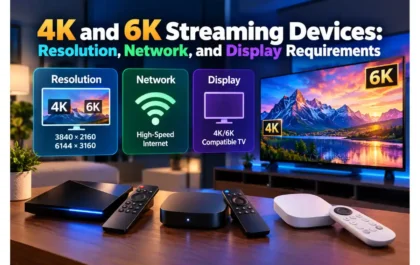
4K and 6K Streaming Devices: Resolution, Network, and Display Requirements
4K and 6K Streaming Devices High-resolution streaming has changed the way people experience movies, sports, documentaries, and other digital entertainment…

Creative Photo Editing: How Small Digital Details Make Images More Engaging
Introduction Digital photography has quietly become part of the way people talk to one another. They take pictures to hold…