Printer cartridges are a major part of the printing ecosystem, affecting print quality, operating costs, page yield, maintenance, and the overall ownership experience. Depending on the printer technology, users may work with liquid-ink cartridges, toner cartridges, standard or high-yield versions, original manufacturer supplies, compatible replacements, or remanufactured cartridges.
Computer Tech Reviews welcomes original contributions from technology writers, printer technicians, IT professionals, reviewers, office-technology specialists, and contributors with practical experience selecting, installing, testing, maintaining, or troubleshooting printer cartridges.
Our Cartridges Write for Us opportunity focuses specifically on printer consumables, including ink cartridges, toner cartridges, cartridge compatibility, page yield, replacement, storage, cost per page, OEM and third-party options, cartridge errors, recycling, and related printing technologies.
This contributor section is part of our broader Gadgets Write for Us hub and sits naturally within the printing ecosystem covered by our Printer Write for Us page.
Printer Cartridge Topics We Welcome
We welcome practical and educational articles that help readers understand printer cartridges, choose compatible consumables, interpret page-yield figures, calculate printing costs, replace cartridges correctly, improve print quality, and troubleshoot common cartridge problems.
Suitable topics include:
- Ink cartridges
- Toner cartridges
- Black and color cartridges
- Standard-yield cartridges
- High-yield cartridges
- OEM cartridges
- Compatible cartridges
- Remanufactured cartridges
- Refillable cartridges
- Cartridge compatibility
- Printer cartridge chips
- Page yield
- Cost per page
- Cartridge installation
- Cartridge replacement
- Cartridge storage
- Ink and toner handling
- Cartridge recycling
- Print-quality problems
- Cartridge troubleshooting
Explore Related Printer and Office Technology Write for Us Pages
What Is a Printer Cartridge?
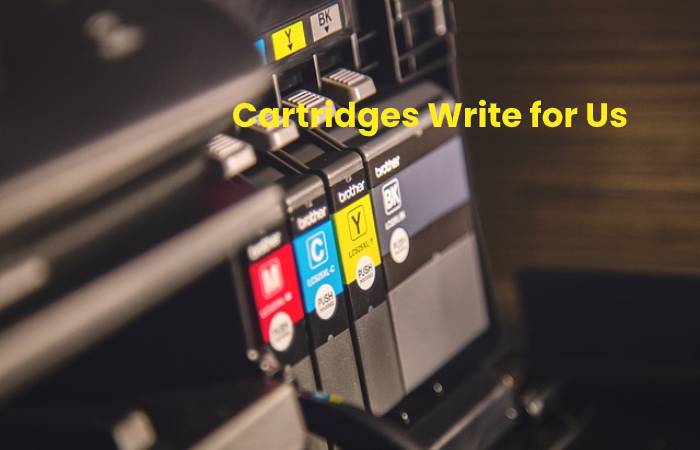
A printer cartridge is a replaceable or serviceable consumable used by a compatible printing system. Depending on the printer technology, the cartridge may contain liquid ink, powdered toner, or other components required to produce printed output.
Cartridge designs vary considerably between printer manufacturers and product families. Some printers use individual cartridges for each color, while others combine several colors into one cartridge. Laser printers may use toner cartridges with separate drum units or designs in which multiple components are integrated into the cartridge assembly.
Ink Cartridges
Ink cartridges contain liquid ink used by compatible inkjet printers. The ink is delivered through the printer’s ink system and print head to create text, graphics, or photographs on supported media.
We welcome articles about:
- Black ink cartridges
- Color ink cartridges
- Individual-color cartridges
- Tri-color cartridges
- Standard and high-yield ink cartridges
- Pigment and dye-based inks
- Cartridge installation
- Ink levels
- Cartridge storage
- Ink cartridge errors
- Page yield
- Photo printing
Articles where the printer technology itself is the main subject should use our Inkjet Printers Write for Us page.
Toner Cartridges
Toner cartridges contain powdered material used by laser and related electrophotographic printing systems. Depending on the printer design, a toner cartridge may operate with separate drums, developers, transfer components, and fusers, or some components may be integrated into a replaceable cartridge assembly.
We welcome articles about:
- Black toner cartridges
- Color toner cartridges
- Standard-yield toner
- High-yield toner
- Toner cartridge replacement
- Toner page yield
- Toner storage
- Toner cartridge errors
- Cartridge compatibility
- Cost per page
Articles concentrating on toner-based printing, drums, fusers, transfer systems, or laser-printer performance should use our Laser Printers Write for Us section.
Ink Cartridges vs. Toner Cartridges
Ink and toner cartridges serve similar purposes as printer consumables but work with fundamentally different printing technologies.
Ink cartridges contain liquid ink and are associated primarily with inkjet printing. Toner cartridges contain powdered toner used in laser and related electrophotographic printers.
We welcome comparisons involving:
- Printing technology
- Cartridge design
- Page yield
- Purchase price
- Cost per page
- Storage
- Replacement
- Print quality
- Color printing
- Text printing
- Maintenance
- Expected workloads
A useful comparison should explain the complete printing system rather than treating cartridge price alone as the deciding factor.
Black vs. Color Ink Cartridges
Some inkjet printers use a dedicated black cartridge together with a combined color cartridge, while others use separate cartridges for cyan, magenta, yellow, black, and potentially additional colors.
We welcome articles explaining how different cartridge configurations affect replacement, printing costs, photo output, maintenance, and user convenience.
Individual vs. Tri-Color Cartridges
An individual-color system allows a particular ink color to be replaced separately, while a tri-color cartridge contains several colors within one cartridge assembly.
We welcome balanced comparisons examining convenience, replacement frequency, printer design, ink usage, waste, and operating costs.
Standard-Yield vs. High-Yield Cartridges
Printer manufacturers may offer multiple cartridge capacities for the same printer family. Standard-yield cartridges generally contain less usable ink or toner, while high-yield cartridges are designed to produce more pages under defined test conditions.
A useful comparison should consider:
- Cartridge purchase price
- Rated page yield
- Cost per page
- Expected print volume
- Replacement frequency
- Printer compatibility
- Storage requirements
Higher yield does not automatically make a cartridge the right choice for every user, particularly where printing volumes are very low.
What Does XL Mean on a Printer Cartridge?
Some manufacturers use terms such as XL or high yield to distinguish cartridges designed to produce more pages than standard versions.
Writers should avoid assuming that naming conventions are identical across manufacturers. Articles should verify cartridge capacity, rated yield, printer compatibility, and manufacturer documentation for the specific product being discussed.
OEM Printer Cartridges
OEM cartridges are produced or supplied under the printer manufacturer’s brand for compatible printer models.
We welcome articles about OEM cartridge compatibility, page yield, print quality, installation, availability, warranty considerations, and operating costs.
Compatible Printer Cartridges
Compatible cartridges are third-party products designed to work with specified printer models.
We welcome balanced articles examining:
- Compatibility
- Purchase price
- Page yield
- Print quality
- Printer recognition
- Reliability
- Warranty considerations
- Environmental considerations
Claims about compatible cartridges should be based on documented testing or reliable evidence rather than assumptions that all third-party products perform identically.
Remanufactured Cartridges
A remanufactured cartridge is a previously used cartridge that has been collected, inspected, cleaned, serviced where necessary, refilled with ink or toner, and prepared for reuse.
The exact remanufacturing process and quality controls can vary between suppliers.
We welcome articles about remanufacturing processes, quality control, page yield, reliability, compatibility, environmental considerations, and cost.
OEM vs. Compatible vs. Remanufactured Cartridges
Comparisons between original, compatible, and remanufactured cartridges should go beyond purchase price.
Useful evaluation criteria include:
- Printer compatibility
- Purchase price
- Rated page yield
- Measured page yield
- Cost per page
- Print quality
- Color consistency
- Reliability
- Cartridge recognition
- Warranty considerations
- Supplier support
- Recycling and reuse
Writers should clearly identify whether conclusions are based on first-hand testing, manufacturer information, or independent research.
Refillable Ink Cartridges
Some printing systems support refillable cartridges or reservoirs. These systems can reduce the need to replace an entire cartridge whenever ink is depleted, but compatibility, refill procedures, ink formulation, maintenance, and printer design all matter.
We welcome articles about refillable cartridge systems when the advice follows manufacturer-supported or otherwise well-documented procedures.
Ink Tank Systems vs. Traditional Cartridges
Ink-tank printers use refillable reservoirs rather than relying exclusively on conventional disposable cartridges.
We welcome comparisons involving:
- Initial printer price
- Ink costs
- Print volume
- Cost per page
- Refilling
- Maintenance
- Storage
- Photo printing
- Home and office use
Articles primarily about inkjet printer architecture and ink-tank printer technology should use our Inkjet Printers Write for Us section.
Printer Cartridge Compatibility
Cartridge compatibility is one of the most important subjects for printer owners because cartridges that appear physically similar are not necessarily interchangeable.
Compatibility can depend on:
- Printer manufacturer
- Printer model
- Printer series
- Cartridge number
- Regional product variations
- Firmware
- Cartridge design
- Electronic identification
Writers should verify compatibility using reliable manufacturer documentation before recommending a cartridge for a specific printer.
How to Find the Correct Cartridge for a Printer
A useful cartridge-selection guide should begin with the exact printer model rather than relying only on appearance or brand.
Readers can be encouraged to verify:
- Exact printer model number
- Supported cartridge numbers
- Standard or high-yield options
- Black or color requirements
- Regional compatibility
- Manufacturer documentation
- Existing cartridge identification
Printer Cartridge Numbers
Manufacturers commonly use product numbers, families, or codes to identify cartridges designed for particular printers.
We welcome articles explaining how readers can locate and verify cartridge numbers without assuming that similar numbering systems indicate compatibility.
Printer Cartridge Chips
Some cartridges contain electronic components that allow the cartridge and printer to exchange information related to identification, compatibility, status, or consumable monitoring.
We welcome educational articles explaining cartridge electronics and printer communication at a high level.
Troubleshooting content should focus on legitimate compatibility and maintenance rather than instructions intended to defeat security, authentication, or manufacturer protection mechanisms.
Printer Cartridge Page Yield
Page yield is an estimate of how many pages a cartridge can produce under specified standardized test conditions.
Actual results may differ because of:
- Page coverage
- Photographs and graphics
- Color usage
- Print-quality settings
- Cleaning cycles
- Printing frequency
- Printer maintenance
- Environmental conditions
We welcome articles that help readers interpret page-yield figures rather than presenting rated yield as a guaranteed number of real-world pages.
What Affects Ink Cartridge Yield?
Ink cartridge life can vary significantly according to what is printed and how the printer is used.
Factors can include page coverage, photographs, graphics, print quality, color usage, cleaning cycles, print-head maintenance, and printing frequency.
What Affects Toner Cartridge Yield?
Toner yield can be influenced by page coverage, graphics, color use, print density, document type, printer settings, maintenance cycles, and other operating conditions.
Articles should distinguish standardized rated yield from measured real-world results.
How to Calculate Cartridge Cost Per Page
A basic cost-per-page estimate can be calculated by dividing the cartridge price by its rated page yield.
For example, if a cartridge costs $60 and has a rated yield of 3,000 pages, the theoretical toner or ink cost is $0.02 per page.
This calculation does not necessarily include paper, drums, print heads, fusers, maintenance kits, electricity, wasted pages, or other ownership expenses.
Writers should clearly explain the assumptions behind any cost-per-page calculation.
Cartridge Price vs. Long-Term Printing Cost
The cheapest cartridge at checkout is not necessarily the least expensive option over time.
We welcome articles comparing purchase price with:
- Page yield
- Cost per page
- Replacement frequency
- Print quality
- Reliability
- Printer compatibility
- Maintenance requirements
Printer Cartridge Installation
Cartridge installation procedures vary by printer and cartridge design.
We welcome beginner-friendly articles explaining how to:
- Identify the correct cartridge
- Prepare the printer
- Remove the old cartridge
- Remove required packaging from the replacement
- Handle the cartridge correctly
- Install the cartridge
- Confirm printer recognition
- Print a test page
- Check output quality
Model-specific installation instructions should follow manufacturer documentation.
Replacing Ink Cartridges
Ink cartridge replacement may involve opening the cartridge access area, allowing the carriage to move into its supported replacement position, removing the depleted cartridge, preparing the replacement, and installing it correctly.
Writers should avoid recommending force when a cartridge does not fit. An incorrect fit may indicate the wrong cartridge, incorrect orientation, or another compatibility issue.
Replacing Toner Cartridges
Toner replacement procedures differ between laser-printer designs. Some cartridges are separate from the drum, while others incorporate multiple imaging components.
We welcome guides that identify the exact printer and cartridge system and follow manufacturer-supported replacement procedures.
When Should a Printer Cartridge Be Replaced?
A printer may report low or depleted ink or toner, but replacement decisions can depend on printer design, output quality, cartridge monitoring, and manufacturer recommendations.
We welcome articles explaining low-consumable warnings, depleted-cartridge messages, print-quality symptoms, and replacement planning.
How to Store Printer Cartridges
Proper storage can help protect unused cartridges until they are required.
Storage recommendations should be based on the manufacturer’s instructions for the specific cartridge, but general considerations can include:
- Keeping cartridges in original packaging until needed
- Avoiding excessive heat
- Avoiding freezing conditions
- Keeping cartridges dry
- Protecting them from direct sunlight
- Avoiding unnecessary handling
- Following orientation recommendations where applicable
Ink Cartridge Storage
Ink cartridges can be sensitive to environmental conditions and handling. We welcome articles about unopened-cartridge storage, installed-printer considerations, long periods of printer inactivity, and manufacturer storage recommendations.
Toner Cartridge Storage
Toner cartridges should be stored according to manufacturer guidance and protected from unsuitable temperatures, moisture, direct sunlight, contamination, and unnecessary handling.
Articles should avoid suggesting procedures that could damage toner cartridges or expose users unnecessarily to toner.
Printer Cartridge Expiration and Shelf Life
Some printer consumables include manufacturing dates, warranty dates, expiration information, or recommended storage periods.
We welcome articles explaining these labels and how storage conditions can affect consumables. Writers should verify manufacturer-specific claims rather than applying one shelf-life figure to all cartridges.
Printer Cartridge Recycling
Used ink and toner cartridges contain plastics, metals, electronic components, residual consumables, and packaging materials that may be suitable for manufacturer take-back, recycling, or remanufacturing programs.
We welcome articles about:
- Manufacturer recycling programs
- Retail collection programs
- Cartridge remanufacturing
- Responsible disposal
- Packaging reduction
- Reuse
- Environmental considerations
Disposal and recycling options vary by region, so writers should identify the relevant location when discussing specific programs.
Printer Cartridges for Home Use
Home users may prioritize affordable replacement costs, occasional printing, color output, photographs, schoolwork, and convenient cartridge availability.
We welcome articles helping home users estimate their actual printing requirements before choosing between cartridge types and printer systems.
Printer Cartridges for Offices
Office environments may prioritize higher yields, predictable costs, reliable supply, multiple printers, standardized cartridge inventories, and reduced downtime.
We welcome articles about cartridge management for home offices, small businesses, schools, departments, and shared workplaces.
Printer Cartridges for Photo Printing
Photo printing can place different demands on ink systems because color reproduction, tonal range, supported media, and ink formulation become particularly important.
We welcome articles about photo-oriented ink sets, pigment and dye inks, cartridge configurations, paper compatibility, and cost per print.
Printer Cartridge Reviews and Testing
A useful cartridge review should explain exactly what was tested and under what conditions.
Where relevant, contributors should document:
- Printer make and model
- Cartridge brand and model
- OEM, compatible, or remanufactured status
- Standard or high-yield version
- Firmware version
- Driver version
- Paper type
- Print-quality setting
- Color or monochrome output
- Test documents
- Number of pages
- Page coverage where known
- Testing methodology
Clearly distinguish manufacturer specifications, independently measured results, and subjective impressions.
Testing Cartridge Page Yield
Page-yield testing requires a controlled methodology because different documents can consume very different amounts of ink or toner.
Writers should identify the test documents, printer, cartridge, print settings, page count, and methodology. If standardized testing procedures are referenced, they should be identified accurately.
Do not compare an independently measured yield directly with a manufacturer’s standardized yield without explaining differences in test conditions.
Testing Cartridge Print Quality
Print-quality comparisons should identify the printer, cartridge, paper, print settings, and source document.
Depending on the cartridge and printer, testing may consider:
- Text sharpness
- Black density
- Color consistency
- Photographs
- Gradients
- Fine lines
- Banding
- Streaks
- Smudging
- Backgrounding
Printer Cartridge Troubleshooting
Cartridge problems can involve compatibility, installation, electronic communication, ink or toner delivery, printer settings, firmware, print heads, drums, or other components.
We welcome troubleshooting articles about:
- Cartridge not recognized
- Incompatible cartridge messages
- Cartridge installed incorrectly
- Printer showing empty cartridge
- New cartridge not printing
- Ink cartridge not printing
- Toner cartridge not printing
- Faded output
- Streaks and lines
- Incorrect colors
- Cartridge leakage
- Toner-related defects
- Cartridge communication errors
- Page-yield concerns
Printer Says Cartridge Is Not Recognized
A cartridge-recognition error can result from incompatibility, incorrect installation, electrical contact problems, packaging that has not been fully removed, cartridge damage, firmware behavior, or another printer-specific condition.
We welcome systematic troubleshooting that begins by confirming the exact printer and cartridge models and then follows manufacturer-supported diagnostic steps.
Printer Says Cartridge Is Incompatible
An incompatible-cartridge message may indicate that the cartridge is not intended for the printer, belongs to another regional or product family, is installed incorrectly, or cannot communicate properly with the device.
Writers should verify compatibility rather than recommending methods intended to bypass legitimate printer protections.
New Ink Cartridge Not Printing
A newly installed ink cartridge may fail to produce output because of incorrect installation, remaining protective material, compatibility problems, print-head issues, ink-delivery problems, or other printer-specific conditions.
We welcome troubleshooting guides that use safe, supported diagnostic procedures.
New Toner Cartridge Not Printing
A replacement toner cartridge may fail because of installation, compatibility, shipping materials, cartridge recognition, drum configuration, or another printer-specific problem.
Articles should identify whether the printer uses a separate or integrated drum system before recommending component-related troubleshooting.
Printer Shows Empty Cartridge After Replacement
A printer may continue to display a consumable warning after replacement because of installation, recognition, compatibility, monitoring, firmware, or device-specific conditions.
We welcome articles that explain supported troubleshooting procedures without assuming the same reset process applies to every printer.
Faded Printing After Cartridge Replacement
Faded output after cartridge replacement can involve the cartridge, printer settings, print heads, drums, transfer components, paper, or other parts of the printing system.
We welcome articles that distinguish between inkjet and laser causes before recommending a solution.
Lines and Streaks After Cartridge Replacement
Lines or streaks can result from different causes depending on the printing technology. Inkjet systems may involve print heads or ink delivery, while laser systems may involve toner, drums, transfer components, fusers, or other imaging parts.
We welcome diagnostic guides that identify the printer technology before attributing the problem to the cartridge.
Cartridge Leakage
Damaged or leaking cartridges should be handled carefully and according to manufacturer guidance.
We welcome safety-conscious articles about identifying cartridge damage, protecting the printer and surrounding area, handling residual ink or toner appropriately, and determining when a cartridge should no longer be used.
Cartridges and Printer Maintenance
Not every print-quality problem is caused by the cartridge. Print heads, drums, fusers, transfer systems, rollers, paper, printer settings, and maintenance condition can all influence output.
We welcome articles that help readers distinguish cartridge problems from printer problems before unnecessarily replacing consumables.
Cartridges and Inkjet Printers
Ink cartridges form part of the broader inkjet printing system, which can also include print heads, ink delivery components, cleaning systems, and software controls.
For articles primarily about print heads, nozzle cleaning, inkjet printer technology, photo printing, or inkjet-specific troubleshooting, visit our Inkjet Printers Write for Us page.
Cartridges and Laser Printers
Toner cartridges operate as part of a larger electrophotographic system that can include drums, developers, transfer components, and fusers.
For articles primarily about laser-printing technology, drums, fusers, transfer systems, laser-printer speed, or laser-specific troubleshooting, visit our Laser Printers Write for Us page.
Cartridges, Printers, and Scanners
Cartridges are associated with the printing function of multifunction devices. Scanning itself does not require printer ink or toner because it captures information from a physical document and converts it into digital form.
Articles primarily about flatbed scanners, sheet-fed scanners, OCR, scanner resolution, document digitization, or scanning workflows should use our Scanner Write for Us section.
Other Office Technology Topics
Printer consumables form one part of a broader home and office technology environment that includes printers, scanners, computers, networking equipment, document tools, and smaller productivity devices.
Writers covering powered pencil sharpening, classroom and office use, sharpening mechanisms, safety features, maintenance, or choosing sharpening equipment can explore our Electric Pencil Sharpener Write for Us page.
What Makes a Strong Printer Cartridge Article?
A strong cartridge article should help readers understand printer consumables, choose compatible products, compare cartridge types, interpret page-yield information, calculate printing costs, install or store cartridges correctly, or solve a practical problem.
We prefer submissions based on practical experience, technical knowledge, documented research, reproducible testing, or clearly explained observations.
Your article should:
- Address a specific cartridge question, comparison, feature, or problem.
- Identify the exact printer when compatibility matters.
- Identify the cartridge model or number where relevant.
- Distinguish ink cartridges from toner cartridges.
- Use OEM, compatible, remanufactured, page-yield, and cost-per-page terminology accurately.
- Verify cartridge compatibility before recommending a product.
- Distinguish rated page yield from measured real-world yield.
- Explain calculation assumptions when discussing cost per page.
- Explain testing methodology when cartridge performance is compared.
- Clearly distinguish personal testing from research-based conclusions.
- Avoid attributing every print-quality problem to the cartridge.
- Support technical claims with reliable sources.
- Disclose relevant relationships with printer manufacturers, cartridge suppliers, retailers, or products.
Printer Cartridge Article Ideas You Can Pitch
- How do printer cartridges work?
- Ink cartridges vs. toner cartridges
- Standard vs. high-yield cartridges
- What does XL mean on a printer cartridge?
- OEM vs. compatible printer cartridges
- OEM vs. remanufactured cartridges
- Compatible vs. remanufactured cartridges
- Individual vs. tri-color ink cartridges
- Ink cartridges vs. ink tanks
- How to find the correct cartridge for a printer
- How printer cartridge numbers work
- How cartridge chips communicate with printers
- What does printer cartridge page yield mean?
- What affects ink cartridge page yield?
- What affects toner cartridge page yield?
- How to calculate cartridge cost per page
- How to compare printer cartridge costs
- How to replace an ink cartridge
- How to replace a toner cartridge
- How to store unused printer cartridges
- Do printer cartridges expire?
- How to recycle printer cartridges
- How to test cartridge page yield
- How to compare cartridge print quality
- Why is my printer not recognizing a new cartridge?
- Why does my printer say the cartridge is incompatible?
- Why is a new ink cartridge not printing?
- Why is a new toner cartridge not printing?
- Why does my printer still show an empty cartridge?
- Why is printing faded after replacing a cartridge?
- What causes lines or streaks after cartridge replacement?
- How to determine whether a cartridge or printer is causing poor print quality
Content We Are Unlikely to Accept
This page is specifically about printer cartridges and printing consumables. We are not looking for articles about video-game cartridges, vaping cartridges, razor cartridges, water-filter cartridges, air-purifier cartridges, coffee-machine filters, ammunition, or other unrelated meanings of the word “cartridge.”
We are also not looking for articles created primarily to advertise a cartridge supplier, printer manufacturer, retailer, refill service, repair company, or backlink. Products and services can be discussed when genuinely relevant, but the article should provide independent value to readers.
We may reject submissions that make unsupported page-yield claims, recommend cartridges without verifying printer compatibility, present manufacturer-rated yields as guaranteed results, or repeat cartridge-related keywords unnaturally.
Do not claim that you personally tested a cartridge, page yield, print quality, cost per page, color accuracy, reliability, or another characteristic unless you actually performed that test.
AI tools may assist with research, planning, organization, or drafting, but authors remain responsible for the final article. Cartridge compatibility, page yields, printer models, cartridge numbers, firmware information, measurements, performance claims, quotations, statistics, and factual statements should be independently verified before submission.
Unedited or unverified AI-generated articles will not be accepted.
Editorial Guidelines
- Submit original content that has not been published elsewhere.
- Write a minimum of 800 words for a standard article.
- Use a clear title, introduction, descriptive headings, and short paragraphs.
- Write naturally for readers rather than search engines.
- Avoid unnecessary promotional or sales-focused language.
- Verify printer models, cartridge numbers, cartridge types, and compatibility.
- Use ink, toner, OEM, compatible, remanufactured, page-yield, and cost-per-page terminology accurately.
- Distinguish rated page yield from independently measured results.
- Support factual claims, measurements, and statistics with reliable sources.
- Clearly distinguish personal testing from research-based conclusions.
- Explain testing methodology when cartridge comparisons are included.
- Identify the printer, cartridge, paper, and print settings when they materially affect results.
- Do not recommend unsupported methods for bypassing cartridge authentication, printer security, or other protective mechanisms.
- Disclose supplied review products, sponsorships, employment, affiliate relationships, or other relevant commercial connections.
- Use original or properly licensed photographs, screenshots, diagrams, charts, and other media.
- Proofread and fact-check the complete article before submission.
- Our editorial team may edit submissions for accuracy, clarity, formatting, and readability.
How to Submit a Cartridges Guest Post
Before submitting a complete article, you may send us a short proposal explaining what you want to cover and why the topic would be useful to Computer Tech Reviews readers.
Your proposal can include:
- Your proposed article title
- The cartridge topic involved
- The printer make and model where relevant
- The cartridge brand and model where relevant
- Whether the cartridge is OEM, compatible, or remanufactured
- Whether it is standard or high yield
- The question or problem the article will address
- A proposed outline
- The rated page yield where relevant
- The paper and print settings where relevant
- The firmware or driver version where relevant
- The testing methodology if measurements are included
- Whether you personally tested the cartridge
- Links to relevant writing samples
- Details of supplied products, sponsorships, affiliate relationships, or other commercial connections
Send your proposal or completed article to contact@computertechreviews.com.
For broader printing topics, visit our Printer Write for Us page. Articles primarily about toner-based printer technology belong in our Laser Printers Write for Us section, while liquid-ink printer technology belongs in our Inkjet Printers Write for Us section. Document-digitization topics can use our Scanner Write for Us page, while broader consumer and office hardware topics can use our Gadgets Write for Us hub.
Frequently Asked Questions
Can I submit a printer cartridge guest post?
Yes. We welcome original articles about ink cartridges, toner cartridges, cartridge compatibility, page yield, cost per page, installation, replacement, storage, recycling, reviews, and troubleshooting.
What is the difference between Printer and Cartridges Write for Us?
Printer Write for Us covers the complete printer ecosystem, including printer technologies, connectivity, paper handling, buying guides, maintenance, and troubleshooting. Cartridges Write for Us focuses specifically on ink and toner consumables, compatibility, page yield, replacement, storage, costs, and cartridge-related problems.
Can I write about ink cartridges?
Yes. We welcome articles about black and color ink cartridges, standard and high-yield options, cartridge compatibility, replacement, page yield, storage, cost per page, and troubleshooting.
Can I write about toner cartridges?
Yes. Articles can cover toner cartridge technology, compatibility, standard and high-yield toner, replacement, storage, page yield, cost per page, and toner-cartridge problems.
What is the difference between Cartridges and Inkjet Printers Write for Us?
Cartridges Write for Us focuses on the replaceable consumable itself. Inkjet Printers Write for Us covers the broader inkjet system, including print heads, ink delivery, printer hardware, photo printing, connectivity, performance, maintenance, and troubleshooting.
What is the difference between Cartridges and Laser Printers Write for Us?
Cartridges Write for Us covers toner as a consumable, while Laser Printers Write for Us covers the complete laser-printing system, including drums, fusers, transfer components, printer performance, connectivity, maintenance, and laser-specific troubleshooting.
Can I compare OEM and compatible cartridges?
Yes. We welcome balanced comparisons of OEM, compatible, and remanufactured cartridges. Claims about page yield, print quality, reliability, and compatibility should be supported by actual testing or reliable evidence.
Can I write about cartridge page yield?
Yes. Articles can explain rated yield, standardized testing, real-world variables, cost-per-page calculations, and the factors that influence ink or toner consumption.
Can I write about cartridge troubleshooting?
Yes. We welcome articles about unrecognized cartridges, incompatibility messages, new cartridges not printing, incorrect consumable levels, faded output, lines, streaks, leakage, and other cartridge-related problems.
Can I write about scanners?
Scanning can be mentioned when discussing multifunction printers, but scanners do not normally use printer ink or toner to perform the scanning function. Articles primarily about document scanning, OCR, scanner resolution, or digitization should use our Scanner Write for Us page.
Can I submit cartridge reviews?
Yes. Reviews should identify the printer, cartridge model, cartridge type, paper, print settings, rated yield, and testing methodology where relevant. Supplied products and commercial relationships should be disclosed.
Do I need to personally test the cartridge?
Not for every educational article. Research-based content can rely on manufacturer documentation and credible independent sources. However, you should not describe page yield, print quality, reliability, color performance, or another characteristic as personally tested unless you actually conducted the test.
Can I submit articles about game cartridges or other types of cartridges?
No. This contributor page is specifically focused on printer cartridges and printing consumables. Articles about game cartridges, vaping cartridges, filter cartridges, razor cartridges, or unrelated cartridge technologies are outside the scope of this page.
Can I submit AI-assisted content?
AI tools may assist with research, planning, or drafting, but the author remains responsible for the finished article. Cartridge compatibility, printer models, page yields, cartridge numbers, measurements, performance claims, quotations, statistics, and factual statements should be independently verified before submission.
Recent Posts
M4A vs MP3 for Transcription: What Actually Changes the Transcript
M4A vs MP3 for Transcription Comparing M4A vs MP3 for transcription is close to a non-question, and the reason is…
The Patch Window Problem: Why Small IT Teams Fall Behind on Updates
The Patch Window Problem This Article is a part of Cybersecurity Guides and Best Practices Every breach report that mentions…