
How AI Is Changing the Creative Workflow
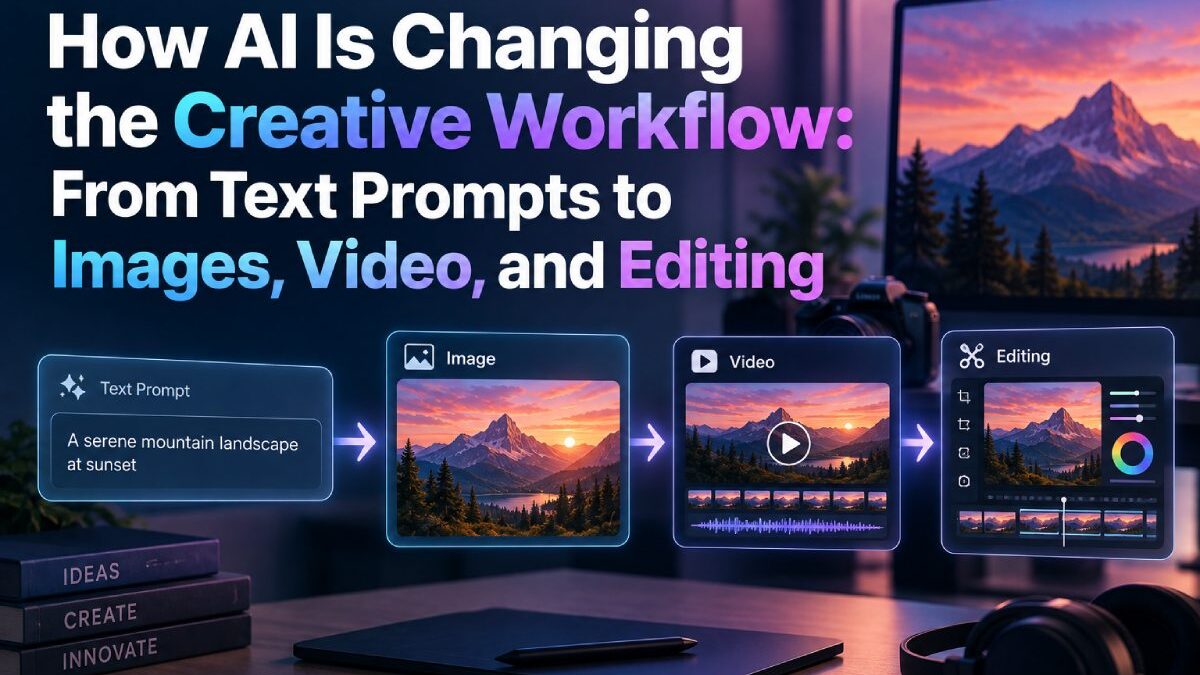
Creating visual content used to mean moving between several different tools. A writer might start with a text prompt, switch to an image generator, move the result into a video application, and then open another editor to make the final adjustments.
That workflow is changing.
The rise of generative AI is creating a new kind of creative stack in which text, images, video, and editing can become connected parts of the same production process. Instead of thinking about AI image generation and AI video generation as separate activities, creators can treat them as stages of one continuous workflow.
For creators, marketers, designers, and small teams, this approach can make experimentation faster and reduce the friction between having an idea and turning it into usable content.
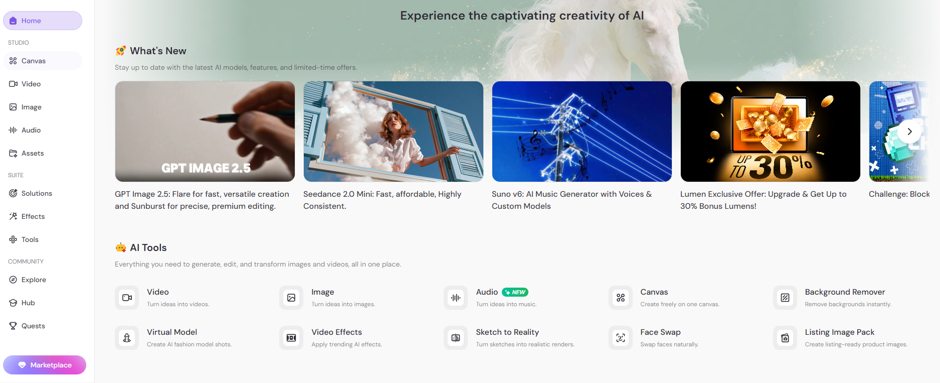
Table of Contents
What Is an AI Creative Stack?
An AI creative stack is essentially a collection of AI-powered capabilities used throughout the content-production process.
A typical workflow might look like this:
Text prompt → AI Image → AI editing → AI Video → Final content
The text prompt establishes the creative direction. An AI Image tool can turn that idea into a visual concept. Editing tools can refine the result, while an AI Video workflow can transform a static image into moving content.
The advantage is not simply having more AI tools. The real benefit comes from connecting these capabilities.
Instead of starting from scratch every time, creators can reuse an existing visual as the foundation for the next stage.
From Text to AI Image
Text prompts provide one of the simplest ways to communicate a visual idea.
A creator can describe a product, character, environment, lighting setup, or artistic direction without manually constructing the entire scene. AI can then interpret those instructions and generate visual variations.
For example, a marketing team developing a campaign for a new pair of headphones could start with a prompt describing:
- A premium wireless headset
- A futuristic studio environment
- Soft cinematic lighting
- A clean commercial composition
- A dark modern color palette
The resulting AI Image can become more than a standalone picture. It can serve as a creative reference for the rest of the campaign.
This makes AI Image generation particularly useful during early-stage concept development, where creators often need to explore several visual directions quickly.
From AI Image to AI Video
Static images are increasingly becoming starting points for video content.
Rather than filming every scene from scratch, creators can use an existing image as a visual foundation and describe how they want it to move.
For example, the headphone image above could become a short product animation. The camera could slowly move around the product while reflections change across the surface and the background remains visually consistent.
This is where an AI Video Generator can become part of the same creative workflow.
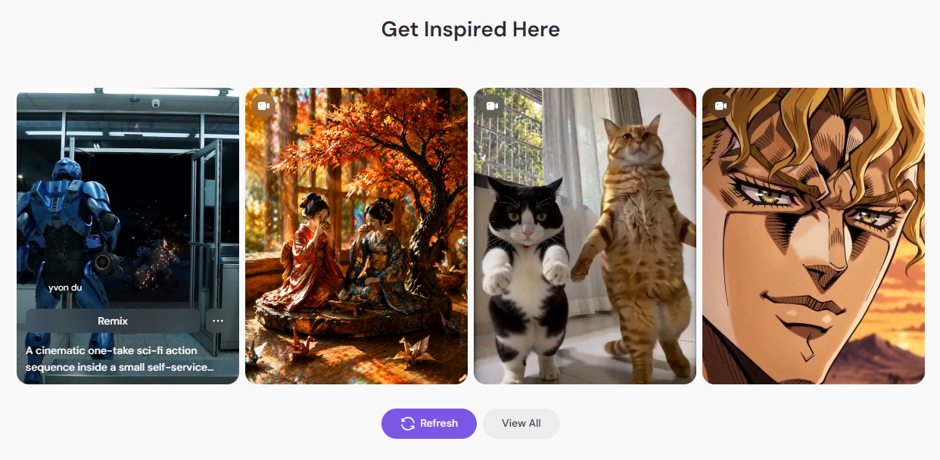
The creator does not necessarily need to develop a completely new concept for the video. Instead, the existing image provides the visual foundation while AI generates motion around it.
This approach can be useful for:
- Social media videos
- Product demonstrations
- Advertising concepts
- Short-form promotional content
- Storyboards
- Presentation visuals
- Creative experiments
The process is especially useful when the goal is to test an idea before investing in a traditional production workflow.
Why an All-in-One Creative Workspace Matters
Using separate tools for every stage can introduce unnecessary friction.
A creator may need to download an image, upload it to another service, rewrite the original prompt, adjust the visual style, and then move the resulting video into another editor.
Every additional transition creates another opportunity for inconsistencies.
An all-in-one AI creative workspace takes a different approach.
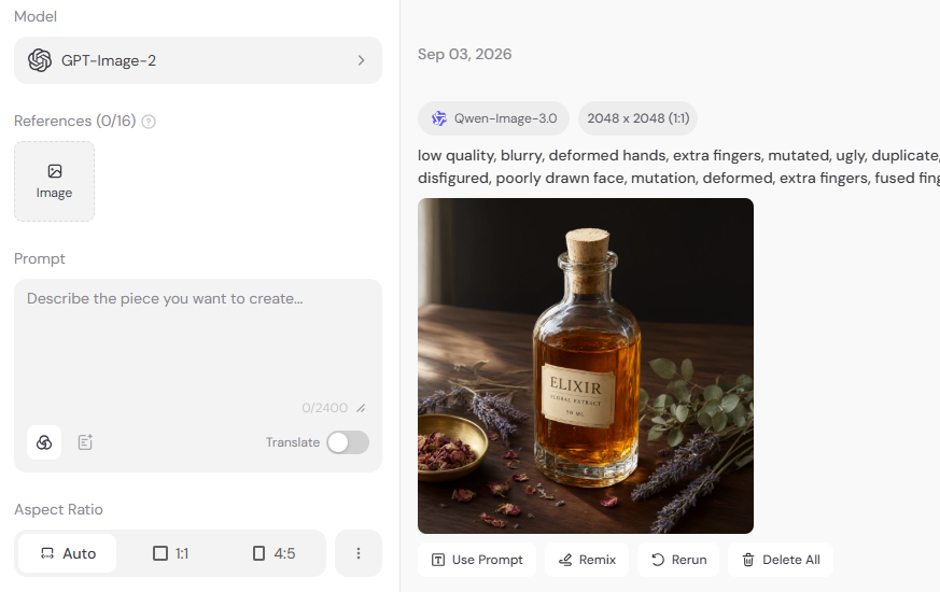
PicLumen is designed as a broader creative environment rather than a tool focused on only one generation task. Its role in the AI creative stack is to bring different stages of visual creation closer together—from developing an initial idea and generating AI Image content to exploring AI Video and refining visual assets.
This makes the platform useful for creators who do not want their workflow to revolve around a collection of disconnected applications.
The Importance of Visual Consistency
One of the practical challenges of generative AI is maintaining a consistent creative direction.
Imagine creating a campaign featuring the same character across five images. If the character’s clothing, facial features, proportions, or environment change dramatically between generations, the resulting campaign can feel disconnected.
The same issue can appear when moving from image creation to video.
A useful AI creative workflow therefore needs to consider not only generation quality but also how assets can be reused and developed.
Starting with a strong visual reference can help creators establish a consistent foundation before creating additional content.
This is particularly valuable for:
- Brand campaigns
- Product launches
- Character-driven storytelling
- Social media series
- E-commerce content
- Digital advertising
AI Editing Is Still Part of the Creative Process
Generation does not eliminate the need for editing.
In practice, creators often need to remove unwanted objects, change backgrounds, adjust compositions, refine details, or adapt an asset to different formats.
This is why the modern AI creative stack should be viewed as a loop rather than a straight line:
Generate → Edit → Refine → Generate again
A creator might generate an AI Image, remove or replace an element, create another variation, and then turn the refined image into AI Video.
The ability to move back and forth between generation and editing can be more useful than simply producing a single high-quality output.
One Creative Idea Can Become Multiple Assets
Another major advantage of this workflow is content repurposing.
Consider a fictional product campaign.
One original concept could become:
Text prompt
↓
AI Image for a website
↓
Alternative AI Images for social media
↓
AI Video for an advertisement
↓
Edited versions for different platforms
Instead of treating every asset as a separate project, the creator can build an entire content package around the same creative direction.
This can be especially valuable for small marketing teams that need to produce multiple formats without maintaining a large production pipeline.
Choosing an AI Creative Workflow
Not every creator needs the same level of complexity.
Someone who only needs occasional images may prefer a dedicated AI Image generator. A professional video creator may need advanced controls specifically designed for production.
However, creators who regularly move between images, video, and editing may benefit from a broader workspace.
Three questions can help determine whether an all-in-one approach makes sense:
1. Can the workflow start from a simple idea?
The easier it is to move from a text concept to a visual asset, the faster creators can experiment.
2. Can existing assets be reused?
The ability to take an existing image and develop it further can reduce repetitive work.
3. Can different content formats be created from the same concept?
A useful creative workflow should make it easier to turn one idea into multiple deliverables instead of forcing creators to rebuild each asset independently.
The AI Creative Stack Is Becoming a Workflow, Not a Tool
The most important shift in generative AI may not be the arrival of another standalone generator. It is the movement toward connected creative workflows.
Text can become an image. An image can become video. Both can be edited, refined, and repurposed into different forms of content.
That is the direction represented by all-in-one creative workspaces such as PicLumen.
For creators, the goal is not simply to generate more content. It is to reduce the distance between an initial idea and a finished creative asset.
As AI Image, AI Video, and AI-powered editing continue to develop, the creative stack will increasingly be defined by how well these capabilities work together.