
This Article is a part of
Computer Vision Resource Center
Stroll through the new e-gate at the airport, and one camera will check your passport picture against the real thing for a second or so, then the gate will open. Stroll past a shop window where there‘s a networked camera behind, and may be your face is already comparing itself to a watchlist you (or I) never consented to. Both of these are “facial recognition.” Almost nothing else about them is the same — not the math, not the failure mode, not the law that governs them, and not what happens to you if the system gets it wrong.
That gap is the whole story of facial recognition in 2026. The technology spent its first decade chasing a single, undifferentiated goal: recognize any face, anywhere, against anything. It has spent the last two years walking that ambition back in favor of something narrower and, frankly, more honest — tightly scoped verification systems that know exactly what question they’re answering and how confident they need to be before they answer it.
Here‘s all that you need to know: how a single photograph turns into a string of numbers in order to allow it to be fed into a computer, how a machine learning model‘s loss function is much more critical than what most specification sheets suggest, how an AI is attempting to distinguish between a live person and a picture or a deepfake image, why performance continues to remain so segregated between demographically delineated groups, and what you are actually required to do with the EU AI Act, the Illinois BIPA, and China PIPL today as opposed to what you read in a blog post in 2023. If you are building, analyzing, or looking to simply comprehend a facial recognition system, this is where to begin.
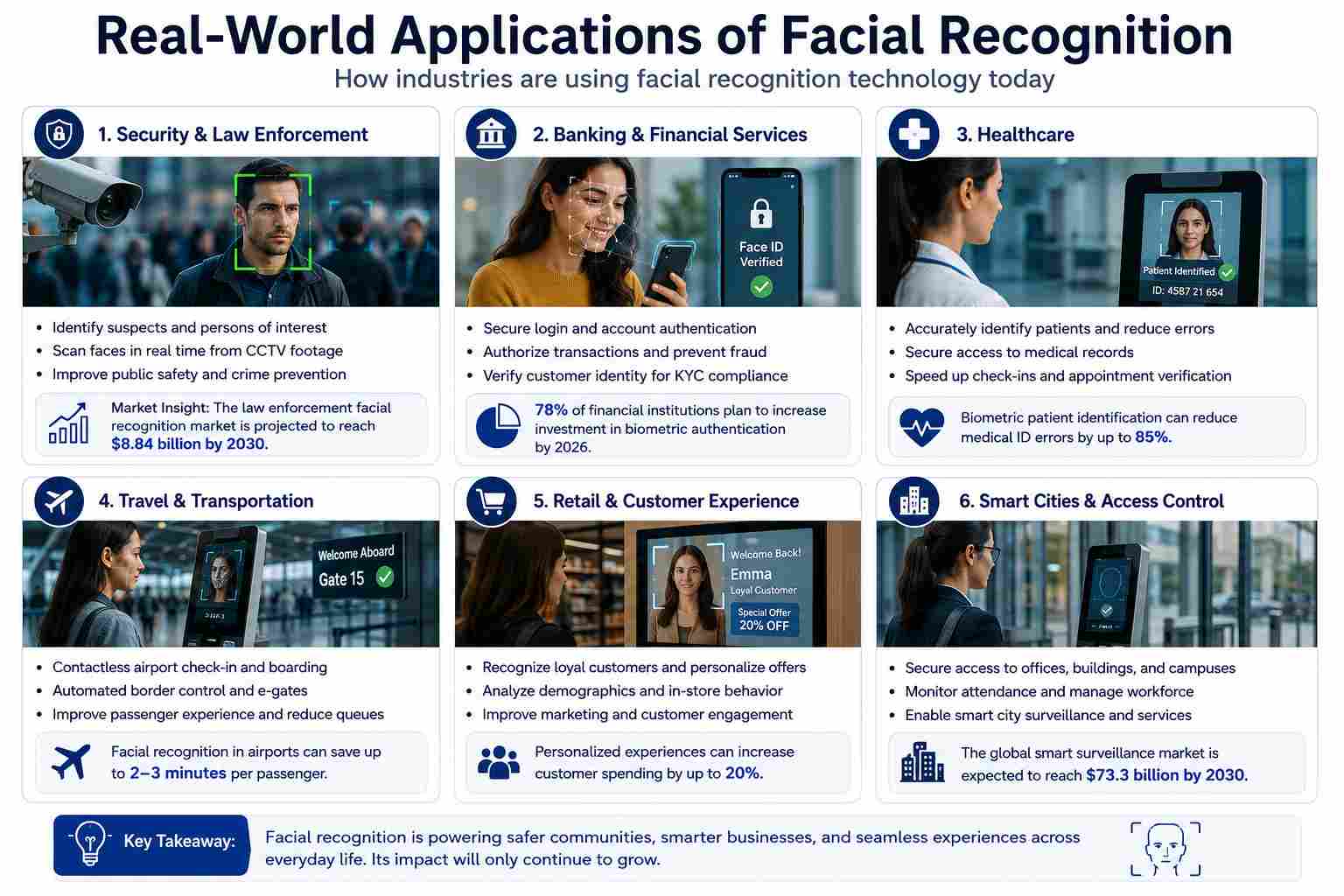
Table of Contents
Why Facial Recognition Matters Today
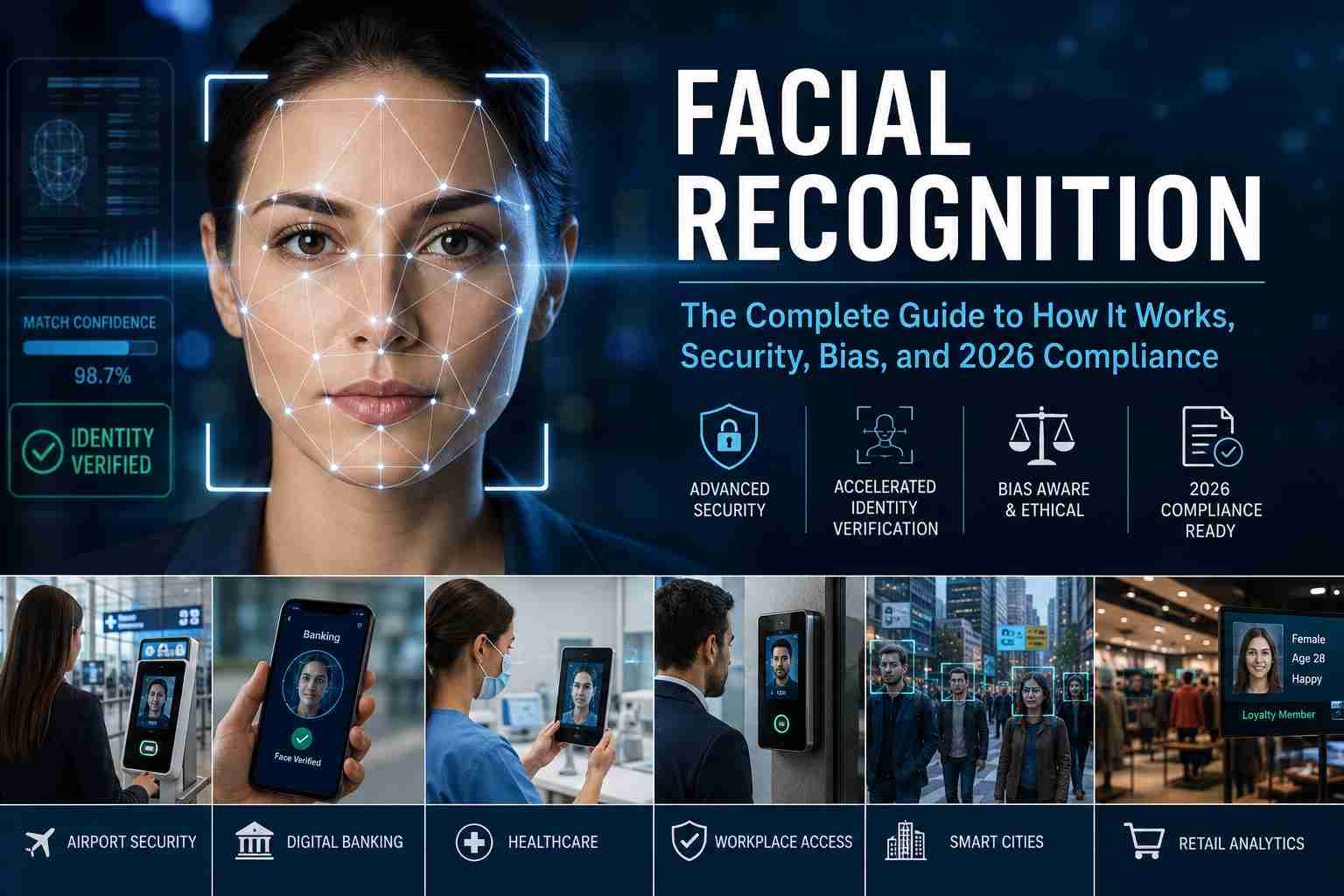
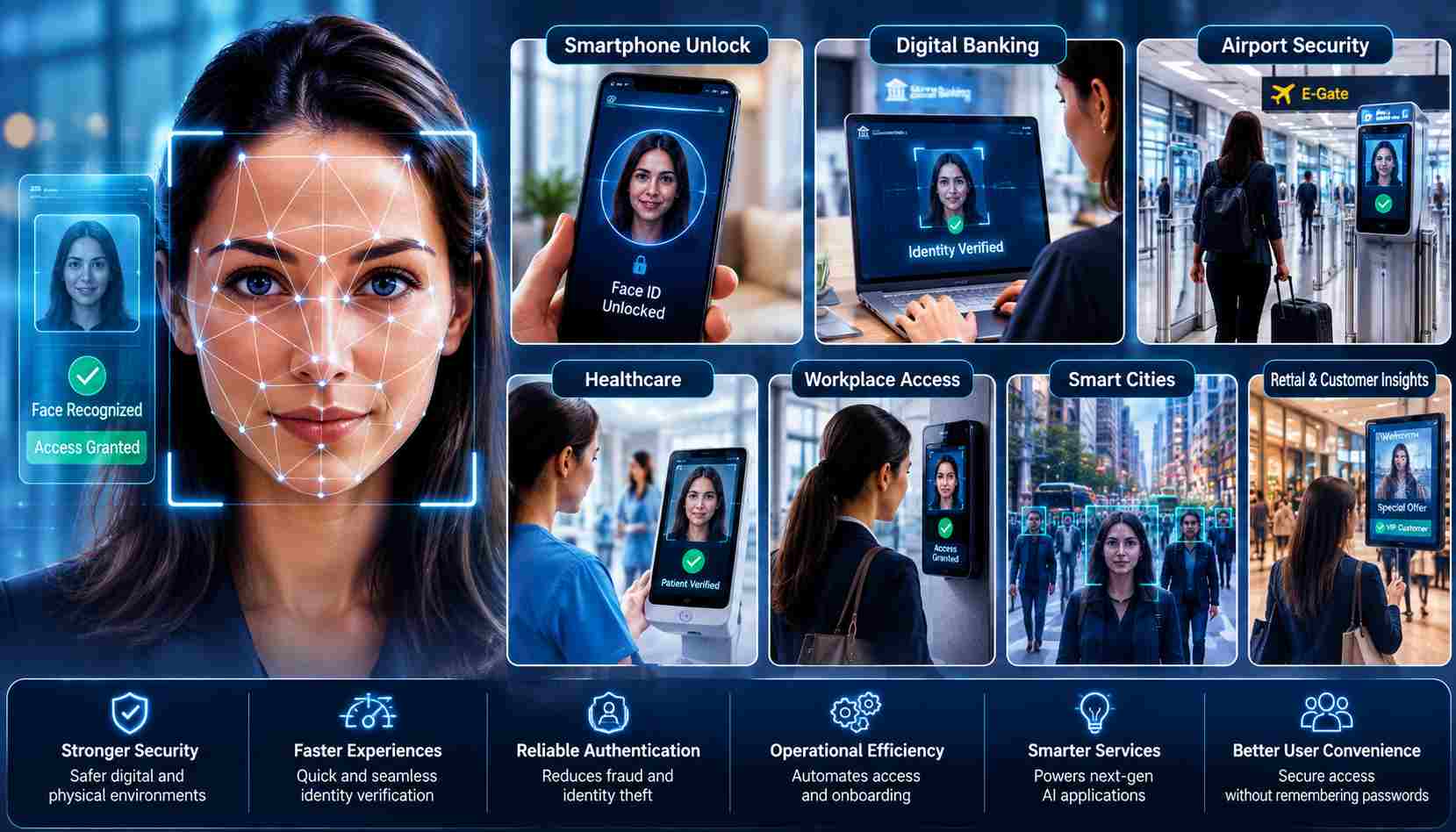
Today, facial recognition is ubiquitous. It’s no longer something only used to unlock your phone. It is used in digital banking and online ID checks, to speed you through airport e-gates, ensure the right patients are treated at hospitals, make access control to your workplace more secure, detect and prevent fraud in financial services and is a key part of many AI-powered ‘smart city’ projects. With more and more organizations adopting computer vision and biometric AI around the world, facial recognition has become one of the most widely-used and most heavily legislated types of AI. It’s not just AI engineers or security teams that need to understand how it works, where it is reliable and where it isn’t which is why facial recognition is now crucial knowledge for all businesses, policymakers and consumers.
Facial Recognition at a Glance
| Topic | Explanation |
| Technology Type | Applied computer vision / biometric AI |
| Core Technical Distinction | 1:1 verification vs. 1:N identification |
| Dominant Architectures | CNN and Vision Transformer hybrids trained with margin-based loss functions |
| Security Layer | Liveness detection / Presentation Attack Detection (ISO/IEC 30107) |
| Best-Documented Weakness | Demographic accuracy gaps (Gender Shades, NIST FRVT) |
| Governing Law (varies by region) | EU AI Act, Illinois BIPA, China’s PIPL |
What “Facial Recognition” Actually Means — and Why the Question “How Accurate Is It?” Is Incomplete
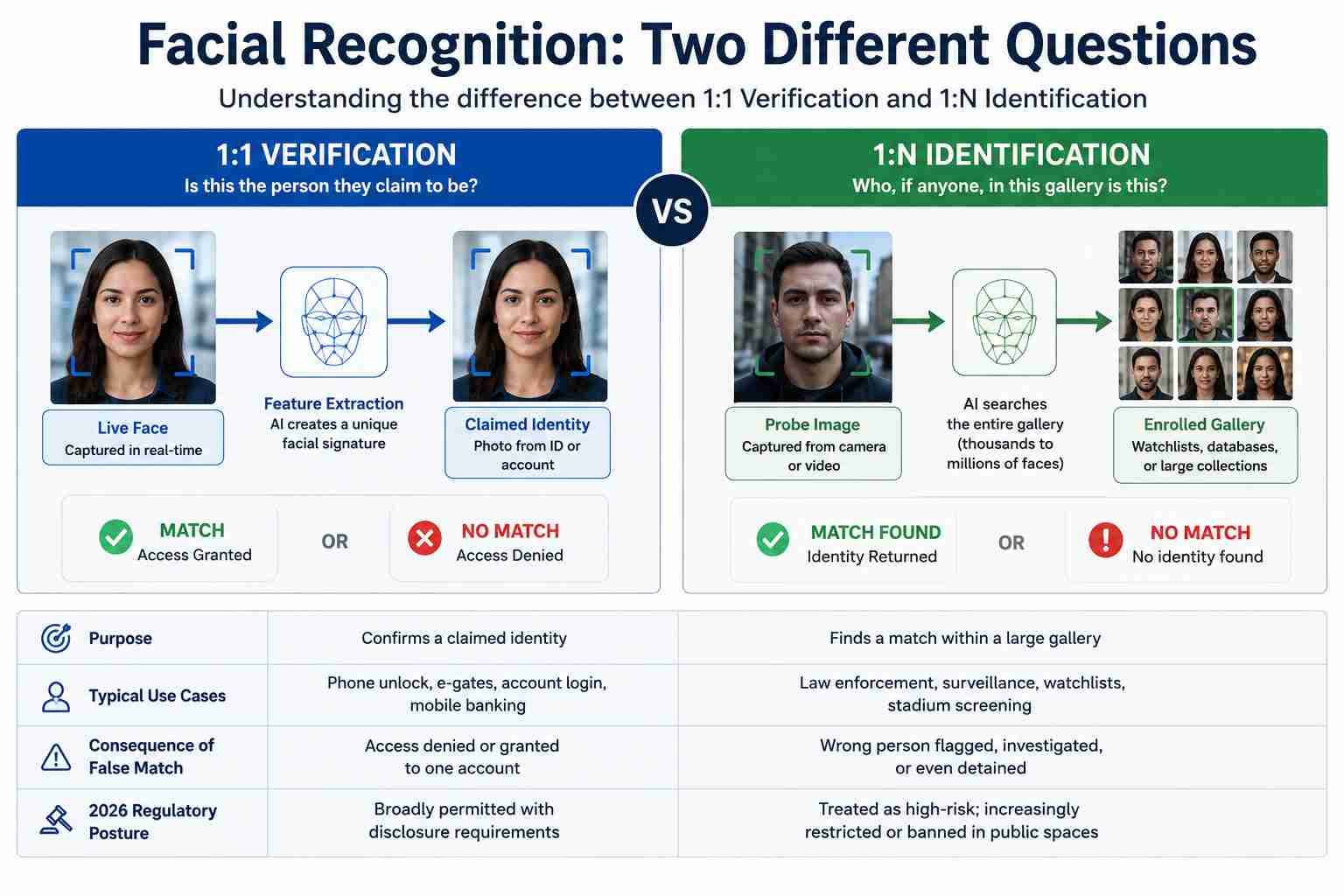
Facial recognition is the process of converting a photograph or video frame of a face into a numerical descriptor, then comparing that descriptor against one or more stored descriptors to answer an identity question. That’s the whole mechanism. What changes everything is which identity question is being asked, and that comes down to a distinction the industry now treats as foundational: 1:1 verification versus 1:N identification.
1:1 verification compares a live face against a single claimed identity — the face on your phone’s unlock screen, the face on your passport chip at an e-gate, the face tied to your account when you verify a fraud alert with your bank. There’s one candidate. The system either confirms it’s you or it doesn’t. Error rates for well-designed 1:1 systems, under controlled lighting and cooperative subjects, are now low enough that several major platforms treat face verification as a primary authentication factor rather than a novelty.
1:N identification is a different animal entirely. It takes a face and searches it against an enrolled gallery that might contain thousands or millions of entries — a police database, a stadium watchlist, an airport’s “persons of interest” list. There’s no single correct answer guaranteed to exist in the gallery, the search space is enormous, and a false positive doesn’t just deny you access — it can point law enforcement at the wrong person. This is the category where nearly every documented harm involving facial recognition, including the wrongful arrests covered later in this guide, has occurred.
| 1:1 Verification | 1:N Identification | |
| Question being answered | “Is this the person they claim to be?” | “Who, if anyone, in this gallery is this?” |
| Typical use case | Phone unlock, e-gates, account recovery, mobile banking | Police investigations, watchlists, large-venue screening |
| Consequence of a false match | Access denied or granted to one account | Wrong person flagged, investigated, or detained |
| 2026 regulatory posture | Broadly permitted with disclosure requirements | Treated as high-risk; increasingly restricted or banned in public spaces |
The bottom-line: if a vendor says “face recognition is 99% accurate” ask them which of these two operations they mean, with what sort of image input, and at what gallery size? Those numbers don‘t mean the same thing in each case; vendors have every reason to cite the more favourable.
How a Camera Turns a Face Into Math
Before Recognition Comes Detection
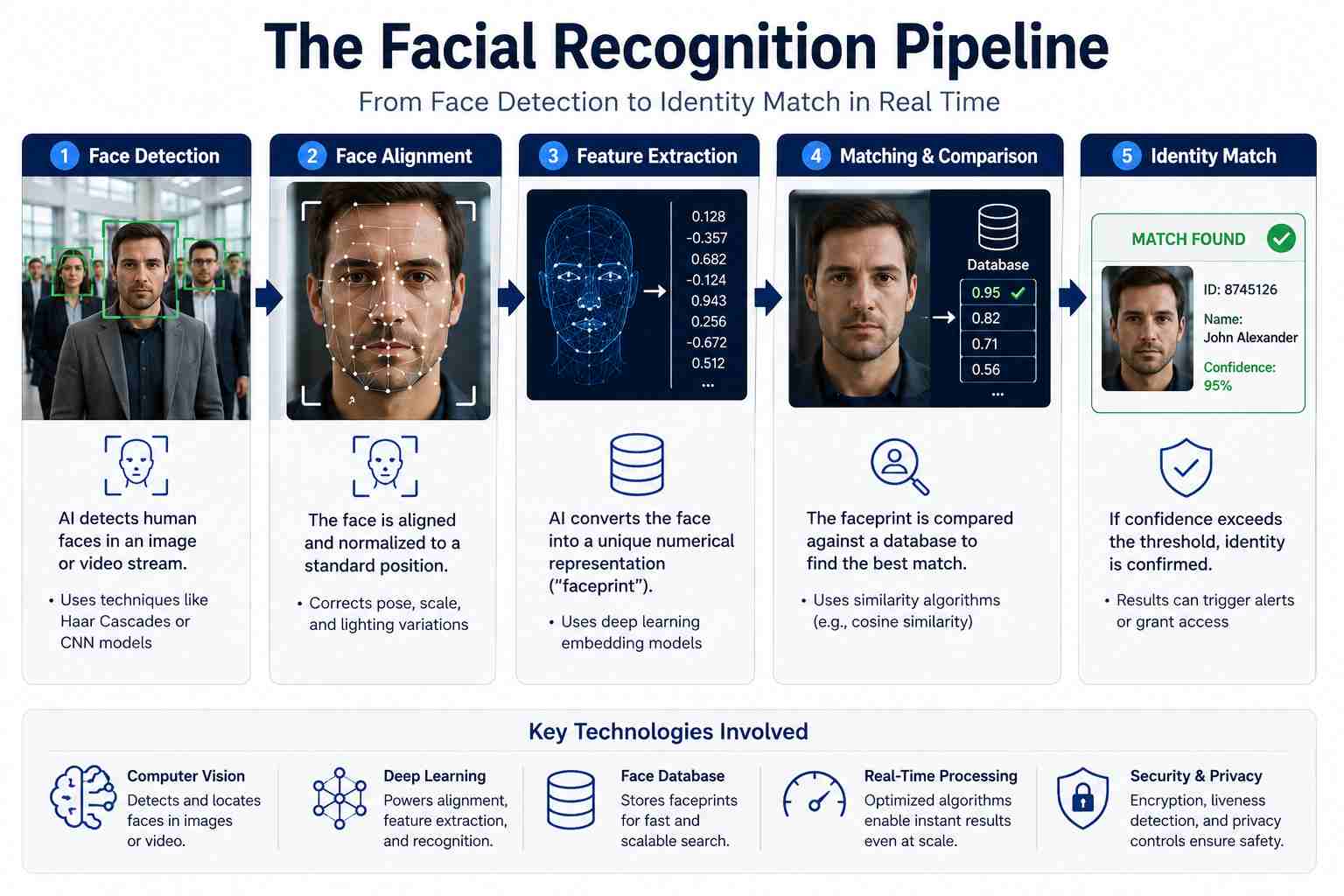
Prior to facial identification, a system must detect the face. All facial recognition processes start with face detection: an AI analyses a captured still image or video frame to identify the presence of a human face, and distinguish it from the surrounding landscape. State of the art computer vision models are capable of identifying numerous faces at once, even under dense crowds, while ignoring other objects.
Once the face has been located, the process of face alignment begins. During this process, the shape of the jaw, the eyes, nose and mouth are searched and the image can be scaled, place into the same position and rotated accordingly. This reduces the influences such as tilt, camera angle, enlarging/reducing and pose.
It is not until the face is detected and aligned that the system begins feature extraction. This involves applying deep learning models to derive a numerical embedding of the normalized face, which can then be compared to a database of enrolled identities. If the detection stage misses the face or the alignment is inaccurate, recognition accuracy often suffers regardless of how advanced the underlying recognition model may be.
Related: Learn more about how AI locates people and objects in images in our Object Detection guide.
All modern systems whether based on a CNN, a Vision Transformer, or even more and more a combination of both do roughly the same thing: they take a face and lay it out as a point in some high-dimensional vector space (generally a hundred and twenty-eight or five hundred and twelve dimensional spaces). Images of the same person should ideally be laid out close to each other in that space. Two photos of different people should land far apart. Recognition, at that point, becomes a distance calculation rather than a lookup table.
We cover the CNN-versus-Vision-Transformer architecture debate in full in our computer vision guide, so we won’t re-litigate it here — what matters for facial recognition specifically is how the model is trained to arrange that vector space, because that choice determines almost everything about real-world performance.
Triplet Loss vs. Angular Margin Loss
Two training objectives have shaped the field more than any others.
Triplet Loss Its implementation by the people from Google FaceNet is centered around learning with triplets: anchor image, positive image (same person as anchor image) and negative image (different person). The loss function pushes the anchor-positive distance down and the anchor-negative distance up, in ordinary Euclidean space. It works well, but “semi-hard” triplet mining — finding negative examples that are difficult enough to be useful without being so difficult that training collapses — is computationally expensive, and the resulting embeddings are noticeably more sensitive to pose changes than what came after.
Additive Angular Margin Loss (ArcFace) pushes the problem into a geometric space. Instead of directly calculating in plain Euclidean space, ArcFace encourages tighter class clusters on a hypersphere by projecting the embeddings onto it and directly applying an angular margin penalty against the target class during training. And for it to work, the closer together those class clusters held up regardless of different ages and angles, a lot better than triplet-training could guarantee, and that‘s largely how the successor ArcFace (and its variants CosFace, AdaFace and ElasticFace) became the de facto standards for production face recognition after 2019.
| Triplet Loss (FaceNet) | Additive Angular Margin Loss (ArcFace) | |
| Geometric basis | Euclidean distance between embeddings | Angular distance on a hypersphere |
| Strength | Strong performance on clean, frontal, well-lit imagery | More consistent across age and pose variation; tighter class boundaries |
| Weakness | Expensive semi-hard triplet mining; sensitive to pose | Performance still degrades on severely degraded, low-resolution surveillance footage |
Neither loss function fully solves the hardest real-world case: identifying someone from a distant, poorly lit, low-resolution surveillance frame. That gap has pulled in a separate line of research — approaches like SFace’s sigmoid-constrained training — aimed specifically at benchmarks built from degraded footage, such as QMUL-SurvFace. It’s a reasonable rule of thumb that any vendor accuracy number quoted without specifying the image quality it was measured on tells you very little about how that system will perform on an actual security camera feed.
Mask-wearing produces a related but distinct problem: it removes roughly the lower half of the discriminative signal a model relies on. A 2023 study published in Algorithms (Akingbesote et al.) evaluated a Pareto-optimized version of FaceNet — combining targeted data preprocessing with an optimization approach that balances accuracy against inference speed — and found it improved on the original FaceNet’s roughly 94% baseline accuracy across both masked and unmasked test conditions, while also producing a smaller, faster model. That’s a meaningful academic result, not a guarantee every masked-face deployment will hit the same number; dataset composition and camera conditions still swing outcomes considerably.
Liveness Detection: Proving the Face Is Actually There
By 2026, industry consensus has settled on a hard rule: a face match without a verified liveness check is not a secure authentication event. This is what Presentation Attack Detection (PAD) exists to solve, and it’s standardized under ISO/IEC 30107, which defines both the attack taxonomy and the testing methodology labs use to certify products against it.
PAD has to defend against two very different attack families. Physical presentation attacks are the analog ones — a printed photo, a mask, a photo displayed on a second screen held up to the camera. Digital injection attacks are newer and harder to catch: a deepfake or a virtual camera driver feeding synthetic video directly into the software pipeline, bypassing the physical camera entirely.
Liveness checks generally fall into two categories:
- Passive liveness runs invisibly during a normal capture — no instructions, no user action. Infer that a real 3D human is in front of the camera by examining indicators such as the texture of the skin, or the patterns of how light is reflected, or even the micro-motions of the face. Choose to make use of the approach by, for instance, iProov (whose “Flashmark” technology projects a sequence of light, then analyzes the reflection) or the liveness detection submitted to Microsoft‘s Azure AI Vision, or make a decision based on a fixed industry statistic, but one to find out for each vendor what the latency and accuracy measurements are as presented in their current published figures rather than any assumed standards.
- Active liveness asks the user to do something — blink, smile, turn their head, follow a moving target. It adds friction, but a randomized challenge sequence is inherently harder for a static or pre-recorded attack to fake than a passive capture is.
For financial-grade and enterprise deployments, the certification benchmark most vendors now chase is a 0% Attack Presentation Classification Error Rate (APCER) and 0% Impostor Attack Presentation Accept Rate (IAPAR) under independent lab testing — most commonly iBeta Level 1 and Level 2 evaluation against the ISO/IEC 30107-3 standard. Making that bar is what‘s allowed a liveness system to gain credibility in more regulated industries like banking, or remote identity verification.
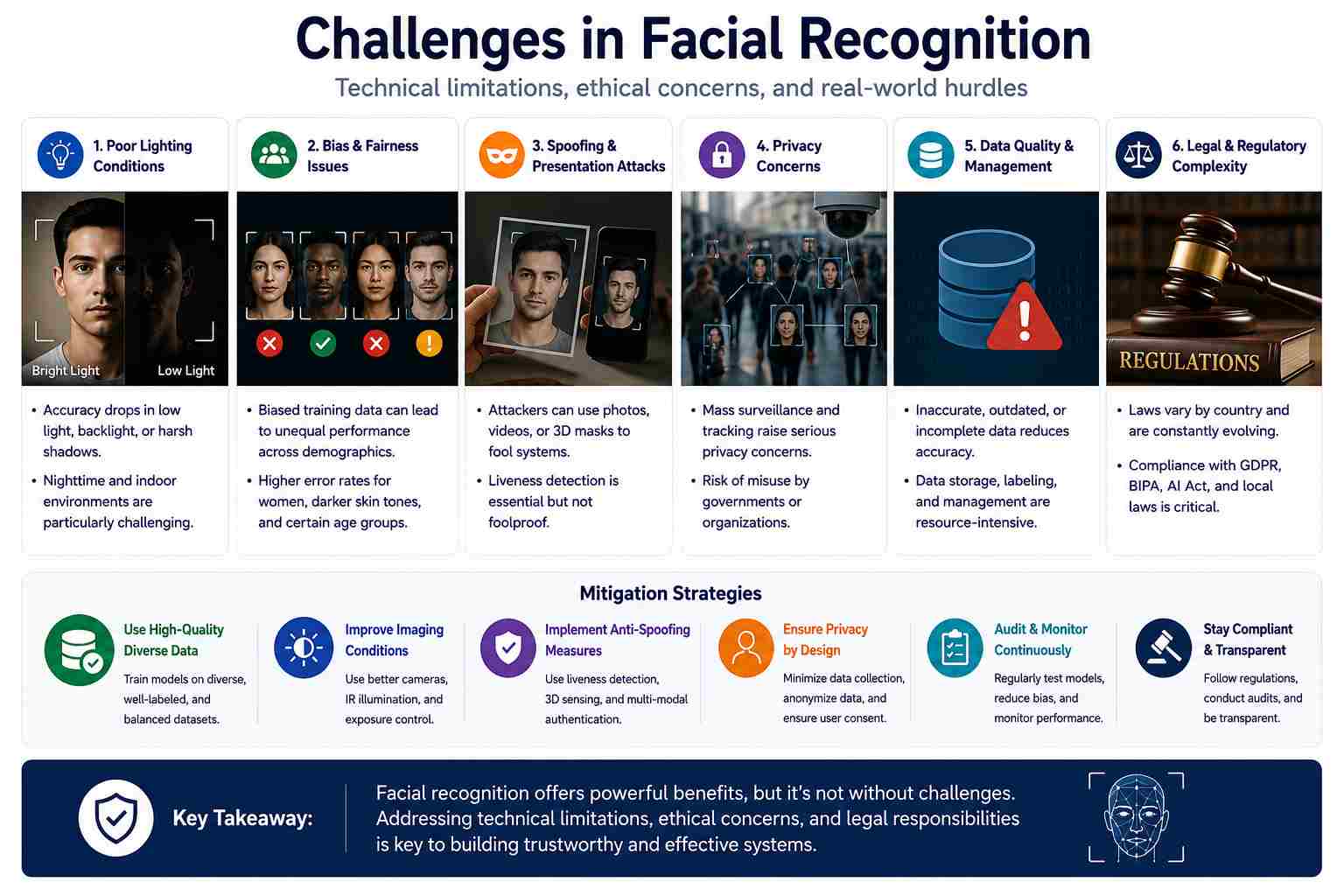
Real-World Challenges: When Facial Recognition Struggles
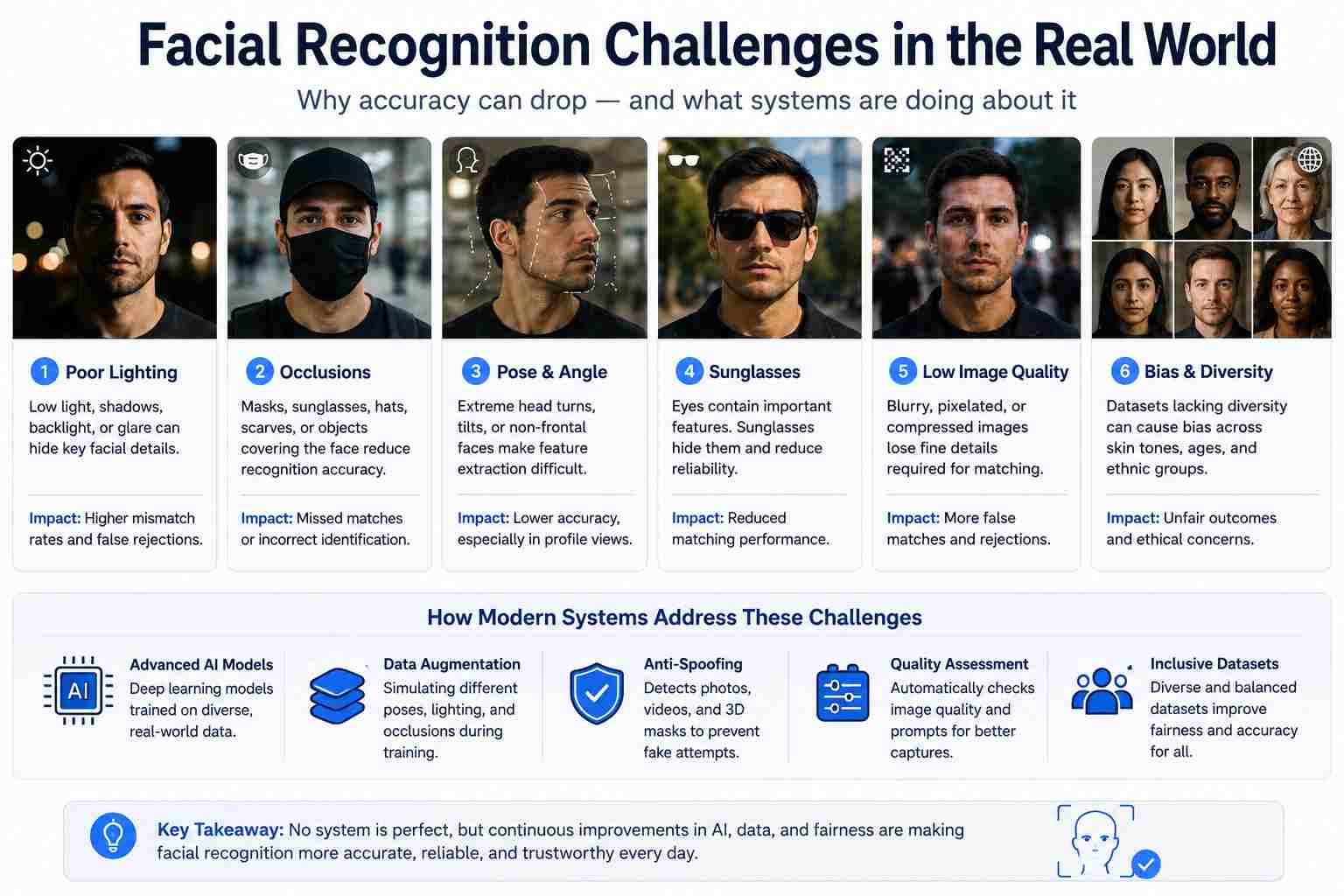
Whereas facial recognition systems have achieved tremendous accuracy in ideal settings, the reality of the outside world is that there are many factors that will degrade performance. AI models today are trained on broad data sets and are vastly improved over earlier models, but even the best models still struggle in some situations.
| Challenge | Impact on Facial Recognition |
| Sunglasses | Can obscure the eyes, reducing the amount of facial information available for matching. |
| Hats and Headwear | May cast shadows or partially hide facial landmarks, particularly around the forehead and hairline. |
| Identical Twins | Extremely similar facial features can increase false-match rates, often requiring an additional biometric factor. |
| Aging | Natural facial changes over time can affect similarity scores, although modern models are increasingly robust to gradual aging. |
| Beard Growth or Shaving | Significant changes in facial hair can alter appearance, especially around the jawline and chin. |
| Heavy Makeup | Cosmetic changes may modify skin texture and facial contours, though most modern systems are trained to tolerate moderate variations. |
| Plastic Surgery | Major reconstructive or cosmetic procedures can substantially alter facial geometry, sometimes requiring users to update their biometric enrollment. |
Environment is also an important factor. Bad lighting, motion blur, low resolution imaging, extreme view angles, partial face occlusion, all these remain common factors leading to a decrease in recognition accuracy. A factor that separates the vendors’ laboratory test results from that of the unconstrained world.
As note with these edge cases, some organizations now combine facial recognition with other biometrics i.e. Fingerprint, iris, behavioral, etc. To deliver reliable authentication even with off-axis and poor environmental conditions.
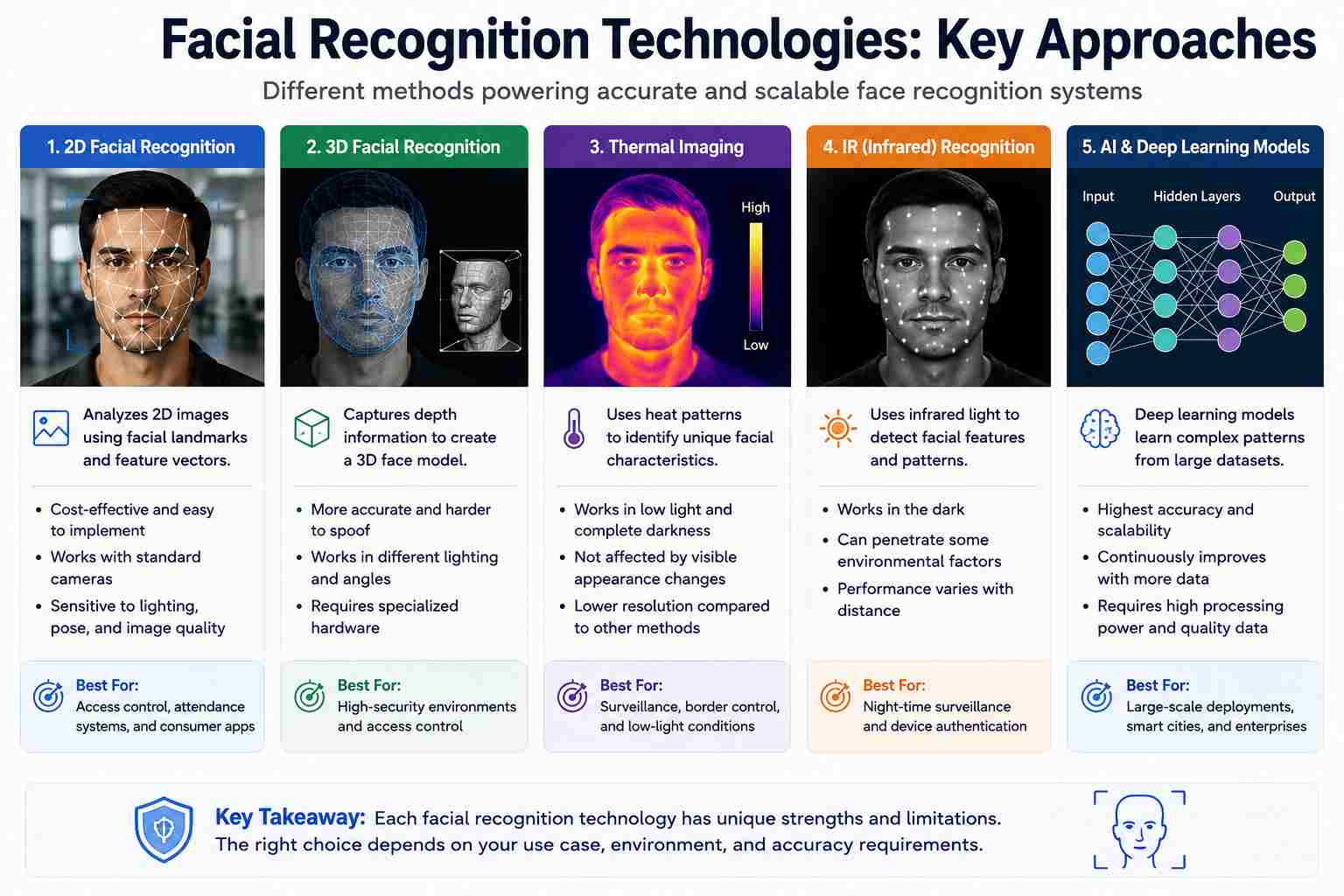
Beyond Visible Light: Infrared and Thermal Imaging
To improve reliability in challenging environments, many enterprise and government deployments supplement standard RGB cameras with infrared (IR) or thermal imaging technologies.
- Infrared cameras capture facial features using near-infrared light rather than visible light, allowing recognition systems to perform more consistently in darkness or low-light conditions. Many smartphones and enterprise access-control systems already use infrared sensors to improve both facial recognition accuracy and liveness detection.
- Thermal cameras measure heat patterns emitted by the human face instead of reflected light. While thermal imaging generally lacks the fine facial detail needed for standalone identification, it can support facial recognition in poor visibility, assist with liveness detection, and improve performance in specialized security and defense applications.
Rather than relying on a single camera type, many modern deployments combine visible-light, infrared, and depth sensors with advanced AI models to improve recognition accuracy across a wider range of environmental conditions. This multi-sensor approach helps reduce false negatives while making presentation attacks and spoofing attempts more difficult to execute successfully.
Face Morphing: The Attack Aimed at Documents, Not Devices
Face morphing is a narrower but genuinely serious threat: using generative models — GANs or, increasingly, diffusion-based tools — to blend the facial features of two different people into a single synthetic image that can pass a face-match check against both original identities. The classic attack scenario is a passport or ID application: one person legitimately applies with a morphed photo, then hands the resulting document to a second person — often someone with no legal right to travel — who can use it to pass an automated e-gate or a human border check, because the morphed photo plausibly resembles both faces.
This isn’t a theoretical concern for individual users; it’s a document-issuance and border-security problem, and it’s exactly why passport application photo requirements have tightened in several jurisdictions. On the defense side, a 2025 paper by Medvedev and Gonçalves, MorphGuard: Morph-Specific Margin Loss for Enhancing Robustness to Face Morphing Attacks, proposed a dual-branch training strategy that adds a distinct classification path for morph samples during training. By applying separate margin parameters to genuine versus morphed images within an ArcFace-style loss function, the approach pulls genuine faces into tighter clusters while pushing morphed samples toward a separate, more easily flagged region of the embedding space — a mathematically elegant answer to a problem that’s otherwise hard to catch by eye.
The Bias Reality Check: Two Studies People Keep Conflating
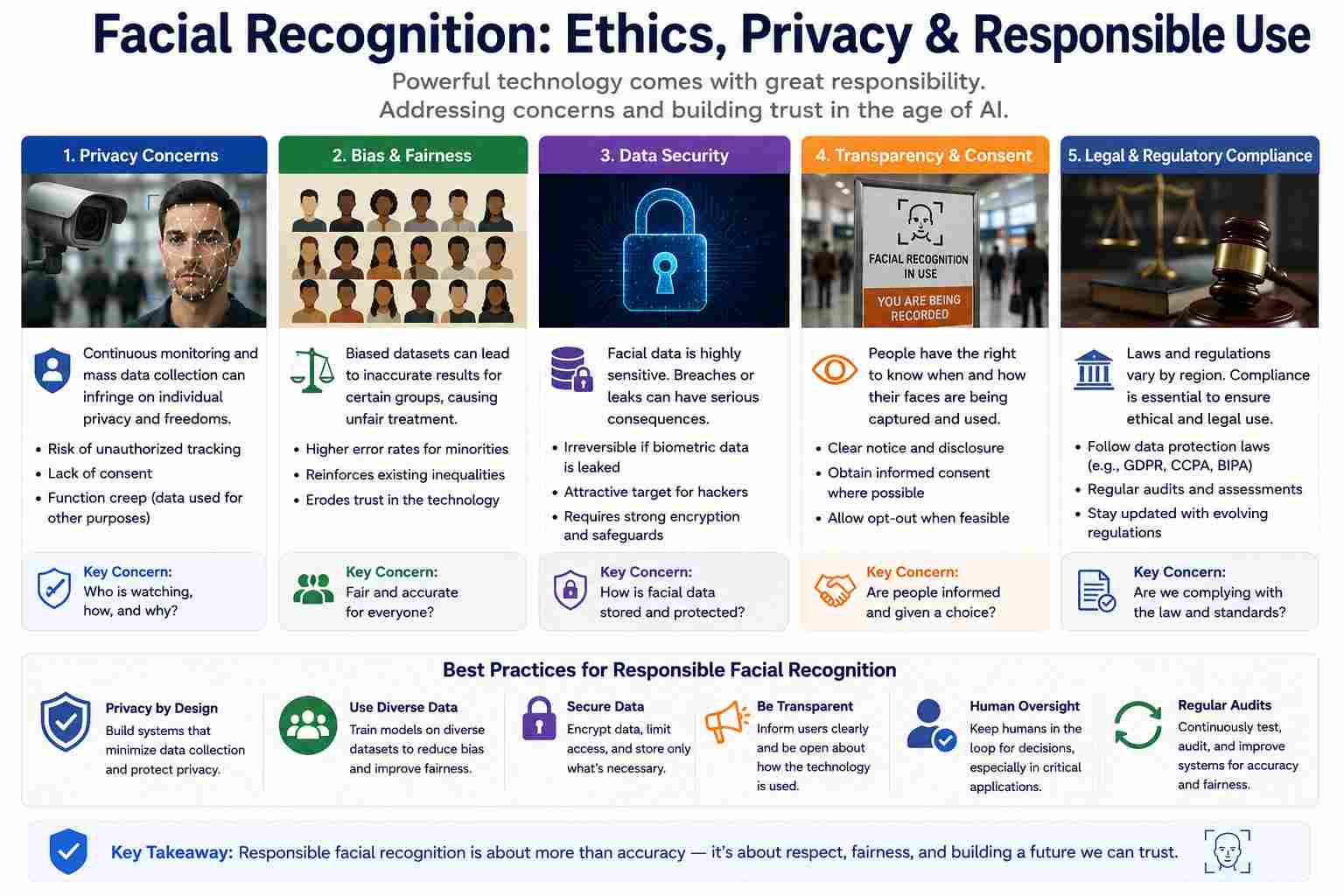
Almost every article about facial recognition bias cites one number — 0.8% versus 34.7% — and almost none of them explain that it comes from a gender classification study, not an identity-matching one. Getting this distinction right matters if you’re building a compliance case, so it’s worth being precise about what each landmark study actually measured.
Gender Shades (Buolamwini and Gebru, MIT Media Lab and Microsoft Research, 2018) tested three commercial systems — from IBM, Microsoft, and Face++ — on a single, narrow task: classifying the gender of a face in an image. Using the dermatologist-developed Fitzpatrick skin-type scale, the study found error rates as low as 0.8% for lighter-skinned men and as high as 34.7% for darker-skinned women overall, with two of the three systems producing error rates of 46.5% and 46.8% specifically for the darkest skin-type category (Fitzpatrick VI). That’s a gender-classification task — an attribute inference, not a “who is this person” identity match — but the finding was foundational enough that it directly prompted IBM to shut down its facial recognition program.
NIST’s Face Recognition Vendor Test, Part 3: Demographic Effects (2019) is the study that actually measured identity matching — both 1:1 verification and 1:N identification — across 189 algorithms from 99 developers. Its headline finding: false positive rates varied by a factor of 10 to more than 100 times across demographic groups, with the highest false-positive rates concentrated among West and East African, East Asian, and American Indian populations, and — in 1:N search specifically — elevated false-positive rates for African American women in particular. NIST also found real variation between developers: algorithms built in China, for instance, showed little to no gap between East Asian and Caucasian faces, which is itself evidence that these disparities trace back to training data composition rather than some unavoidable property of the technology.
The reason to keep these two studies separate isn’t pedantry. Gender classification errors and identity-matching false positives are different failure modes with different consequences, and treating “34.7%” as if it describes how often a police lineup search misidentifies someone overstates one number while under-stating the real risk sitting in the NIST data. Bias here isn’t a solved problem and it isn’t a single number — it’s an ongoing measurement obligation, which is exactly how most current AI governance frameworks now treat it.
When the System Is Wrong and Nobody Stops to Check
The technical term for what turns a flawed algorithm into a wrongful arrest is automation bias — the well-documented human tendency to trust a computer’s output over your own judgment, even when contradicting evidence is sitting right in front of you. Three real cases illustrate how this plays out in practice, and they’re worth telling accurately rather than as clickbait, because real people lived through them.
Robert Williams was arrested by the Detroit Police Department in January 2020 after a facial recognition search misidentified him — the first publicly documented wrongful arrest tied to the technology in the United States.
Porcha Woodruff was eight months pregnant when six Detroit police officers arrested her at her home in February 2023 on a carjacking and robbery warrant. She had been identified through an unreliable facial recognition match against an old mugshot, which was then used to build a photo lineup that a robbery victim selected her from — meaning the algorithm’s error propagated directly into a human identification, rather than being caught by one. Her civil rights lawsuit, Woodruff v. Oliver, was ultimately dismissed by a federal judge in 2025, who found the officer wasn’t shown to have lacked probable cause — a result that itself illustrates how hard these cases are to win even when the underlying technology clearly failed.
Harvey Eugene Murphy Jr. shows the same failure pattern outside of policing entirely. In 2022, a Sunglass Hut store in Houston was robbed. A loss-prevention system used by the store’s parent company, working with a retail partner, flagged Murphy as a suspect using facial recognition run against low-quality security footage — despite Murphy living in California at the time. He was arrested in October 2023 when he returned to Texas to renew his driver’s license. His case is a useful reminder that automation bias isn’t confined to law enforcement; private-sector deployments carry the same risk, with far less public oversight.
All three cases share a structure: a probabilistic match got treated as a certainty, and no one in the chain was positioned — or required — to double-check it. That’s precisely why the industry’s current emphasis on disciplined threshold management and mandatory human review for 1:N matches isn’t a compliance nicety. It’s the difference between an investigative lead and a false accusation.
2026 Compliance Landscape: EU AI Act, BIPA, and China’s PIPL
Global facial recognition law has moved fast enough in the last few months that a lot of published guidance is already out of date. Here’s where things actually stand as of this article’s publication.
The EU AI Act
- February 2, 2025 — Prohibited practices. Workplace and school emotion-inference AI, untargeted scraping of facial images from the internet or CCTV to build recognition databases, and real-time remote biometric identification in public spaces (with narrow law-enforcement exceptions) have been banned since this date. Nothing about this changed in 2026.
- August 2, 2026 — Transparency obligations. Deployers must disclose to individuals when a biometric categorization or emotion-recognition system is in use. This deadline has already passed as of this guide’s publication — if your system falls into this category and you haven’t shipped the disclosure, you’re already out of compliance.
- December 2, 2026 — A different deadline entirely. This date does not apply to biometric identification compliance. It’s the deadline for a new prohibition on “nudifier” apps that generate non-consensual intimate imagery, plus a tightened requirement to watermark AI-generated content. A lot of secondary sources have confused this date with the high-risk compliance deadline below — it’s worth double-checking any source that conflates the two.
- December 2, 2027 — High-risk compliance for standalone biometric identification systems. This is the deadline that actually governs standalone 1:N identification and biometric categorization systems under Annex III of the Act. It was originally set for August 2, 2026, but the EU’s Digital Omnibus on AI — Regulation (EU) 2026/1744 — entered into force on July 27, 2026, granting a 16-month extension. Annex I systems (AI embedded in already-regulated products, like medical devices) get an even longer runway, to August 2, 2028. If you’re planning a compliance program around biometric identification in the EU, this later date, not the original 2026 one, is the one to build toward — though the Omnibus’s own text notes the extension is meant to give standards bodies time to finish technical guidance, not to give deployers permission to wait until the last minute.
Illinois’ Biometric Information Privacy Act (BIPA)
BIPA’s statutory damages have always been steep — $1,000 per negligent violation, $5,000 per intentional or reckless one. What changed the risk calculus dramatically was the Illinois Supreme Court’s 2023 ruling in Cothron v. White Castle System, Inc., which held that a new violation accrued with every single biometric scan, not just the first one. For a business scanning employee fingerprints or faces daily, that math could produce liability in the billions.
The Illinois legislature closed that door in August 2024, passing an amendment (Public Act 103-0769) that limits a plaintiff to one recovery per person per collection method, regardless of how many times the scan happened. And in April 2026, the Seventh Circuit Court of Appeals, in Clay v. Union Pacific Railroad Co., confirmed that amendment applies retroactively — meaning even lawsuits filed before the fix now fall under the capped-damages rule. The practical effect: BIPA exposure in 2026 is still real and still expensive, but the “per-scan” nightmare scenario that drove years of settlement pressure is no longer the operative legal theory.
China’s Personal Information Protection Law (PIPL)
PIPL classifies facial data as sensitive personal information, on the reasoning that its leakage or misuse can directly endanger someone’s safety or dignity. That classification triggers two hard requirements before any facial recognition deployment: separate, specific consent from each individual (a general terms-of-service checkbox doesn’t satisfy this), and a documented Personal Information Protection Impact Assessment (PIPIA) completed before data collection begins, not after. China’s Cyberspace Administration (CAC) enforces both requirements and applies a “strict necessity” test — you have to be able to show facial recognition was the only viable method, not just the most convenient one.
Facial Recognition vs. Other Biometrics
Facial recognition doesn’t operate in a vacuum — most enterprise security decisions weigh it against fingerprint, iris, and palm-vein systems as part of a broader biometric access control strategy. The figures below are commonly cited industry benchmarks; treat them as a starting comparison rather than fixed physical constants, since actual false-accept rates depend heavily on the matching threshold a given deployment chooses, and vendors don’t always test under comparable conditions.
| Biometric Modality | Contact Required | Commonly Cited Accuracy (FAR) | Primary Operational Limitation |
| Facial Recognition | No | Often cited around 1 in 100,000 | Sensitive to lighting, angle, and occlusion |
| Fingerprint | Yes | Often cited around 1 in 100,000 | Degrades with moisture, wear, or sensor grime |
| Iris Scanning | No | Often cited as low as 1 in 1,200,000 | Expensive hardware; needs precise positioning |
| Palm Vein | No | Very low reported error rates | Relies on active subcutaneous blood flow; higher hardware cost |
Facial recognition’s real advantage isn’t raw accuracy — iris and palm-vein systems can outperform it under controlled conditions — it’s that it’s contactless, works with hardware most organizations already own (cameras), and scales to unattended, high-throughput scenarios like retail entrances or transit gates in a way fingerprint and iris systems generally can’t.
Why Modern Organizations Are Moving Toward Multimodal Biometrics
Facial recognition is powerful on its own, but many organizations no longer rely on a single biometric trait for high-security applications. Instead, they’re adopting multimodal biometric systems, which combine two or more authentication methods to improve accuracy, strengthen security, and reduce the risk of spoofing or false matches.
A typical multimodal system might verify an employee’s identity using facial recognition and a fingerprint scan, or combine facial recognition with iris recognition for highly sensitive environments such as airports, government facilities, and data centers. Financial institutions and healthcare providers are also increasingly pairing facial recognition with behavioral biometrics—such as typing rhythm, touchscreen interactions, or device usage patterns—to provide continuous authentication after a user has logged in.
| Biometric Modality | Primary Strength | Common Enterprise Use Cases |
| Facial Recognition | Contactless, fast authentication | Building access, airports, smartphones |
| Fingerprint Recognition | Mature and highly accurate | Employee attendance, physical access control |
| Iris Recognition | Extremely low false-match rates | Border control, military, critical infrastructure |
| Palm Vein Recognition | Difficult to spoof and hygienic | Hospitals, banking, secure laboratories |
| Behavioral Biometrics | Continuous identity verification | Online banking, fraud detection, account security |
The biggest advantage of multimodal biometrics is resilience. If one authentication method performs poorly because of poor lighting, a face mask, wet fingerprints, aging, or temporary physical changes, another biometric factor can still verify the user’s identity. Combining multiple biometric signals also makes sophisticated presentation attacks and identity fraud significantly more difficult than relying on facial recognition alone.
As AI-powered authentication continues to evolve, multimodal biometric systems are becoming the preferred architecture for organizations that need to balance security, usability, and regulatory compliance. Rather than replacing facial recognition, these systems position it as one component within a broader identity verification framework, delivering stronger protection against spoofing while reducing false positives and false negatives.
What It Costs to Deploy
Rough planning benchmarks vary enormously by vendor, integration complexity, and whether you’re building on-premise or using a cloud API, but as a general order-of-magnitude guide for physical access control deployments:
- Small business (1–10 doors): typically fingerprint or palm-vein sensors with basic HR system integration. Upfront capital in the low five figures, with annual maintenance running roughly 12–18% of hardware cost.
- Mid-market (10–50 doors): facial recognition or palm-vein systems integrated with payroll and existing security camera infrastructure. Upfront capital moving into six figures.
- Enterprise / critical infrastructure (50+ doors): multimodal biometric systems integrated across full CCTV and alarm infrastructure on enterprise on-premise networks. Upfront capital frequently exceeding $150,000, sometimes well beyond it depending on site count.
Treat these as a conversation-starter for budgeting, not a quote — get vendor-specific numbers before committing to any figure in a business case.
Where Facial Recognition Is Being Deployed Today
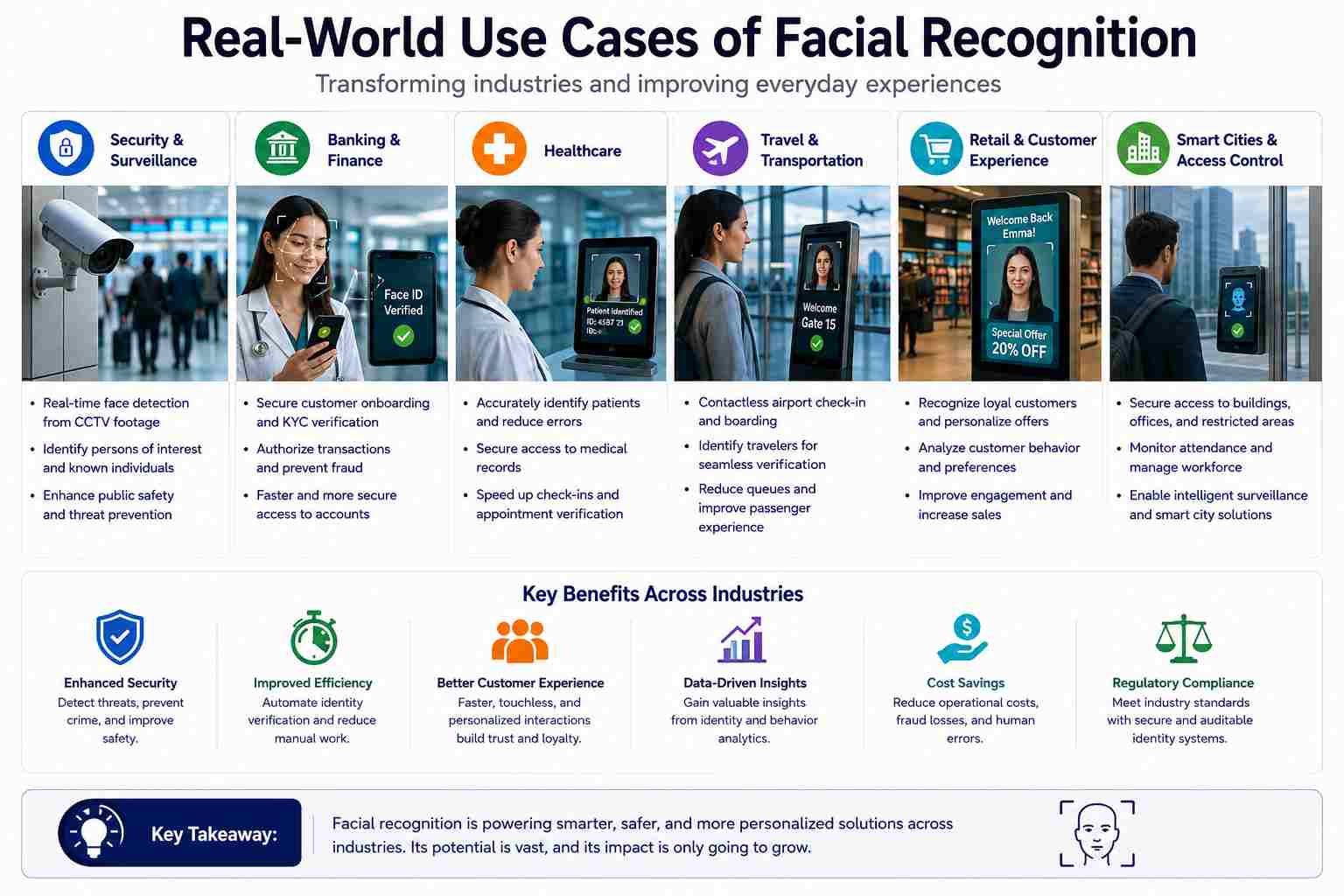
While airports and retail stores remain some of the most visible adopters of facial recognition, the technology is now being deployed across a wide range of industries. Advances in AI models, edge computing, and liveness detection have made facial recognition practical for organizations that need fast, contactless identity verification at scale.
Healthcare
Hospitals use facial recognition to verify patient identities during registration, reduce duplicate medical records, and control access to restricted areas such as operating rooms, pharmacies, and medical laboratories. Combined with electronic health records, biometric verification helps reduce administrative errors while strengthening patient privacy and security.
Manufacturing
Manufacturing facilities increasingly rely on facial recognition to manage employee access to production lines, hazardous work zones, and research facilities. AI-powered access control systems can automatically verify authorized personnel while maintaining detailed audit logs for compliance and workplace safety.
Education
Schools and universities are exploring facial recognition for campus access, residence halls, library services, and attendance management. Many institutions, however, balance these benefits against privacy concerns and local regulations, making transparency and consent essential components of any deployment.
Logistics and Warehousing
Large logistics companies use facial recognition to secure warehouses, verify employee identities at restricted loading zones, and streamline workforce management. Combined with computer vision systems that monitor packages and inventory, facial recognition helps improve operational efficiency while reducing unauthorized access.
Smart Cities
Municipal governments are integrating facial recognition into broader smart city initiatives alongside traffic monitoring, public safety systems, and intelligent surveillance networks. These deployments typically combine facial recognition with object detection, vehicle recognition, and video analytics to support law enforcement and urban management, though they remain subject to increasing regulatory oversight and privacy requirements.
Banking and Financial Services
Banks and financial institutions use facial recognition for digital identity verification, customer onboarding, ATM authentication, fraud prevention, and remote Know Your Customer (KYC) processes. Most modern banking platforms pair facial recognition with liveness detection and additional authentication factors to defend against spoofing attacks and synthetic identity fraud.
Although these industries have different operational requirements, they share a common objective: delivering faster, more secure identity verification while reducing manual checks. As AI models continue to improve, facial recognition is increasingly becoming one component of broader computer vision and multimodal biometric systems rather than a standalone security solution.
Privacy by Design: How Compliant Systems Are Actually Built
The organizations navigating the EU AI Act, BIPA, and PIPL simultaneously tend to converge on the same three architectural choices, regardless of which law is driving the decision:
- Local processing. Matching happens on-device — inside a secure enclave on a phone, or on local hardware at a facility — rather than in the cloud. This shrinks the biometric data footprint dramatically and limits exposure under BIPA’s rules around third-party data transfers.
- Dynamic consent with immutable logging. Consent isn’t a one-time checkbox; it’s tracked with logs that support data-destruction schedules and can prove, after the fact, exactly what a person agreed to and when.
- Pseudonymized logging. Access and audit logs reference tokens rather than raw facial geometry, so a log breach doesn’t itself expose biometric templates.
None of these are exotic. They’re the same privacy engineering patterns that showed up in our broader look at bias, privacy, and governance across computer vision — facial recognition just applies them to the most sensitive data type the field handles.
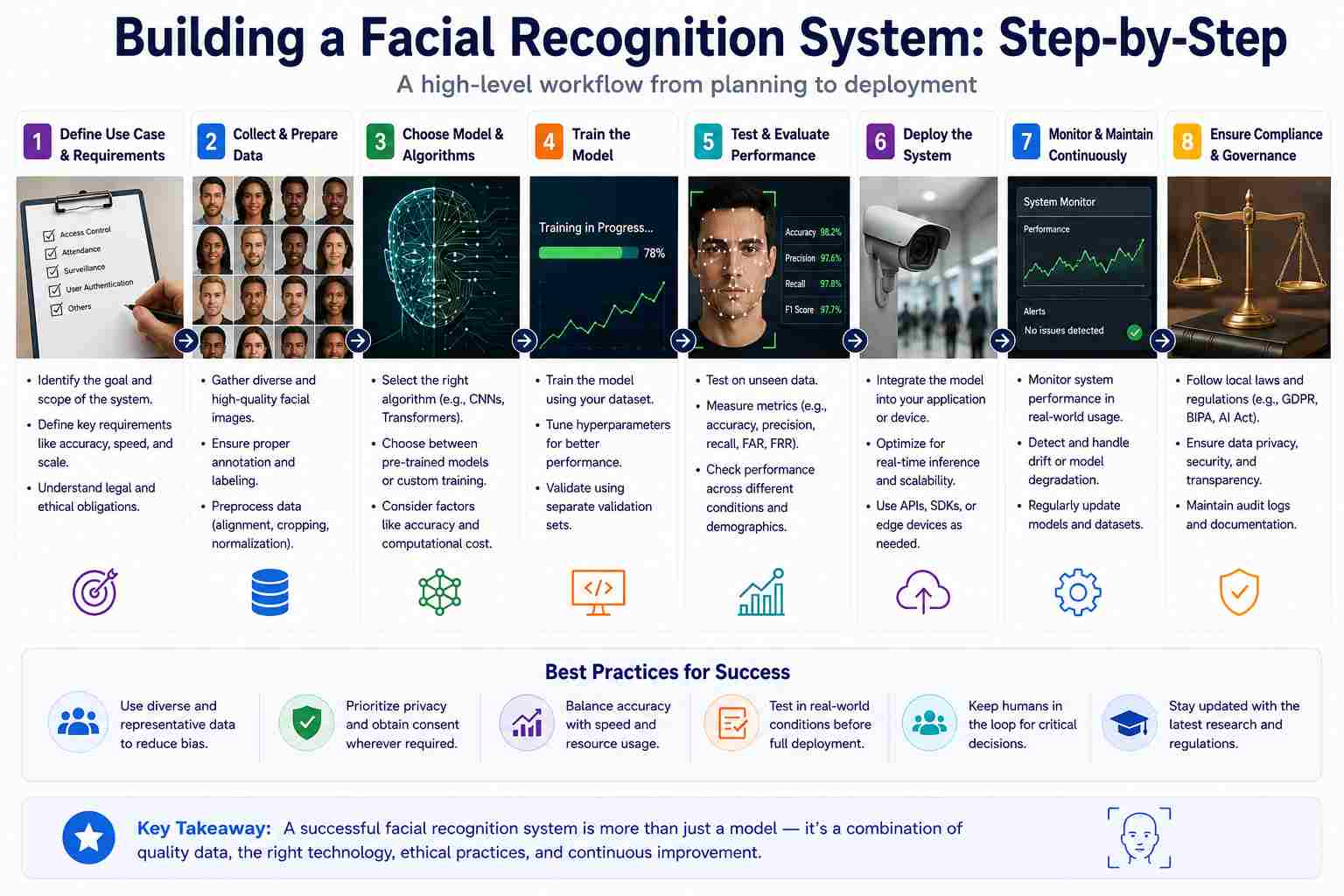
A Practical Checklist for Building or Auditing a Facial Recognition Pipeline
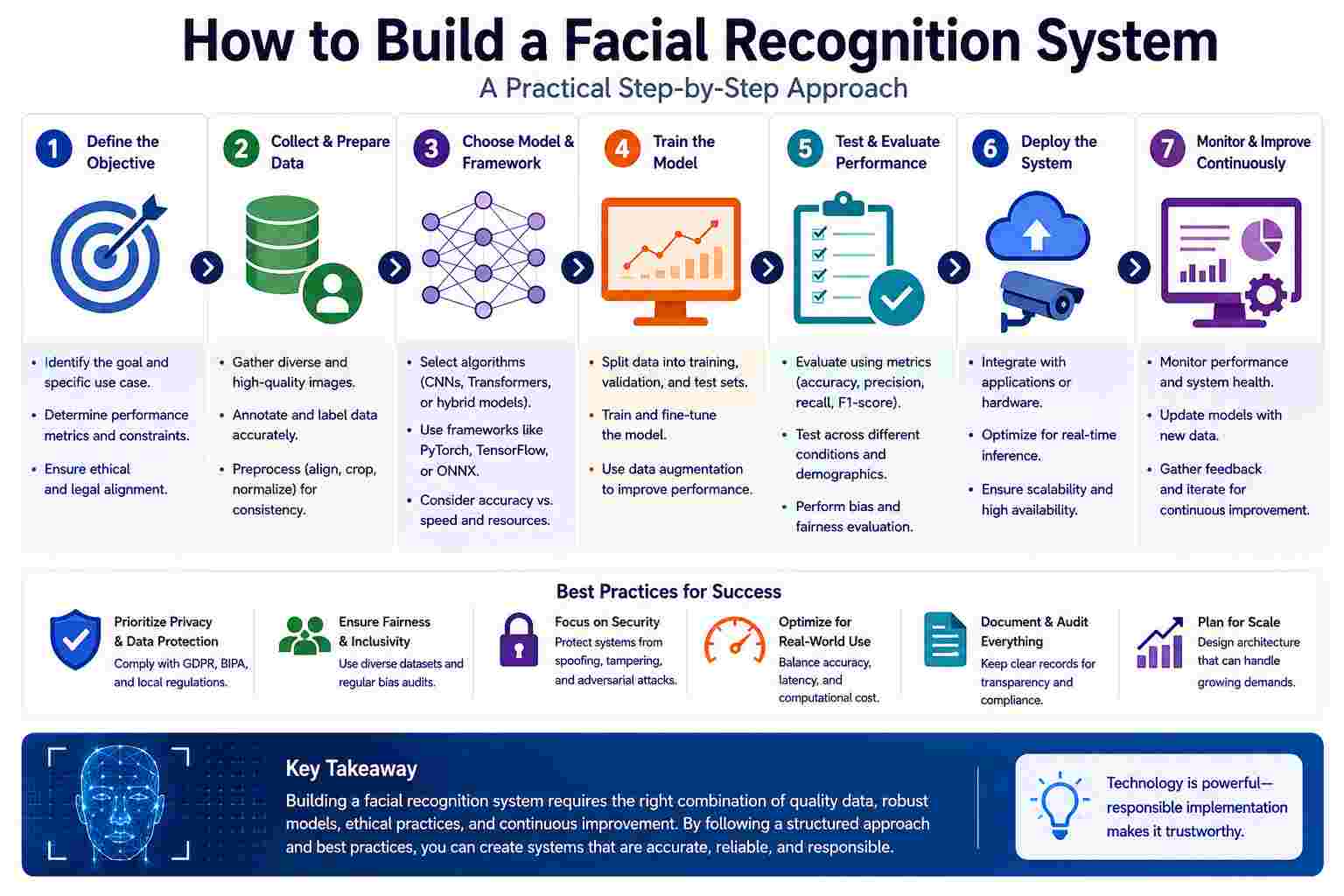
If you’re responsible for a deployment, this is roughly the order in which the questions above should get answered:
- Scope it as 1:1 or 1:N, explicitly, in writing. Don’t let a verification use case quietly expand into an identification one without a fresh risk assessment.
- Bake in liveness detection from day one. Treat it as a core requirement of the matching engine, not a bolt-on feature — and test it against ISO/IEC 30107-3 via an accredited lab (iBeta or equivalent) before launch.
- Set and document your confidence threshold, and require human review for any 1:N match below a defined confidence level. This is the single control most directly implicated in the wrongful-arrest cases above.
- Run stratified demographic accuracy testing before deployment and on a recurring schedule after, not as a one-time checkbox — bias in these systems is a moving target as training data and models change.
- Match your privacy architecture to your strictest applicable law. If you operate in the EU, Illinois, and China simultaneously, design for PIPL’s separate-consent requirement and BIPA’s written-policy obligations from the start rather than retrofitting them.
- Build your transparency notices now if you’re EU-facing — the August 2, 2026 disclosure requirement is already active — and start your Annex III readiness work well ahead of December 2, 2027, since standards and conformity-assessment infrastructure are still catching up even with the extended timeline.
- Keep a kill-switch and incident-response path documented, not just implemented. Regulators are increasingly asking to see it, not just hear that it exists.
FAQs
Q1: What’s the difference between active and passive liveness detection?
A: Active liveness asks the user to do something — blink, smile, turn their head — and analyzes that response for signs of spoofing. Passive liveness runs invisibly during a normal capture, using cues like light reflection or texture analysis to infer a live human is present without requiring any action. Passive is lower-friction; active is generally considered harder for an attacker to fake because the challenge is randomized each time.
Q2: Is workplace “emotion AI” legal under the EU AI Act?
A: No. AI systems designed to infer the emotional states of employees or students have been classified as a prohibited practice under Article 5 of the EU AI Act since February 2, 2025, and that ban wasn’t affected by the 2026 Digital Omnibus. Deploying emotion-inference tools in workplace or school settings anywhere the Act applies is illegal, full stop.
Q3: What is a face morphing attack, and how do defenses like MorphGuard work?
A: A face morphing attack blends the facial features of two people into one synthetic photo that can pass a facial recognition check against both original identities — a serious threat to passport and ID issuance in particular. Defenses like the 2025 MorphGuard approach modify the training process itself, adding a separate classification path and margin parameter for morphed samples so the model learns to push morphs into a distinct, more easily flagged region of its embedding space, rather than trying to catch morphs only at inspection time.
Q4: What must businesses do to comply with China’s PIPL when using facial recognition? A: Facial data is classified as sensitive personal information under PIPL, which triggers two requirements: separate, specific consent from each individual (not a bundled terms-of-service agreement), and a documented Personal Information Protection Impact Assessment completed before data collection. China’s Cyberspace Administration also applies a strict-necessity test, meaning you need to be able to show facial recognition was genuinely required, not just convenient.
Q5: How much does wearing a mask affect facial recognition accuracy, and how do developers address it?
A: Mask-wearing removes much of the lower-face detail models rely on, and historically caused significant accuracy drops. Research on Pareto-optimized architectures — including a 2023 study evaluating a modified FaceNet model — has shown that combining targeted data preprocessing with optimization for both speed and accuracy can maintain accuracy in the low-to-mid 90s percent range across masked and unmasked conditions in test settings, though results vary depending on the dataset and deployment environment.
Related Computer Vision Resources
Want to explore more computer vision technologies and AI-powered visual intelligence? These in-depth guides complement this facial recognition guide.
- Guide to Computer Vision – Learn the complete computer vision pipeline, from image classification and object detection to segmentation, OCR, multimodal AI, and modern vision architectures.
- Image Recognition – Discover how AI identifies and classifies people, objects, scenes, and patterns in digital images, providing the foundation for modern facial recognition systems.
- Object Detection – Learn how AI locates and tracks objects within images and video using models such as YOLO, Faster R-CNN, and DETR before facial recognition begins.
- The Benefits of Computer Vision in Retail Businesses – Explore how retailers use facial recognition, customer analytics, automated checkout, inventory monitoring, and loss prevention.
- Automatic Image and Video Caption Generation with Deep Learning – See how computer vision and natural language processing work together to automatically describe images and videos.
- Text-to-Image AI – Understand how diffusion models and generative AI create synthetic faces, image manipulation, and face morphing techniques discussed in this guide.
- Guide to Generative AI – Learn how GANs, diffusion models, and transformer-based AI are reshaping image generation, deepfakes, and biometric security.
Key Takeaways
If you’re evaluating, building, or deploying facial recognition systems, these are the most important points to remember:
- Facial recognition isn’t a single technology. There’s a fundamental difference between 1:1 verification (confirming a claimed identity) and 1:N identification (searching for a match within a database), each with different accuracy, risk, and regulatory implications.
- Modern systems rely on deep learning embeddings. Rather than comparing images pixel by pixel, today’s AI models convert faces into numerical feature vectors that can be efficiently compared using advanced similarity metrics.
- Recognition starts with detection and alignment. Before a face can be matched, the system must first detect the face, align key facial landmarks, and normalize the image to improve recognition accuracy.
- Liveness detection is no longer optional. Presentation Attack Detection (PAD) has become a critical security layer for defending against printed photos, replay attacks, masks, and AI-generated deepfakes.
- Bias and fairness remain ongoing challenges. Despite major advances in AI, demographic performance differences still require continuous testing, monitoring, and responsible deployment practices.
- Global privacy laws are reshaping facial recognition. Regulations such as the EU AI Act, Illinois’ BIPA, and China’s PIPL increasingly require transparency, consent, risk assessments, and stronger governance for biometric systems.
- Organizations are moving toward multimodal biometrics. Combining facial recognition with fingerprint, iris recognition, palm vein scanning, or behavioral biometrics improves both security and authentication reliability.
- Facial recognition is becoming part of broader computer vision ecosystems. Modern deployments increasingly integrate facial recognition with object detection, image recognition, video analytics, and AI-powered surveillance to deliver more intelligent and context-aware systems.
The Bottom Line
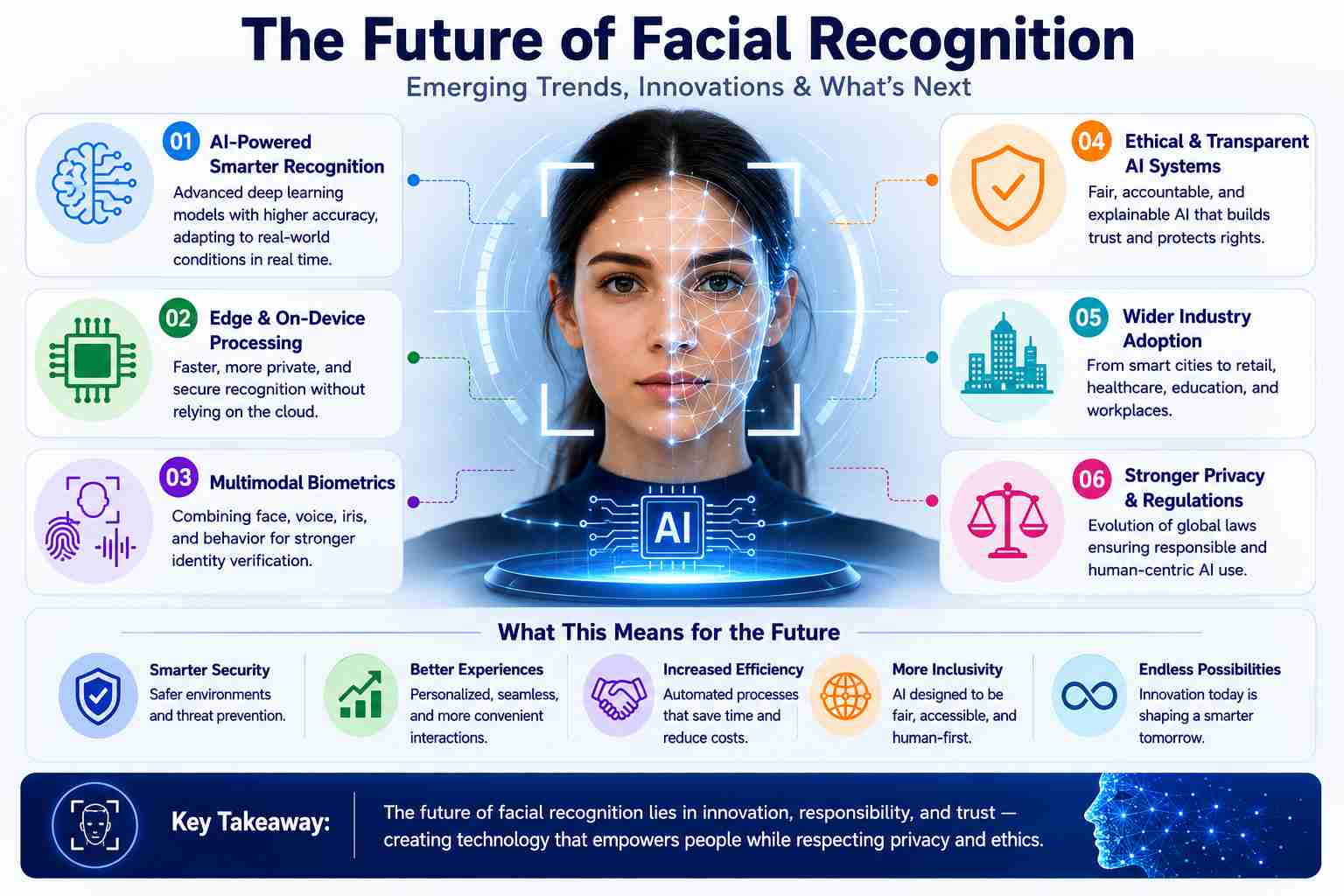
Facial recognition in 2026 isn’t one technology — it’s a spectrum running from a low-risk phone unlock to a high-stakes public-safety search, governed by very different math, very different failure consequences, and, increasingly, very different laws. The systems getting this right share a pattern: they’re explicit about which question they’re answering, they treat liveness detection as non-negotiable, they measure bias on a recurring basis instead of once, and they build in a human checkpoint before a probabilistic match becomes a real-world consequence. The ones that get it wrong tend to blur exactly those lines — and the wrongful arrests covered in this guide are what happens when that blurring goes unchecked.
For the broader technical foundation this guide builds on — including the CNN-versus-Transformer debate, segmentation architectures, and the governance frameworks shaping computer vision generally — see our complete guide to computer vision. For the generative side of the morphing threat covered above, our generative AI guide covers how GAN and diffusion models work in more depth. And if you’re evaluating facial recognition specifically for a retail access-control or loss-prevention use case, our piece on computer vision in retail covers the commercial deployment side in more detail.