
Quality Control Service Write for Us: Guest Posts and Guidelines
Computer Tech Reviews welcomes original articles from quality-control professionals, inspectors, engineers, operations managers, auditors, consultants, suppliers and experienced technology specialists.
We are looking for practical contributions that help organizations define quality requirements, examine products or services, detect nonconformities and improve the reliability of their results. Strong submissions should explain the standards, inspection method, evidence and limitations involved.
This contributor page is part of our Business Technology & Operations Write for Us hub, which covers the technologies and management practices used to improve organizational performance.
What Are Quality Control Services?
Quality control services help organizations determine whether products, materials, processes or service outputs meet defined requirements. These services may include inspection, sampling, measurement, testing, documentation review and reporting.
Quality control can be performed by an organization’s own employees or by an independent service provider. Third-party providers are often used when a business requires specialist expertise, geographic coverage or an external assessment of a supplier’s output.
Contributors should distinguish between:
- Quality control: Examining outputs to determine whether they meet specified requirements.
- Quality assurance: Establishing and reviewing systems intended to prevent quality problems.
- Testing: Evaluating a particular property or performance requirement.
- Inspection: Examining products, materials, documents or processes against defined criteria.
- Process improvement: Changing a process to produce better or more consistent outcomes.
Quality Control Topics We Welcome
We accept tutorials, professional analysis, case studies and first-hand experiences covering subjects such as:
- Quality-control planning and acceptance criteria
- Incoming-material and supplier inspections
- In-process and final-product inspections
- Sampling plans and inspection levels
- Measurement systems and calibration
- Statistical process control
- Defect classification and nonconformity reporting
- Corrective and preventive actions
- Supplier and third-party quality management
- Quality documentation and traceability
- Automated inspection and computer vision
- Quality-control software and digital records
- Cost of quality and defect prevention
- Quality risk management
- Quality-control practices for SMEs
Quality Planning and Acceptance Criteria
Quality control begins with clear requirements. An inspector cannot determine whether an output is acceptable when specifications are vague, contradictory or incomplete.
A useful quality plan may identify:
- The product, process or service being evaluated
- Applicable specifications and customer requirements
- Critical and non-critical characteristics
- Inspection and testing methods
- Sampling requirements
- Measurement equipment
- Acceptance and rejection criteria
- Reporting and escalation responsibilities
Contributors should explain who defined the requirements and how disagreements are resolved. Avoid describing a product as “high quality” without identifying the criteria used to reach that conclusion.
Incoming, In-Process and Final Inspection
Quality control may take place at several points in a product or service lifecycle.
Incoming inspection examines materials or components before they enter production. In-process inspection checks work while it is being performed. Final inspection examines the completed output before delivery or acceptance.
Articles should explain why a particular inspection stage was selected. Detecting a defect earlier may reduce rework, but excessive inspection can add cost and delay without addressing the source of the problem.
Writers may also discuss pre-shipment inspections, container-loading checks, production monitoring and remote inspection methods when based on genuine experience.
Sampling and Statistical Quality Control
Inspecting every item may be impractical or unnecessary, particularly in high-volume production. Sampling allows an organization to evaluate a portion of a batch, but the result contains uncertainty.
Sampling articles should explain:
- The batch or population being evaluated
- The sampling method
- The sample size
- The defect categories
- The acceptance and rejection rules
- The confidence and limitations of the conclusion
Do not imply that an accepted sample proves every item is defect-free. Explain the practical meaning and limitations of the sampling plan.
Measurement, Calibration and Data Reliability
Quality decisions depend on reliable measurements. An inaccurate instrument or inconsistent inspection method can cause acceptable items to be rejected and defective items to be approved.
We welcome articles about measurement-system analysis, calibration, repeatability, reproducibility and inspector training. Identify the equipment, method, environment and units used.
Do not report greater precision than the measurement method can support. Contributors should also explain how missing, inconsistent or manually altered quality data was handled.
Nonconformities and Corrective Action
When an output fails to meet a requirement, the organization should document the nonconformity, determine its disposition and evaluate whether corrective action is necessary.
Suitable articles may discuss:
- Defect and severity classifications
- Containment and segregation
- Rework, repair and rejection decisions
- Root-cause analysis
- Corrective and preventive actions
- Effectiveness verification
- Lessons shared with suppliers and process owners
Corrective action should address a verified cause rather than simply repeating instructions or retraining employees without evidence that training caused the problem.
Quality Control and Business Operations
Quality control should connect with the process that creates the output. Repeated inspections may detect defects, but they do not necessarily prevent those defects from returning.
We welcome articles explaining how inspection findings are communicated to procurement, production, engineering, customer service and operational teams.
Articles primarily focused on workflows, production, capacity and recurring service delivery may be submitted through our Business Operations Write for Us page.
Quality Control in Projects
Projects may require quality plans, design reviews, testing, acceptance criteria and final handover documentation. Quality requirements should be established during planning rather than introduced shortly before delivery.
Contributors may discuss quality responsibilities, test plans, acceptance reviews, defect management and the relationship between project delivery and operational acceptance.
Articles primarily focused on project planning, schedules, budgets and stakeholder coordination belong in our Project Management Write for Us section.
Quality Control and Six Sigma
Quality control identifies whether outputs meet requirements. Six Sigma may be used to investigate process variation and address the underlying causes of recurring defects.
We welcome articles connecting inspection data with structured process improvement, but writers should not use the terms interchangeably.
Contributions focused on DMAIC, Lean Six Sigma, process capability or statistical improvement projects should be submitted through our Six Sigma Write for Us page.
Quality Risk Management
Not every defect has the same consequence. Some issues may be cosmetic, while others may affect safety, legal compliance, reliability or customer trust.
Risk-based quality control considers the likelihood and potential effect of failure when deciding what to inspect, how frequently to test and which nonconformities require immediate escalation.
Contributors should explain how severity was determined and who had authority to accept remaining risk. Avoid claiming that inspection removes every possibility of failure.
Articles primarily about organizational, supplier, operational or technology risks belong in our Risk Management Write for Us section.
Cost of Quality
Quality-related costs may include prevention, inspection, testing, rework, warranty claims, returns, recalls and lost customer trust. Increasing inspection may reduce some failures but also add expense and delay.
We welcome articles that compare prevention and appraisal costs with the financial impact of defects. Explain the calculation method and distinguish verified expenditure from estimated opportunity costs.
Articles primarily focused on budgeting, cost control and expenditure analysis can be submitted through our Cost Management Write for Us page.
Technology and Digital Quality Control
Quality-control technology may include digital checklists, connected measurement devices, automated testing, computer vision, analytics and real-time monitoring.
Technology can improve consistency and traceability, but automated results still require validation. Contributors should explain how the system was trained or configured, how false approvals and false rejections were measured and when human review was required.
Articles about broader technology modernization, data integration and organization-wide change may be submitted through our Digital Transformation Write for Us page.
Choosing a Quality Control Service Provider
We accept balanced articles about evaluating third-party inspection and testing providers. A useful assessment may consider:
- Industry and product experience
- Inspector qualifications
- Geographic coverage
- Testing and measurement capabilities
- Reporting quality and turnaround time
- Independence and conflicts of interest
- Data security and confidentiality
- Pricing and contractual terms
- Escalation and dispute procedures
Do not claim that a provider can guarantee regulatory compliance or defect-free production. Clearly disclose any relationship with a featured service provider.
Quality Control for SMEs
Small and medium enterprises may not have dedicated quality departments, but they still need clear specifications, consistent checks and documented responses to defects.
SME-focused articles should recommend proportionate practices. A smaller organization may begin with simple checklists, defined acceptance criteria, supplier records and basic trend analysis before adopting specialized platforms.
Articles about the wider technology and management needs of smaller organizations can be submitted through our SME Write for Us page.
Quality Control Software Reviews
We accept reviews of inspection, quality-management and testing software when they are based on first-hand use.
A useful review may evaluate:
- Inspection plans and digital checklists
- Defect and nonconformity tracking
- Corrective-action workflows
- Supplier-quality features
- Calibration and equipment records
- Dashboards and reporting
- Audit trails and access controls
- Integrations and data export
- Implementation requirements and pricing
Identify the product version, plan and testing date. Do not declare a platform “the best” without defining the organization and requirements for which it is suited.
Case Studies and Evidence Requirements
We welcome genuine quality-control case studies when they provide enough information for readers to understand how the result was measured.
A strong case study should include:
- The organization’s industry and approximate size
- The product, process or service inspected
- The applicable requirements
- The original quality problem
- The inspection or testing method
- The baseline defect rate
- The corrective action introduced
- The verified result and limitations
Do not invent defect reductions or financial savings for illustrative examples. Clearly label hypothetical scenarios and protect confidential supplier and customer information.
Contributor Guidelines
- Submit an original article containing at least 800 words.
- Use a clear title, introduction, headings and conclusion.
- Define the product, process, requirement and quality context.
- Write naturally instead of repeating search keywords.
- Describe the inspection, sampling or testing method.
- Support defect and performance claims with credible evidence.
- Explain measurement limitations and acceptance criteria.
- Distinguish quality control, quality assurance and process improvement.
- Use first-hand evidence for reviews and case studies.
- Do not disclose confidential supplier or customer information.
- Disclose sponsorships and service-provider relationships.
- Do not submit copied, spun or primarily promotional content.
- Manually verify every calculation, fact and citation in AI-assisted drafts.
How to Submit a Quality Control Guest Post
Email your article proposal or completed draft to contact@computertechreviews.com.
Please include:
- Your proposed article title
- A short summary or outline
- The intended audience
- The inspection, testing or quality topic covered
- Details of any original research or case study
- Links to relevant writing or professional work
- Disclosure of any commercial relationship
Our editorial team may edit accepted submissions for accuracy, clarity, structure and house style. Submission does not guarantee publication.
Explore Related Business Contributor Pages
Recent Posts

How to Build a Dedicated Development Team for AI Projects
Dedicated Development Team for AI Projects The arrival of artificial intelligence has meant a revolution for companies, transforming numerous processes…
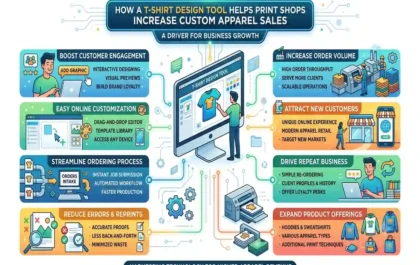
How a T-Shirt Design Tool Helps Print Shops Increase Custom Apparel Sales
By Pratik Shah, Creative Head, PrintXpand. Disclosure: PrintXpand sells a t-shirt design tool. Quick Summary: Most custom t-shirt revenue still…