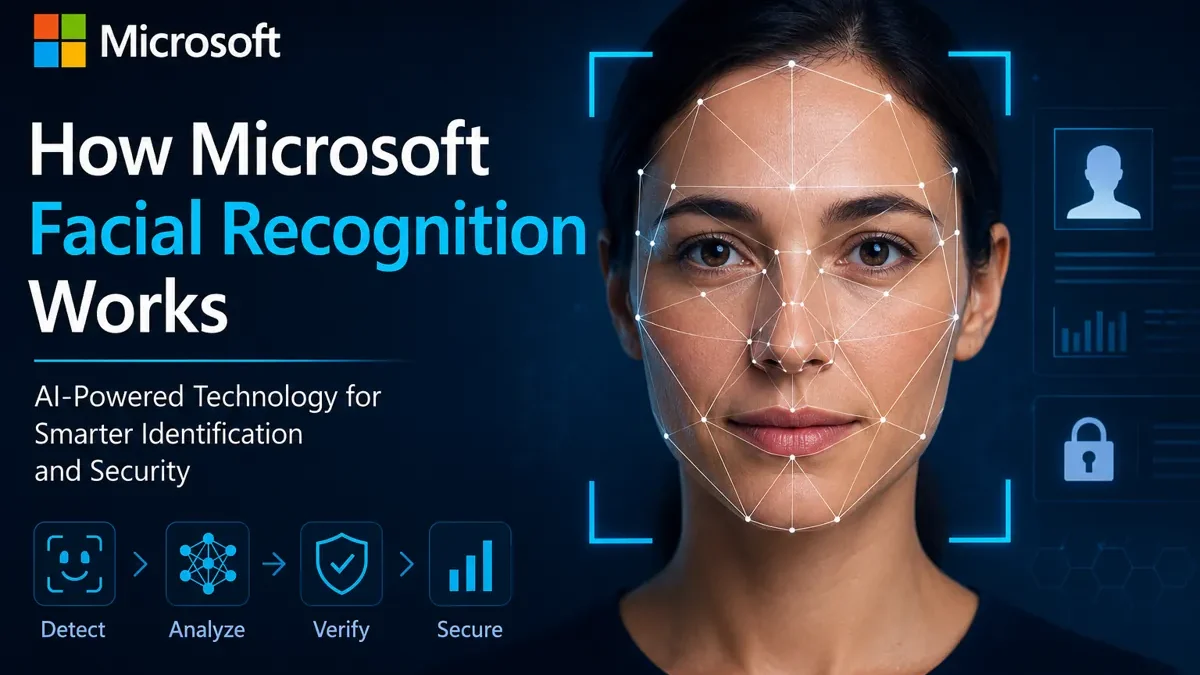

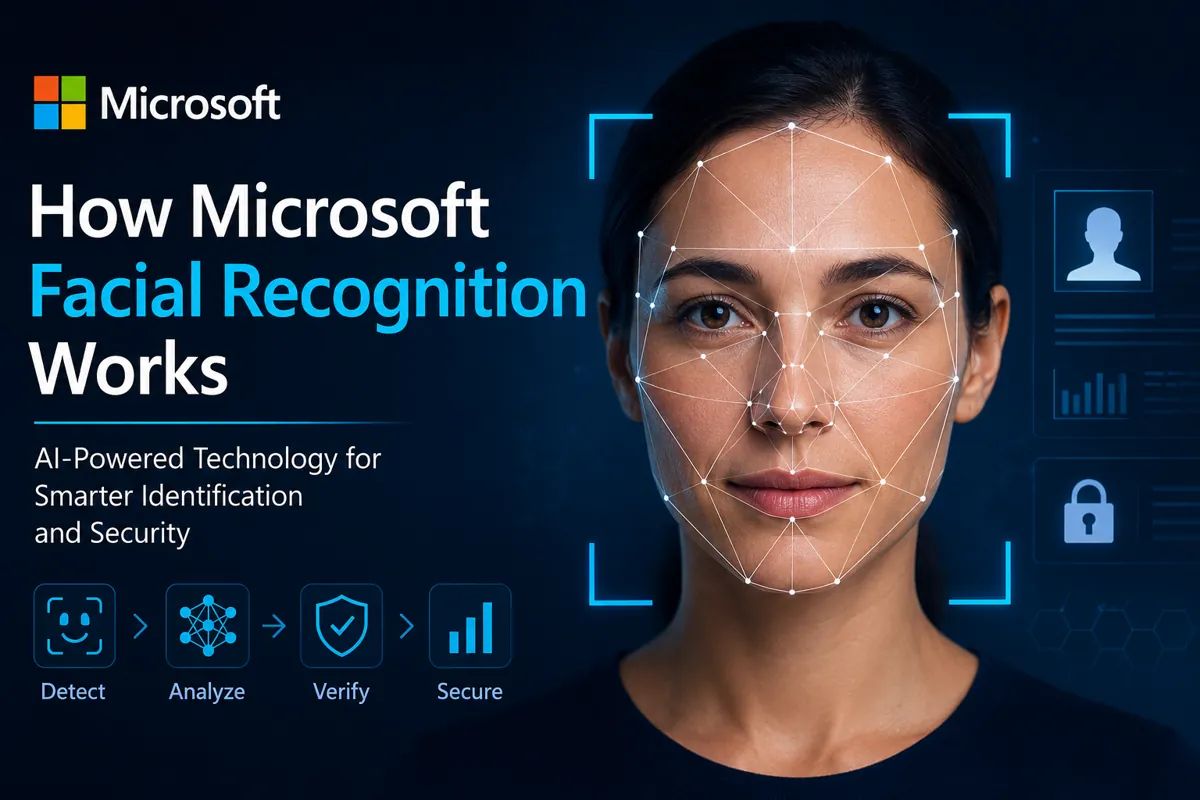
Microsoft facial recognition technology uses highly developed machine learning algorithms and computer vision technologies to recognize, confirm, and analyse human faces in digital images and videos. Microsoft mainly suggests these expertise through its Azure Face API, which is part of the Azure AI services ecosystem.
This Article is a part of
Machine Learning Resource Center
The system works by detecting facial landmarks such as:
- eye position
- nose shape
- facial contours
- distance between facial features
These biometric patterns are converted into mathematical representations known as facial embeddings. Machine learning models then compare these embeddings against stored datasets to perform:
- face verification
- face identification
- emotion analysis
- liveness detection
- access authentication
Microsoft facial recognition systems are commonly used in:
- airport security
- employee attendance systems
- identity verification
- banking authentication
- smart surveillance
- healthcare systems
The Azure Face service similarly supports cloud-based scalability, letting businesses to manage large volumes of facial recognition requests through Microsoft Azure infrastructure.
Table of Contents
Microsoft Facial Recognition Usage in Different Sectors
Healthcare organizations increasingly use facial recognition and AI-powered healthcare diagnostics for patient monitoring, predictive analysis, and hospital automation systems.
Modern businesses use AI-powered customer intelligence systems to improve customer engagement, automate workflows, and deliver predictive sales insights.
Enterprises are rapidly adopting AI-driven hyperautomation systems to streamline repetitive tasks, optimize operations, and improve workflow efficiency.
Scalable machine learning applications rely heavily on cloud-based AI infrastructure to process large datasets and deliver real-time analytics.
Organizations are increasingly integrating generative AI technologies into business automation, content generation, and intelligent decision-making systems.
Microsoft Facial Recognition vs Traditional Authentication
| Authentication Method | Security Level | Contactless | AI-Based | Scalability |
| Passwords | Medium | No | No | High |
| Fingerprint | High | Partial | Limited | Medium |
| Facial Recognition | Very High | Yes | Yes | High |
| OTP Verification | Medium | Yes | No | High |
Ethical Concerns and Confidentiality Challenges
Even though facial recognition technology advances major advantages in automation and security, it has also caused serious ethical and privacy concerns globally.
Microsoft has implemented stricter Responsible AI policies for its Face API after criticism related to:
- demographic bias
- mass surveillance
- consent issues
- inaccurate emotion detection
- misuse of biometric data
The company now limits access to certain facial recognition capabilities and requires approval for advanced use cases involving identity verification.
Microsoft also recommends that organizations:
- obtain user consent
- provide fallback authentication methods
- maintain human oversight
- comply with GDPR and biometric privacy regulations
Future of Microsoft Facial Recognition in 2026
In 2026, Microsoft continues integrating facial recognition with:
- cloud AI systems
- edge computing
- generative AI
- cybersecurity frameworks
- enterprise automation
Emerging trends include:
- AI-powered liveness detection
- multimodal authentication
- zero-trust identity verification
- AI governance frameworks
- privacy-preserving biometrics
As machine learning models become more accurate and efficient, facial recognition technology is expected to expand further into:
- smart cities
- autonomous systems
- healthcare diagnostics
- financial security
- workplace automation
Frequently Asked Questions
What is Microsoft facial recognition technology?
Microsoft facial recognition technology is an AI-powered system that detects, verifies, and identifies human faces using machine learning algorithms and Azure AI services.
Is Microsoft Face API free?
Microsoft offers limited free-tier access to Azure Face API, but enterprise-scale usage typically requires paid Azure subscriptions.
Is facial recognition considered AI?
Yes. Facial recognition is a subset of artificial intelligence that combines computer vision and machine learning technologies.
What are the risks of facial recognition?
Major risks include:
- privacy concerns
- demographic bias
- unauthorized surveillance
- biometric data misuse
- inaccurate identification