
This Article is a part of
Generative AI Guide
One of the best known names to be associated with the rise of AI image generation is ‘DALL-E’. When OpenAI launched it in 2021, it demonstrated that a model could take a blank piece of text and generate a new image in a manner that felt unique rather than experimental.
Today, DALL-E is known more as the model family that established the first definition of text-to-image AI, even if OpenAI‘s modern image experience now resided within newer, multimodal models like GPT-4o and ChatGPT Images.
As AI image generation is getting better and better, numerous consumers searching for “DALL-E” are wondering various questions, including:
- What exactly was DALL‑E?
- How did it work?
- Is DALL‑E still available?
- What replaced it?
- How does it compare to newer models like GPT-4’s image generation or Stable Diffusion?
DALL·E became one of the earliest examples of modern generative AI technology,
showing how artificial intelligence systems can create original visual content from simple human instructions.
This guide answers all of those questions — clearly and factually — while placing DALL‑E in its proper historical and technical context within the broader evolution of text to image AI models.
Table of Contents
Why DALL-E Mattered
Before DALL-E, most perceptions on artificial intelligence, would be of other AI systems that write text or label images. OpenAI brought about a change of thought by showing the text could also be used for visual creation.
That shift would be particularly relevant for creators marketers, designers, developers because it brought image generation into a conversation. They didn‘t need to learn an arduous visual process; they could just write out what they wanted.
What DALL-E Is
DALL-E is a generative AI model for generating images from text, built by OpenAI. The first version (released01/2021) was trained to generate images from captions describing a wide range of objects and concepts OpenAI described it as a “12-billion parameter version of GPT-3 trained to generate images from text captions”.
These two words bring us the vanishing point of the model‘s personality: Salvador Dali blending with DALL-E embodies a surrealist, creative personality. As a user, the idea was straightforward: provide an image des-renders, for example “an astronaut riding a horse”.
DALL·E played a major role in advancing text-to-image AI models, where machine learning systems transform natural language prompts into realistic digital images.
How DALL-E Works
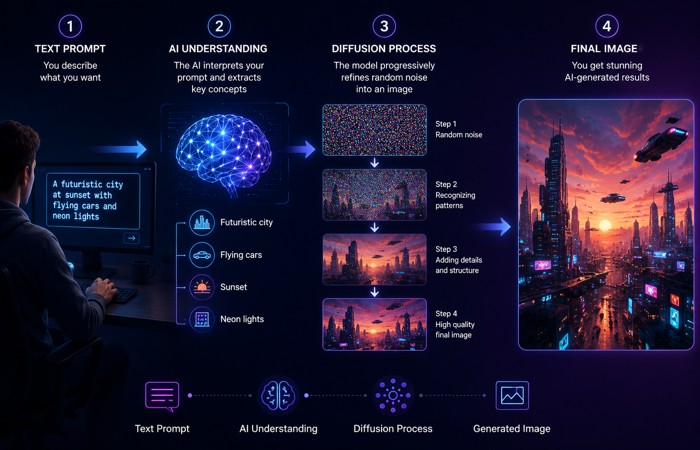
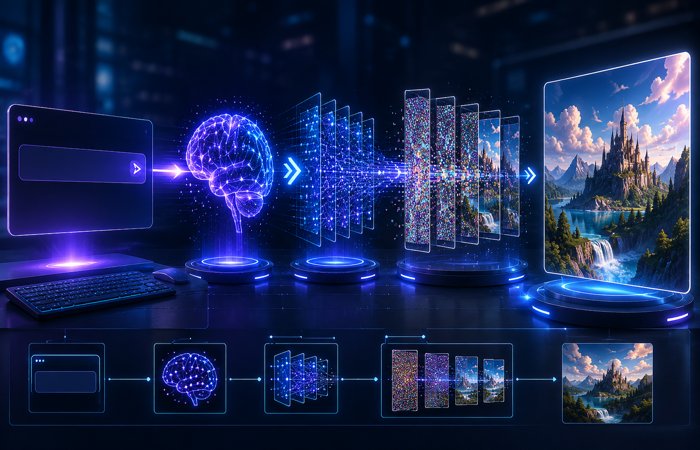
The first DALL-E employed a transformer-style autoregressive configuration with the tokens treated as one sequence with the tokens. It was a huge research jump forward because it brought the logic of language models to visual generation.
Alongside the improvements to innovation, DALL-E 2 and DALL-E 3 shifted over to diffusion based generation which starts with a bunch of noise and slowly transforms it into a result. OpenAI explains the approaches as producing “better quality images that are more realistic and faithful to the prompt,” as well as “stronger safety.”
Simply put, the flow works as follows:
- The model starts with random noise.
- The text prompt guides the generation step by step.
- This is not unusual. We have a similar telling. We see the image get clearer and more organized with a more passes.
- The end results adhere as much as possible with the description of the prompt.
That shift to diffusion is a big reason later versions looked more polished and more usable.
DALL-E 1: The First Breakthrough
In January 2021, OpenAI launched the initial version of DALL-E as a research preview. Despite being just in the early stages of development, it used to be quite mind-blowing because to its capability to combine concepts, generate creative images and flexible understand text prompts.
And at the same time, it was not something you could hold in your hand as a finished interactive art piece like people have come to expect. Resolution was relatively low, results were heavily variable and it was primarily a piece designed to illustrate what could be done.
DALL-E 2: Better Quality and Wider Access
DALL-E 2 Arrived in 2022 and was a giant step forward in quality. OpenAI claimed it created more realistic and accurate visuals at 4 times the resolution of the first model.
This version also made image editing and variation generation much more practical. Which is important as it allowed the public to take an image that was created and iteratively improve it rather than coming from scratch every time. OpenAI also pointed out increasing safety systems and increased public access from time to time.
How CLIP Improved DALL-E
Another important part of DALL-E’s evolution was CLIP, OpenAI’s model designed to connect images and text.
CLIP learned associations between visual concepts and natural language descriptions, allowing an AI system to make a more accurate determination of whether an image reflected a given writing prompt.
This association of understanding the language and the visual representation established those systems as an important basic for later text-to-image applications..
DALL-E 3: The ChatGPT Era
As of 2023 DALL-E 3 became even more accessible since it was integrated into ChatGPT. OpenAI claimed that the model processed so much more nuance and detail than its predecessors, compliance with prompt were enormously better and the engineering of prompts was decreased.
That integration was great for casual users: users didn‘t have to type out a text prompt for the perfect image, they could just speak out the concept, iterate in real-time, and request edits in English.
Strengths of DALL-E
DALL-E gained popularity as it solved a genuine usability issue. It made image generation approachable for non-specialists while still providing enough control for professionals.
Its biggest strengths were:
- Strong natural-language understanding, especially in DALL-E 3.
- Creative combinations of unrelated ideas.
- Conversational editing inside ChatGPT.
- Built-in safety filters for policy-sensitive content.
Limitations of DALL-E
Though at its current level, there were obvious limitations to DALL-E. The most difficult problems had always been handwriting and text within images, so elements such as signs, labels, and fonts would frequently appear misshapen or incorrectly spelled.
It also had trouble with fine details (hands, fingers, placements of objects, consistency of characters through many images). These issues are common in the early generation of image systems. However these flaws became more evident as newer systems showed their weak spots.
How DALL-E Evolved Into Modern AI Image Generation
The successor is not just a single image generator. OpenAI now thus seems to be heading in the direction of native multimodality, that is taking text and images together inside a larger model rather than an image-only pipeline..
OpenAI’s GPT‑4o image generation is described as more capable than earlier DALL-E 3 systems, with better instruction following, improved image editing, stronger text rendering, and image-to-image transformation features. OpenAI’s help documentation now frames image creation and editing as part of ChatGPT Images, including image editing tools and the ability to create or modify images directly in chat.
DALL-E vs GPT-4o Image Generation
| Feature | DALL-E 3 | GPT‑4o / ChatGPT Images |
| Prompt understanding | Strong | Stronger |
| Text rendering | Improved | Better |
| Editing workflow | Conversational | More integrated |
| Character consistency | Limited | Improved |
| Native multimodality | Partial | Yes |
| Current OpenAI focus | Legacy | Current direction |
Best Use Cases
If your goal is historical explanation, DALL-E still deserves coverage because it marks the beginning of mainstream text-to-image AI. It is also a useful comparison point when discussing how far OpenAI’s image systems have progressed.
If what you want to do today is make useful images, the newer GPT 4o/ChatGPT Images stack will be the better choice because they are a modern workflow and better editing behavior.
DALL-E vs Midjourney vs Stable Diffusion vs GPT-4o
| Feature | GPT-4o | Midjourney | Stable Diffusion | DALL-E |
| Ease | Excellent | Good | Advanced | Easy |
| Local control | No | No | Yes | No |
| Fine tuning | Limited | Limited | High | Limited |
| Realism | High | High | Depends | Good |
Can You Use DALL-E Images Commercially?
Yes, images created with DALL-E and OpenAI’s image generation tools can generally be used for commercial purposes, including projects such as marketing materials, website graphics, presentations, product concepts, and creative campaigns, subject to OpenAI’s current terms and content policies.
This was one reason DALL-E became popular among designers, businesses, and content creators. This artwork was generated by a regular person typing in text describing an image and was generated by software.
Having commercial use of the AI images still means you have to abide by its license rules. Users should consider:
- Please note that in the future, it may be the case that you are entitled to more openAI rights than listed here.
- Copyright issues. This is the best of what the future may bring for artists. But there‘s still a huge and unresolved argument in this area.
- For most of my customers it‘s not much of a problem, and I have not had anyone to write packaging or mass communication and tell me it‘s not “brand safe”.
- Accuracy refers to how realistic and correct an image is, with issues including errors in rendering objects, words or other aspects of the image.
Though DALL-E opened up business uses of AI image generation, there still remains a need for human monitoring and reprocessing. This is typically achieved through a combination of AI (to generate creative ideas) and editing, review and publishing best practices.
Legal and Copyright Debate
That DALL-E was only the most recent iteration in a series of high-profile instances in the debate over training data, art rights and copyright. Elsewhere, like many generative systems it provoked debate about transparency, licensing, and ethics of training on enormous image-text sets.
That debate however was part of the larger industry trends towards dataset disclosure and provenance tools, and more explicit content policies. In this sense DALL-E impacted not just images generation, but also the development and governance of AI image generation tools.
The Legacy of DALL‑E
DALL‑E was not just a product. It marked a turning point.
It demonstrated that:
- AI could generate original images from text
- Transformers could extend beyond language
- Creativity and computation could merge in accessible ways
It inspired:
- Midjourney
- Stable Diffusion communities
- Open-source image research
- Enterprise AI design tools
Even as newer systems surpass it technically, DALL‑E remains foundational in the history of text‑to‑image AI.
Alternatives to DALL‑E
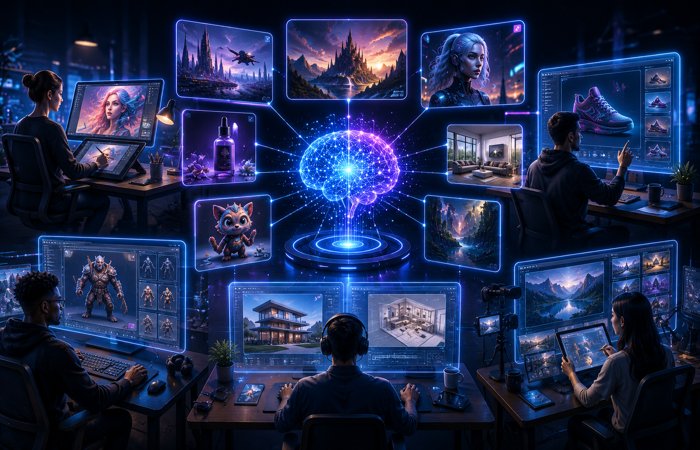
If you are exploring modern text‑to‑image tools, current options include:
- GPT‑4o image generation (OpenAI)
- Stable Diffusion (open-source ecosystem)
- Midjourney
- Adobe Firefly
- Other enterprise visual AI platforms
Each differs in:
- Customization level
- Licensing clarity
- Commercial use policies
- Prompt flexibility
- Cost structure
Which to use depends on whether you want:
- Open-source control
- Ease of use
- Commercial safety
- Artistic experimentation
Along with DALL·E and Stable Diffusion, Midjourney AI image generator became another popular platform known for creating highly detailed and artistic AI-generated visuals.
FAQs
Q1: What does DALL-E stand for?
A: It combines Salvador Dalí and WALL·E
Q2: Is DALL-E still available?
A: Now OpenAI image tools are focused on ChatGPT Images and GPT 4o, and DALL-E 3 is the best for that song to sit the new generation of the “just” one.
Q3: What‘s the difference between DALL-E 2 and DALL-E 3?
A: DALL-E 3 was more responsive to prompts, more conversational, and gave more aligned results (especially within ChatGPT).
Q4: What replaced DALL-E?
A: OpenAI’s newer multimodal image generation inside GPT‑4o and ChatGPT Images represents the current direction.
Q5: Do I need to pay to use DALL-E?
A: Availability and price will vary according to the current ChatGPT plans and image generation access policies of OpenAI.
Q6: is DALL-E Better than Midjourney?
A: It depends on the use case. For instance, Midjourney is generally better suited for artistic styles of images, whereas OpenAI‘s image generation systems place a stronger emphasis on instruction following and usability with ChatGPT.
Q7: Is DALL-E able to generate accurate representations?
A: Yes. DALL-E 3 and subsequent versions show much better realism, prompts accuracy and quality of images. But the quality can change depending on request details.
Final Word
However, DALL-E was more than a model to test: it was the model that really brought text-to-image generation out of the research novelty and into a mainstream creative workflow.
Its legacy is visible in nearly every modern image generator that followed, but OpenAI’s current image stack has clearly moved beyond the original DALL-E era. For historical context, DALL-E is foundational; for current production use, GPT‑4o and ChatGPT Images are the stronger choice.