
AI assistance is becoming part of everyday work. People now use
artificial intelligence to find information, summarize documents,
draft communications, organize tasks, support customers, translate
languages, navigate software, and make complex information easier to
understand.
Computer Tech Reviews welcomes practical contributions about AI
assistants and the technologies, workflows, and safeguards behind them.
We invite articles from developers, product managers, technology
consultants, customer-experience professionals, educators,
accessibility specialists, researchers, and people who have implemented
or evaluated AI-assisted systems.
We are interested in balanced articles that explain what an assistant
can genuinely do, where human review remains necessary, and how users or
organizations can evaluate whether the tool is accurate, useful,
private, secure, and appropriate for its intended purpose.
This page is part of our broader
Artificial Intelligence Write for Us
contributor hub, where writers can explore other AI technologies,
models, platforms, and applications.
What Is AI Assistance?
AI assistance refers to the use of artificial intelligence to help a
person complete a task, understand information, communicate, or make a
decision. The system may respond through text, voice, images, software
controls, recommendations, or a combination of these formats.
An AI assistant does not necessarily complete an entire process without
supervision. In many cases, its purpose is to reduce repetitive work,
present relevant information, suggest a next step, or prepare an output
that a person reviews before using.
The amount of autonomy varies. One assistant may only answer questions
from an approved knowledge base, while another may connect with
calendars, email, customer records, business software, or external
services to perform permitted actions. The greater the access and
autonomy, the more important security, permissions, monitoring, and
human oversight become.
Types of AI Assistance We Cover
Workplace and Productivity Assistants
Workplace assistants can help employees summarize meetings, search
internal documents, prepare reports, draft emails, organize schedules,
analyze information, or navigate business software.
We welcome articles that evaluate whether these tools save meaningful
time, how they affect existing workflows, what information they can
access, and how employees should verify their outputs.
Customer-Service Assistants
Customer-service assistants can answer routine questions, retrieve
account information, guide customers through a process, suggest
responses to human agents, and direct complex cases to the appropriate
team.
Valuable submissions may discuss knowledge-base design, escalation to
human representatives, response quality, customer frustration,
multilingual support, accessibility, privacy, and measuring whether an
assistant actually improves the service experience.
Voice Assistants
Voice assistants combine technologies such as speech recognition,
language understanding, response generation, and text-to-speech. They
may be used in phones, vehicles, smart homes, workplace systems,
accessibility tools, and customer-support services.
Contributors can cover voice-interface design, speech accuracy, accent
and language support, background noise, privacy, wake-word detection,
authentication, or the difficulties of completing complex tasks through
voice alone.
Research and Knowledge Assistants
Research assistants help users locate, compare, summarize, or organize
information. Some work with public sources, while others retrieve
information from a controlled collection of company documents,
databases, or academic material.
Strong articles should examine citation quality, retrieval methods,
source transparency, hallucinations, access permissions, and the need
to verify important conclusions against the original material.
Education and Learning Assistants
AI assistance can support explanations, practice exercises, feedback,
language learning, lesson preparation, and personalized study. However,
educational tools must be designed carefully so they encourage
understanding rather than simply completing the learner’s work.
We welcome balanced discussions of teaching methods, age-appropriate
design, academic integrity, student privacy, accessibility, teacher
oversight, and methods for evaluating learning outcomes.
Accessibility Assistants
Accessibility-focused assistants may describe images, transcribe
speech, simplify language, translate content, support alternative input
methods, or help users navigate digital services.
Articles in this area should consider reliability, inclusive design,
user testing, privacy, language coverage, error consequences, and the
importance of involving people with disabilities in product
development.
Industry-Specific Assistants
AI assistants are also being developed for healthcare, finance, legal
services, retail, travel, human resources, engineering, marketing, and
other specialized fields.
Industry-specific contributions should distinguish between
administrative assistance and high-impact professional decisions. They
should also discuss relevant privacy, security, regulatory, accuracy,
and human-review requirements.
AI Assistance Topics We Welcome
We accept original tutorials, explainers, comparisons, case studies,
implementation guides, product evaluations, and informed opinion pieces
about:
- Designing an AI assistant for a specific user need
- AI copilots for workplace productivity
- Customer-service assistants and intelligent virtual agents
- Voice assistants and voice-user interfaces
- AI meeting, email and scheduling assistants
- Research and knowledge-management assistants
- AI assistance in education and training
- Accessibility applications of AI assistants
- Multilingual and multimodal AI assistance
- Connecting assistants to company data or software
- Retrieval-augmented generation for internal assistance
- Permissions and identity controls for AI assistants
- Human review and escalation procedures
- Testing assistant accuracy and reliability
- Measuring user satisfaction and task completion
- Privacy and security risks in AI assistance
- Reducing hallucinations and unsupported answers
- Comparing AI assistant platforms responsibly
- Introducing AI assistance into existing workflows
- Common reasons AI assistant projects fail
How AI Assistants Work
The design of an AI assistant depends on its purpose, but many systems
combine several components:
- User interface: Accepts text, speech, images or
other forms of input. - Language or speech processing: Interprets the
user’s request and produces an understandable response. - Model: Generates, classifies, retrieves or
recommends information. - Knowledge source: Provides approved documents,
databases or other information relevant to the request. - Tools and integrations: Allow the assistant to
search systems or perform permitted actions. - Permissions: Control which users and systems may
access particular information or functions. - Safety controls: Restrict unsafe requests,
sensitive data exposure or actions outside the assistant’s role. - Monitoring and review: Help teams evaluate
performance, identify errors and improve the system.
Authors do not need to cover every component in one article. A focused,
technically accurate explanation of a single part is often more useful
than a broad overview.
Designing Useful AI Assistance
A successful assistant should be built around a clearly defined user
need. Adding a conversational interface to a product does not
automatically make the product easier or more valuable.
Before implementation, teams should determine:
- Which users the assistant will serve
- Which tasks it may and may not perform
- What information it requires
- Which systems it may access
- When a human must review or approve its work
- How uncertain or incomplete answers will be communicated
- How users can correct mistakes or request human help
- How performance and user satisfaction will be measured
Organizations that have not yet evaluated their data, infrastructure,
governance, workforce skills, and security should first review our
AI Readiness Write for Us
section.
Adopting AI Assistance in an Organization
Introducing an assistant often changes how employees or customers find
information and complete tasks. Implementation may require employee
training, workflow redesign, integration with existing systems,
acceptable-use policies, access controls, monitoring, and a reliable
method for escalating problems.
A limited pilot can help an organization evaluate usefulness and risk
before wider deployment. The pilot should test realistic tasks rather
than relying only on demonstrations prepared by the vendor.
Contributions that mainly discuss organizational pilots, vendor
selection, change management, return on investment, deployment, or
scaling should also consider our
AI Adoption Write for Us
page.
Benefits and Limitations of AI Assistance
An effective assistant may reduce repetitive work, improve access to
information, provide support outside normal operating hours, or make a
service easier to use. These benefits should be demonstrated rather
than assumed.
An assistant may also misunderstand a request, produce unsupported
information, expose sensitive data, apply an unsuitable recommendation,
or create more work for people who must correct its mistakes.
Performance can vary between languages, users, tasks, and real-world
conditions.
We encourage authors to examine both sides. Articles should explain the
circumstances in which AI assistance is helpful and the situations in
which a conventional interface, search tool, documented process, or
human specialist may remain the better choice.
What Makes a Strong AI Assistance Article?
A strong submission is based on real testing, implementation
experience, technical knowledge, user research, or a clearly explained
framework. It should help readers understand how an assistant behaves
during realistic use, not merely repeat a vendor’s feature list.
Your contribution should:
- Identify the intended user and the task being assisted.
- Explain the assistant’s capabilities and boundaries.
- Describe the data, models or integrations involved.
- Explain how accuracy and usefulness were evaluated.
- Discuss privacy, security and human oversight.
- Include practical examples or test scenarios.
- Separate verified facts from predictions and opinions.
- Disclose any connection to a product or company discussed.
Content We Are Unlikely to Accept
We generally do not accept promotional product profiles, copied feature
lists, unsupported claims about productivity or cost savings, or
articles that describe every chatbot, automation tool, or predictive
model as an AI assistant.
We may also reject submissions that overlook privacy, security,
accessibility, accuracy, human oversight, or the consequences of an
incorrect response.
Editorial Guidelines
- Submit original content that has not been published elsewhere.
- Write at least 800 words for a standard contribution.
- Use a focused title, clear headings and short paragraphs.
- Write for a defined audience and user need.
- Support factual claims with current and credible sources.
- Use first-hand testing where reviewing a tool or platform.
- Disclose relevant employer, client or vendor relationships.
- Avoid promotional, exaggerated or keyword-focused language.
- Use only images and screenshots you have permission to publish.
- Proofread and fact-check the article before submission.
AI tools may assist with research or drafting, but authors are
responsible for verifying every claim, source, quotation, product
capability, and example. Unedited or unverified AI-generated
submissions will not be accepted.
How to Submit an AI Assistance Article
Send your proposal or completed article to
contact@computertechreviews.com
.
Please include:
- Your proposed title
- A short summary of the article
- The intended audience and assisted task
- A proposed outline
- Your relevant professional or technical experience
- Details of any testing or implementation behind the article
- Links to previous writing samples, if available
- Disclosure of any connected product, company or client
Related AI Contributor Pages
Select the page that most accurately matches the main focus of your
proposed contribution.
Frequently Asked Questions
What qualifies as an AI assistant?
An AI assistant is a system designed to help a person complete a task,
understand information, communicate, or make a decision. It may use
text, voice, images, recommendations, software integrations, or several
of these methods together.
Is every chatbot an AI assistant?
No. Some chatbots follow fixed rules or menus and use little or no
artificial intelligence. A chatbot can be the interface for an AI
assistant, but the terms are not always interchangeable.
Can I submit a review of an AI assistant?
Yes. The review should be based on first-hand testing and explain the
tasks, settings, limitations, pricing context, privacy considerations,
and evaluation method. It should not simply repeat the product’s
marketing material.
Can I write about AI assistance in a particular industry?
Yes. Industry-specific articles are welcome when they address the
relevant workflows, user needs, regulations, risks, and human-review
requirements.
Recent Posts

How a T-Shirt Design Tool Helps Print Shops Increase Custom Apparel Sales
By Pratik Shah, Creative Head, PrintXpand. Disclosure: PrintXpand sells a t-shirt design tool. Quick Summary: Most custom t-shirt revenue still…
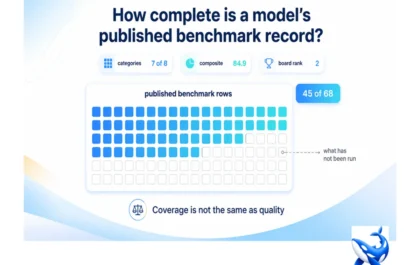
GPT-6 Astra Benchmarks: 45 of 68 Rows, and What That Counts
The GPT-6 Astra benchmarks record is the thickest of the four models in this comparison, and the most useful thing…