
Adopting artificial intelligence involves much more than selecting a
popular tool. An organization must identify a meaningful problem,
prepare its data and employees, evaluate risks, test the proposed
solution, and measure whether the investment produces useful results.
Computer Tech Reviews welcomes practical contributions from technology
leaders, AI consultants, product managers, developers, researchers,
operations professionals, and organizations with first-hand experience
implementing artificial intelligence.
We are particularly interested in articles that move beyond broad
predictions and explain what AI adoption looks like in practice. This
includes the decisions, costs, challenges, mistakes, and organizational
changes that influence whether an AI initiative succeeds.
This contributor page is part of our
Artificial Intelligence Write for Us
section, where you can explore additional AI topics and submission
opportunities.
What We Mean by AI Adoption
AI adoption is the process of introducing artificial intelligence into
a business, public organization, product, or workflow to address a
defined need. It may begin with a small pilot, such as automating
document classification, assisting customer-support agents, detecting
unusual transactions, or improving demand forecasts.
Successful adoption is not measured simply by whether an organization
has purchased an AI platform. It depends on whether the system is
useful, reliable, secure, accepted by its users, and capable of
producing measurable improvements.
Before an organization begins implementation, it should determine
whether its data, infrastructure, governance, workforce, and business
processes are prepared. Contributors covering that earlier stage should
also review our
AI Readiness Write for Us
page.
AI Adoption Topics We Welcome
We accept original explainers, implementation guides, case studies,
frameworks, comparisons, and informed opinion pieces covering subjects
such as:
- Developing an AI adoption strategy
- Identifying high-value AI use cases
- Moving from an AI pilot to production
- Enterprise AI adoption frameworks
- AI adoption for small and medium-sized businesses
- Building internal support for an AI initiative
- Preparing employees for AI-enabled workflows
- Choosing between building and buying an AI solution
- Evaluating AI vendors and platforms
- Integrating AI with existing software and business processes
- Data quality and governance during implementation
- Security, privacy and regulatory considerations
- Responsible AI and human oversight
- Calculating the cost and return on an AI investment
- Measuring AI adoption through practical KPIs
- Common reasons AI projects fail
- Scaling successful AI projects across an organization
- Industry-specific AI adoption in healthcare, finance, retail, education or manufacturing
The AI Adoption Journey
Authors may structure their contributions around one or more stages of
the adoption journey.
1. Identifying the Business Need
A useful AI project starts with a real problem rather than a desire to
follow a technology trend. Articles may explain how organizations
identify repetitive work, decision bottlenecks, customer frustrations,
forecasting problems, or data-heavy processes that could benefit from
AI.
2. Evaluating Organizational Readiness
Before implementation, the organization should assess its available
data, infrastructure, technical skills, leadership support, governance,
security requirements, and employees’ willingness to adopt a different
way of working.
Detailed articles about assessments, maturity models, infrastructure,
workforce preparation, or governance belong within our
AI readiness contributor section
.
3. Selecting and Testing a Solution
A pilot project allows a team to test whether an AI solution performs
reliably under realistic conditions. Useful submissions can discuss
pilot design, vendor selection, data preparation, success criteria,
human review, testing procedures, and decisions about whether to build
or purchase a system.
4. Implementation and User Adoption
Even an accurate AI model can fail if employees do not understand or
trust it. We welcome articles about workflow integration, training,
change management, user experience, internal communication, and
establishing appropriate human oversight.
5. Measurement and Scaling
After deployment, organizations should monitor accuracy, reliability,
cost, user participation, business outcomes, unintended effects, and
changes in the underlying data. Strong articles can explain how teams
measure results and decide whether a successful pilot should be scaled.
AI Assistance as an Adoption Use Case
One of the most common ways organizations introduce AI is by using it to
assist employees or customers. AI assistants can help retrieve
information, summarize documents, draft responses, organize work, guide
users through a process, or support customer-service teams.
Writers focusing on virtual assistants, workplace copilots, intelligent
support systems, voice assistants, or AI-powered productivity tools
should visit our
AI Assistance Write for Us
page.
What Makes a Strong AI Adoption Article?
The best submissions are based on experience, evidence, or a clearly
explained framework. Readers should be able to understand not only what
an organization implemented, but also why it selected that approach and
what happened afterward.
A strong contribution should explain:
- The original business problem or opportunity
- Why AI was considered an appropriate solution
- The people, data, technology, and budget required
- How the solution was tested and evaluated
- What difficulties appeared during implementation
- How employees or customers responded
- Which results were measured
- What the organization would do differently next time
You do not need to disclose confidential company information. However,
concrete observations and realistic examples make an article more
valuable than generic statements about AI improving efficiency.
Content We Are Unlikely to Accept
We generally do not accept articles that present AI adoption as an
automatic or risk-free route to growth. We may reject submissions that
contain unsupported statistics, invented case studies, outdated
product information, excessive promotional language, or recommendations
that ignore privacy, security, governance, cost, and human oversight.
Articles written primarily to promote an AI vendor, consultancy,
platform, or backlink are also unlikely to be approved. If you have a
commercial relationship with a product or organization mentioned in
your submission, disclose it when sending your pitch.
Editorial Guidelines
- Submit original content that has not appeared on another website.
- Write at least 800 words for a standard contribution.
- Use a clear title, introduction, headings and short paragraphs.
- Write for a defined audience and address a specific problem.
- Support research, statistics and factual claims with reliable sources.
- Use current information when discussing AI platforms or regulations.
- Clearly separate personal opinions from verified facts.
- Avoid promotional, exaggerated or keyword-focused writing.
- Disclose relevant company, client or product relationships.
- Proofread and fact-check the complete article before submission.
AI tools may be used to support research or drafting, but the author is
responsible for verifying every factual claim, source, quotation, and
example. Unedited or unverified AI-generated submissions will not be
accepted.
How to Submit an AI Adoption Article
Send a short proposal or completed article to
contact@computertechreviews.com
.
Please include:
- Your proposed article title
- A short summary of the article
- The audience and problem it addresses
- A proposed outline
- Your relevant experience with the subject
- Links to previous writing samples, if available
- Disclosure of any organization or product connected to the article
Related AI Contributor Pages
Choose the contributor page that most accurately matches the main focus
of your proposed article.
Frequently Asked Questions
What is an AI adoption article?
An AI adoption article explains how an organization evaluates,
introduces, manages, measures, or scales artificial intelligence. It
should focus on practical decisions and outcomes rather than providing
only a general definition of AI.
Can I submit an AI adoption case study?
Yes. Case studies are encouraged when they explain the original
challenge, implementation process, results, limitations, and lessons
learned. Promotional case studies may require significant revision.
What is the difference between AI readiness and AI adoption?
AI readiness evaluates whether an organization has the data,
infrastructure, skills, governance, and leadership required to use AI.
AI adoption covers the broader process of selecting, implementing,
measuring, and scaling the solution.
Can I write about an AI assistant used by a business?
Yes. If the article mainly concerns the assistant’s design,
capabilities, implementation, or user experience, the AI Assistance
contributor page may be the more specific destination.
Recent Posts

How a T-Shirt Design Tool Helps Print Shops Increase Custom Apparel Sales
By Pratik Shah, Creative Head, PrintXpand. Disclosure: PrintXpand sells a t-shirt design tool. Quick Summary: Most custom t-shirt revenue still…
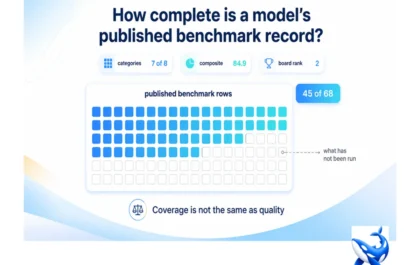
GPT-6 Astra Benchmarks: 45 of 68 Rows, and What That Counts
The GPT-6 Astra benchmarks record is the thickest of the four models in this comparison, and the most useful thing…