

This article is part of our Business and Enterprise Software resource section.
POS system for your Restaurant or Retail Business
Most people may not be aware of what a point-of-sale system is, but people certainly do use them a lot. They may be called the unsung heroes of the retail industry actually. As POS systems have made it easier for businesses and their clients to conduct business with each other smoothly and efficiently. These systems allow people to have the capability to efficiently manage a business using equipment and software specially designed to electronically handle the processes associated with a restaurant or retail business. As businesses connect sales, inventory, purchasing, and other operations, understanding the definition of ERP can help explain how these functions can be managed through an integrated system.
The evolution of e-commerce has also changed the role of POS systems. Retail businesses increasingly need to connect physical stores with online shopping, inventory systems, payment processing, customer information, and fulfilment. A POS system can become an important part of that connected environment because it records transactions while also generating information that can support wider business decisions.
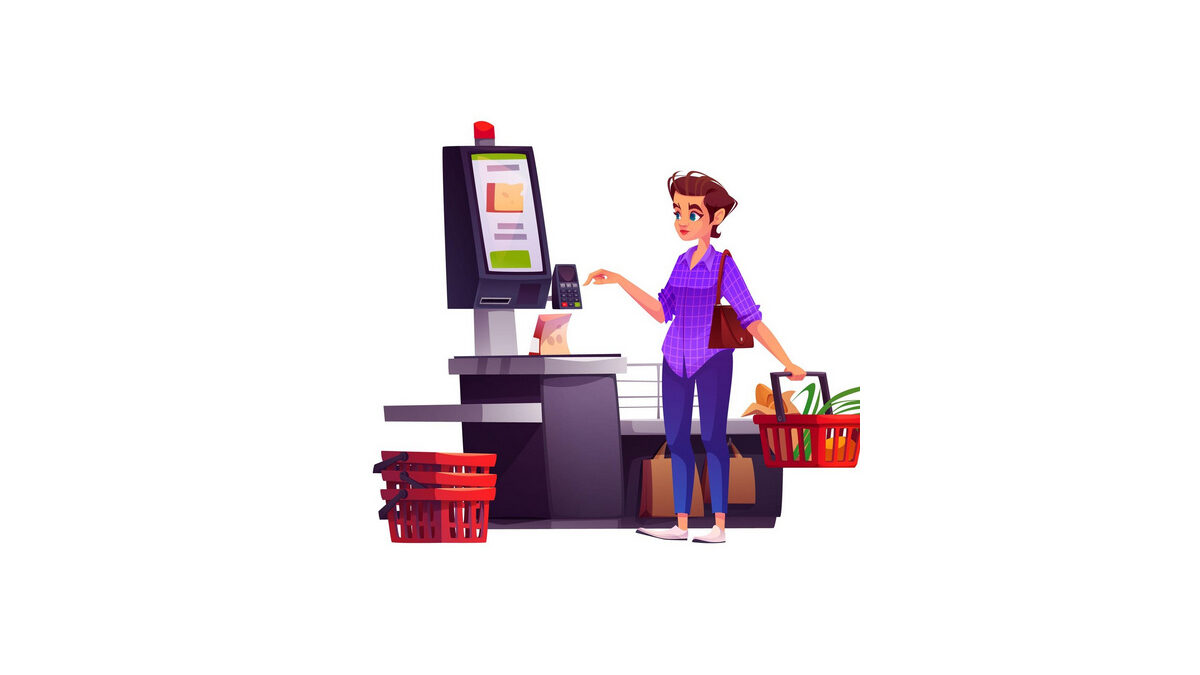
For the uninitiated, you may see part of these systems as being the electronic cash registers you would find at a checkout terminal in a grocery. Using these systems presents a business with many benefits.
This article is part of our E-commerce & Retail Business resource section
Here are some of those benefits and also advantages.
Table of Contents
1. Detailed reports:
The essential feature of any POS system is that it can store much more information and that too much faster than a traditional cash register. It gives you the facility to pull out information from any terminal of the business within seconds. Directly through the central hub. Which has access to all inventory data of your business. A point of sale system can pull out reports on the fly and brings up to date and also exact information about sales, items, time log and much more.
Detailed reporting becomes increasingly important as businesses grow. A small shop may be able to understand its sales from a basic cash register, but a business with multiple employees, locations, product categories, or sales channels can quickly become difficult to manage without centralized information.
Modern POS reports can help managers understand which products sell most frequently, which periods generate the most transactions, how individual locations perform, and where sales opportunities may exist. This information can also be used when making decisions about staffing, promotions, purchasing, and inventory.
2. Faster checkout speed:
Since the POS system primarily uses bar code scanning or similar feature. Hence modifying and completing a transaction is done at a more rapid rate. When you make a comparison between the traditional methods and the point-of-sale process. You can easily see the transaction time difference. Keyboard entry of a 12 character data, which is a typical UPC length, would take about 6 seconds and scan it in the form of bar code would take just about 2 seconds. Obvious now, this system is faster and accessing data is easier too. The effectiveness of this process also depends on using reliable barcode scanners in a POS system to identify products quickly and accurately. POS system facilitates using features like ‘refunds, void or no sale’ so simple that it’s just a click away.
A faster checkout can improve the overall customer experience. Customers generally do not want to spend unnecessary time waiting to pay, particularly when they are making routine purchases.
Speed is also important for employees. A system that makes it easier to find products, apply discounts, process refunds, and complete transactions can reduce the amount of time employees spend dealing with administrative tasks.
Retailers should therefore evaluate not only how quickly a POS system can process a transaction but also how easy it is for employees to use during busy periods.
3. Accurate reports:
Accuracy is the most important factor when you are dealing with an extensive inventory. One single mistake can lead to a blunder. “To err is human.” This has been a long known proverb, and no one can prove it wrong even today. Using a POS system makes your calculation and database almost 100% accurate. Unless the machine somehow malfunctions, there can be no mistake for even the 10th place of a decimal in your calculations.
Accurate reporting is particularly valuable when sales information is used together with inventory and purchasing information. If a retailer has inaccurate transaction records, it becomes difficult to determine whether stock differences are caused by sales, returns, damaged products, theft, or data-entry errors.
Businesses should still remember that computerized systems do not eliminate every possible source of error. Incorrect product information, incorrect pricing, poorly configured tax settings, or mistakes made during setup can still affect reports. Regular review and reconciliation therefore remain important.
4. Fast Facts:
As per studies, standard keying of details by even experienced cashiers is one error in every 300 characters typed using a keyboard. Now let’s see the case with the POS system. A bar code reader for example here has a mistake in 15,000 to 36 trillion characters scanned, and it depends on the type of barcode. Yes, this is a huge difference.
Apart from making mistakes through the traditional method. It also incurs the extra cost of correcting the mistakes and making the final reports faulty. Some of the times, the prices of some items need to be changed, and it might be a hectic task to make the correction at every junction the data is stored. In the POS system, you can make the change at every place by just making the change at the hub or the back office’s primary database. Some such software prints shelf labels and you might not need to modify the price tag on every item. Businesses that handle large volumes of printed labels and documents can also benefit from a printing management system to better manage their printing activities.
Centralized information can be especially useful for businesses with multiple locations. Instead of maintaining separate product and pricing information at every terminal, authorized employees can manage information from a central system.
This can also make it easier to maintain consistency when prices, promotions, or product information change.
5. Easy tracking of inventory:
A Point of sale system keeps a better record of the inventory. It gives you an accurate figure of how many items were sold. It keeps regular track of all the product movements taking place. This is a very efficient and helpful factor for any business. This highlights the importance of inventory management software for businesses that need accurate stock information and better control over product movement. The inventory details have all the data about the product movement like the sales, date of sale, price and much more. It helps you to manage a sufficient amount of inventory in stock and makes sure that it never lacks any particular item. Businesses can measure these improvements by tracking relevant KPIs for successful inventory management such as stock availability, turnover, and inventory accuracy.
In the traditional system, you might need to enter the sales data into the excel sheet after getting it from the cash register software and then calculate the inventory movement for each item. However, in the POS system, you can do all this in the same system. And there is no need to fetch data from anywhere else and type it again. For businesses that also deliver products to customers, fleet management software can complement POS and inventory systems by helping monitor the vehicles involved in delivery operations. It saves an enormous amount of time and prevents errors with manual data entry.
There are software types that allow various kinds of inventory tracking methods. Two common types are perpetual and periodic. Perpetual inventory tracking is a type of real-time inventory tracking in which the stock items record updates as items move out. The number of items remaining in the inventory reduces as the item is sold and passes through the checkpoint. The periodic inventory tracking system counts the inventory every week, month or year. Once products are ready to be delivered, route management software can help businesses organize delivery routes and improve the efficiency of their distribution operations. It is done after a particular time interval.
Inventory visibility becomes even more important when customers can purchase through multiple channels. A product may be sold through a physical store, website, marketplace, or mobile application. If the inventory information is not updated properly, customers may see products as available when they are actually out of stock.
A well-connected POS environment can help retailers maintain better visibility and make replenishment decisions based on actual sales activity.
6. Features Expandability:
A traditional cash register has very limited options to upgrade. But still won’t be able to compete with a basic POS system. Unlike this, a POS system has several additional features that can be added to it. Several modules are available for specific functions to be added to the primary software and you can make your POS software much better than it was before. You can add new modules to the software and integrate it with the primary software. As more devices and connected systems are added, network inventory management can help businesses maintain visibility over the technology supporting their POS operations.
It also provides you the facility to control your entire inventory from one hub. Centralizing this information is part of the broader shift toward revolutionizing inventory management through connected digital systems. From the head office or the department head.
The ability to expand is one of the important differences between a basic cash register and a modern POS system. A business may begin with simple payment processing and later add inventory management, customer accounts, loyalty programs, reporting, online ordering, employee management, or other functions.
This allows the system to develop alongside the business instead of forcing the business to replace its entire technology setup whenever its requirements change.
7. Improve customer relationships:
Not only are these new POS systems fully capable of running your store and making it more efficient. But they can also be used in coming up with effective marketing strategies. New point-of-sale systems are able to produce accurate consumer behavior reports on which you can devise a marketing strategy similar to loyalty programs, incentives, and discounts. This will improve your relationship with existing clients and help you get business from new ones. When these customer insights are combined with efficient checkout operations, a POS system can help increase retail sales by supporting more informed sales and marketing strategies.
Customer information can help retailers understand purchasing frequency, preferred products, average spending, and responses to promotions. When this information is used appropriately, businesses can create loyalty programs and offers that are more relevant to individual customers.
The quality of the customer experience matters as much as the technology itself. Employees should be able to use customer and transaction information to provide useful assistance rather than making customers repeat information that the business already has.
8. Business Reports:
A significant quality of the restaurant POS system is the ability to generate a variety of essential business reports. Most of the high-end models generate real-time information about profits and loss, popular items, inventory, stock, credit card transactions, and server sales. Having this level of visibility further demonstrates the importance of inventory management software when businesses need to monitor stock alongside their sales activity. A restaurant using one of these smart systems is certain to benefit from increased efficiency in record-keeping since all data is achieved by the computerized system.
Business reports become more useful when managers know which metrics they need to monitor. A restaurant might focus on sales by menu item, table turnover, order value, and server performance, while a retail store might focus on product sales, inventory turnover, average transaction value, and customer retention.
The retail analytics approach can help businesses move beyond simply looking at individual sales transactions and instead identify patterns in the information generated by their POS systems.
For example, a retailer may notice that certain products consistently sell together. That information can influence product placement, promotions, bundles, and purchasing decisions.
9. Error Issues:
A computerized system is appreciated for its ability to cut human error since the ordering process is simplified for all those using it. Poor penmanship can mean an incorrect order is sent out to the restaurant. Which results in a loss of profit and waste. But there is no excuse for mistakes in the ordering process when the incoming orders arrive on the easy-to-read prep station.
Reducing errors can also improve customer satisfaction. Incorrect prices, duplicate transactions, incorrect orders, and inventory mismatches can create unnecessary costs and frustration.
A POS system can help reduce these issues by standardizing processes. However, employees still need proper training and businesses need appropriate procedures for correcting mistakes when they occur.
10. Multiple payment types and customer accounts
In addition to EFTPOS compatibility, the POS system facilitates a number of payment options including cash, credit, debit, cheque, or account. The system also allows you to keep track of your different customer accounts.
Offering multiple payment options can make transactions more convenient and reduce friction at checkout. Businesses should also ensure that payment information is handled securely and that employees understand the correct procedures for processing refunds, cancellations, and other transaction adjustments.
POS Systems and the Future of Retail Technology
POS systems are no longer isolated checkout machines. They are increasingly becoming part of a larger technology environment that connects transactions with inventory, customer information, analytics, e-commerce, and business operations.
The top 7 retail tech trends transforming ecommerce demonstrate how technologies such as artificial intelligence, automation, analytics, connected devices, and digital commerce are influencing the retail sector.
This development means retailers need to think about their POS system as part of the wider technology infrastructure rather than as a standalone payment tool.
A connected system can make information available to different parts of the business and reduce the need for employees to manually transfer information between separate systems.
Using POS Data for Better Retail Decisions
Every transaction processed through a POS system creates useful business information. When this information is combined with inventory, customer, and marketing data, retailers can gain a clearer understanding of their operations.
The effective use of data in retail can help businesses identify purchasing patterns, monitor demand, evaluate promotions, and make more informed decisions about stock.
For example, a retailer could compare sales data with inventory levels to identify products that are selling quickly and require more frequent replenishment. It could also identify slow-moving products and decide whether a promotion, price adjustment, or different product placement could improve performance.
The important point is that data should lead to action. Collecting reports without reviewing them does not automatically improve a business.
Computer Vision and POS Operations
Traditional POS systems primarily record transactions, but retailers can now combine POS information with other technologies to understand what happens in physical stores.
Computer vision in retail businesses can provide additional information about shelves, product displays, store activity, and customer interactions.
For example, a retailer may use information about shelf conditions together with POS sales data to determine whether products are being displayed effectively. If a product has strong demand but repeatedly becomes unavailable or difficult to locate, the business can investigate the issue.
Combining different sources of information can therefore provide a more complete understanding of store performance.
Hyper-Personalization and Customer Engagement
Customer information generated through POS systems can also support more personalized retail experiences.
The triumph of hyper-personalization in retail demonstrates how businesses can use customer behavior and purchasing information to create more relevant interactions.
A retailer might use purchase history to recommend complementary products, provide relevant loyalty rewards, or communicate promotions related to products a customer has previously purchased.
However, personalization should be handled responsibly. Businesses need to consider how customer information is collected, stored, accessed, and used.
IoT and Connected POS Systems
The Internet of Things can add another layer of information to a modern retail environment.
The transformation of retail business with IoT shows how connected devices can support physical retail operations.
IoT devices may provide information about equipment, store conditions, inventory, or other operational activities. When this information is connected to business systems, retailers can potentially identify problems faster and make better operational decisions.
The value of IoT does not come simply from collecting sensor information. Businesses need to determine how that information will be used and what action should follow.
AI and Smarter POS-Based Decisions
Artificial intelligence can also support retailers that have large amounts of transaction and operational information.
Retailers can use AI to identify patterns in sales, demand, inventory, customer behavior, and pricing. The use of AI for smarter pricing in retail is one example of how businesses can use data and AI to support pricing decisions.
AI may also help with demand forecasting, product recommendations, customer segmentation, and inventory planning.
However, AI should not replace human judgment completely. If the underlying POS or inventory information is inaccurate, AI systems may produce unreliable recommendations. A strong data foundation is therefore essential before businesses depend heavily on automated decision-making.
POS Systems and Omnichannel Retail
The growth of online shopping has made it increasingly important for physical stores and digital channels to work together.
An e-commerce and omnichannel strategy can help retailers provide customers with more flexible ways to browse, purchase, collect, return, and receive products.
POS systems can contribute to this strategy by providing accurate information about physical-store transactions and inventory.
For example, a customer may check whether an item is available online before visiting a store. If the retailer’s systems are properly connected, the information shown online can better reflect what is actually available.
Omnichannel operations can also support options such as store pickup, returns across channels, and integrated customer service.
Retail Portals and Operational Systems
A POS system is only one component of a wider retail technology environment. Businesses may also rely on dedicated portals for operational tasks, account management, inventory activities, reporting, and other functions.
For retailers working with specific distribution systems, information about the APSBCL retailer login can be relevant when accessing the appropriate retailer portal and managing related activities.
Connecting operational systems properly can reduce unnecessary manual work and make it easier for employees to access the information required to perform their responsibilities.
Choosing the Right POS System
As you can see there are many benefits to purchasing and using POS solutions for your restaurant or retail shop. If you’re looking to buy a new system, there are many traditional POS solutions on the market that offer all these features like Micros, Aloha, Harbortouch. And even some iPad systems like POSLavu, Revel, and ShopKeep (here’s a comprehensive list to compare). The main thing is to evaluate the functions and features that best suit your business or industry and then look at the price that best fits your budget.
Businesses should consider the type of products they sell, the number of locations they operate, the number of employees using the system, their inventory requirements, payment options, reporting needs, and any other software they need to integrate.
A small retailer may only require basic payment and inventory features, while a larger business may need centralized reporting, multiple locations, customer management, e-commerce integration, loyalty programs, and more advanced analytics.
The most expensive system is not necessarily the best choice. The right POS system is the one that supports the actual needs of the business without creating unnecessary complexity.
Final Thoughts
A modern POS system can provide much more than a way to accept payments. It can become a central source of information for sales, inventory, customer relationships, reporting, and operational management.
As retail technology continues to develop, POS systems will increasingly interact with artificial intelligence, analytics, computer vision, IoT devices, e-commerce platforms, and other connected systems.
The goal should not simply be to add more technology. Businesses should focus on using technology to make transactions easier, maintain accurate inventory, understand customers, reduce errors, and make better decisions.
When the right POS system is combined with reliable processes and useful business data, it can become an important part of building a more efficient restaurant or retail operation.
Looking for more information on POS systems? Click to view loads of information on one of the best POS systems.
AUTHOR BIO
Ross Smith is the Managing Partner at iPad POS Middle East. Based in Dubai, covering the whole of the Middle East, the company is passionate about helping restaurateurs and retailers alike find the most suitable point of sale system to meet the needs of their business. They specialize in iPad-based point of sales systems and are resellers of Revel and Vend.
