
This Article is a part of Application and Web Security Guide
Most companies don’t think about security until something goes wrong.
It’s usually after a suspicious login alert… or worse, after customer data shows up somewhere it shouldn’t.
The truth is, modern cyberattacks don’t always start with dramatic “hacks.” A lot of them begin quietly—with a stolen login, a reused password, or a low-level account that shouldn’t have much power… but does.
That’s exactly why penetration testing exists.
And more importantly, why gray box penetration testing has become such a practical approach for businesses today.
Table of Contents
So, What Exactly Is Gray Box Penetration Testing?
Let’s keep this simple.
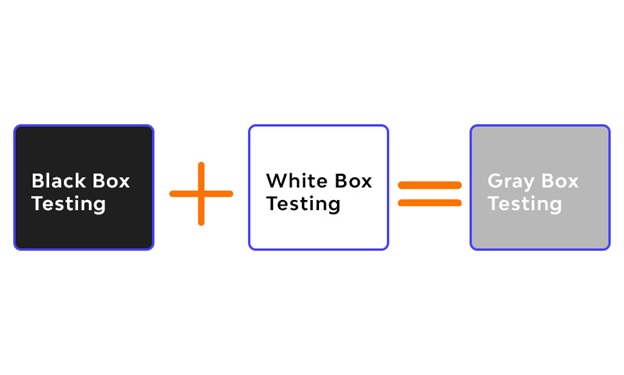
Gray box testing sits right in the middle of two extremes:
- On one end, you have black box testing, where the tester knows nothing.
- On the other, white box testing, where they know everything.
Gray box is somewhere in between.
The tester is given just enough information to be dangerous.
That could mean:
- A normal user account
- A bit of documentation
- Maybe a rough idea of how the system is structured
Not full access. Not zero access. Just… realistic access.
Because in real life, attackers rarely start from scratch—and they almost never have full visibility either.
Gray box testing is one approach within the broader field of penetration testing. To understand the fundamentals, objectives, scope, and methodology of a security assessment, see our guide to penetration testing.
Why This Approach Actually Reflects Reality
If you look at how most breaches happen today, a pattern shows up.
Attackers don’t always break in from the outside. Often, they:
- Use leaked credentials
- Compromise a regular employee account
- Or exploit something after logging in
Once they’re inside—even at a low level—they start exploring.
That’s where things usually go wrong.
Gray box testing is designed to mimic exactly that stage.
Instead of spending weeks trying to “break in,” the tester starts where many real attackers end up: already inside, looking for what’s next.
How a Gray Box Test Typically Plays Out
No two engagements are identical, but most follow a similar rhythm.
First, the organization provides limited access—nothing too privileged.
Then the tester starts mapping things out:
- What can this account actually see?
- What endpoints are accessible?
- Where do permissions feel too loose?
From there, it becomes a process of testing assumptions.
Can a user access another user’s data?
Can roles be manipulated?
Is there a way to move sideways inside the system?
It’s less about brute force—and more about understanding how the system behaves when used in unintended ways. This form of penetration testing is ideal for experienced cybersecurity experts with the right kind of tools and a track record of properly executing both static tests i.e., SAST and dynamic analyses i.e., DAST (fuzzing and source code reviews).
The issue lies in the white box attacking method being unrealistic as no hacker has complete access to their preferred area of attack, instead working with the information they are immediately able to access.
A Real Case (Details Changed, Pattern Is Real)
Here’s something that happens more often than companies expect.
A mid-sized fintech platform brought in testers for a gray box assessment. Nothing unusual there.
They provided a standard user account and some basic API documentation.
At first glance, everything looked solid. Login was secure. Sessions were handled properly. No obvious gaps.
But once the tester started interacting with the API, something subtle showed up.
The application used predictable URLs to fetch user data.
By slightly tweaking a parameter in those requests, the tester was able to pull information tied to other users—without triggering any alarms.
No hacking tools. No complex exploit. Just… a small assumption in the code that no one questioned.
What Was the Issue?
It came down to authorization, not authentication.
The system checked whether the user was logged in—but didn’t properly verify whether they were allowed to access that specific data.
That’s a small oversight with a very big impact.
Why This Matters
This kind of issue is exactly why gray box testing is valuable.
- A black box test might not have reached that point quickly
- A white box test might have focused too much on code paths
But gray box testing hit that middle ground—where real-world risk lives.
A Simple (But Realistic) Scenario
Let’s imagine something closer to everyday business.
- You run an online store.
- A user signs up, places an order, and logs in like any normal customer.
- Nothing unusual.
- But then they start clicking around.
- They notice a pattern in how order IDs are structured. They try changing one.
- Suddenly, they can see someone else’s order.
- Then another.
- And another.
- No firewall alert. No obvious breach. Just a small gap that nobody expected someone to test.
That’s the kind of thing gray box testing is meant to uncover.
White vs Black vs Gray Box (The Practical Difference)
Instead of overcomplicating it, here’s how they differ in real terms:
| Type | What the Tester Knows | What It Feels Like |
| Black Box | Nothing | Like a stranger trying to break in from outside |
| Gray Box | Some access | Like a user already inside exploring limits |
| White Box | Everything | Like a developer reviewing the system deeply |
When Each Approach Makes Sense
There’s no “one-size-fits-all” here.
Black box testing is useful when you want to see how your system looks to the outside world.
White box testing is better when you’re reviewing code, especially during development.
But gray box testing tends to be the most practical when:
- You want realistic results
- You’re concerned about insider risks
- You rely heavily on user roles or APIs
What Experienced Testers Say
I once spoke to a senior pentester who summed it up in a way that stuck with me.
“Most serious issues aren’t sitting on your homepage anymore. They’re behind login screens, in workflows people assume are safe.
If you’re not testing that layer, you’re missing where the real problems usually are.”
That insight lines up with what many teams are seeing today.
Gray box assessments can also be applied to internet-facing applications and systems, where testers work with limited information while evaluating externally accessible attack surfaces. Learn more about online penetration testing and how these assessments identify weaknesses exposed through the internet.
Where Gray Box Testing Really Helps
Some areas benefit more than others:
- SaaS platforms with multiple user roles
- Applications with heavy API usage
- Systems handling sensitive user data
- Internal dashboards and admin panels
In these environments, problems often don’t show up until after login.
A Few Honest Limitations
It’s not perfect.
Gray box testing won’t:
- Fully simulate a completely unknown attacker
- Replace deep code reviews
- Catch every edge-case vulnerability
But that’s okay—because it’s not trying to do everything.
It’s trying to do one thing well:
find realistic, high-impact issues efficiently.
Although penetration testing and security audits serve different purposes, they can complement each other when organizations need to evaluate both technical vulnerabilities and the effectiveness of their security controls. Explore penetration testing and security audits for a broader comparison.
Final Thoughts
Security testing isn’t about ticking boxes anymore.
It’s about understanding how things break in the real world.
And in the real world, attackers aren’t always outsiders with zero access.
Sometimes, they’re already inside—quietly testing boundaries.
Gray box penetration testing is built around that reality.
And for many organizations today, that makes it one of the most useful approaches you can take.
Gray box penetration testing is only one component of a broader application security strategy. Organizations should also address secure development, vulnerability management, API security, authentication, application testing, and continuous monitoring. For a broader overview, see our Application and Web Security Guide.