
This article is part of our E-commerce & Retail Business resource section
APSBCL Retailer Login
APSBCL Retailer Login – Andhra Pradesh State Beverage Corporation Limited is a state-owned company that distributes beverages and liquor, personally and digitally. One can avail of the APSBCL retailer tender online through the list given. The government of Andhra Pradesh publishes the list of tenders on a timeline. Each tender carries the period the liquor shop shall remain valid, including license and registration numbers.
APSBCL retailer logins are essential for access to payment and sales reports. The administrator of APSBCL Administration shares login details with approved applicants whenever such pertinent information is included in the notice. Among the services offered by APSBCL retailers are:
- Material Management System: Efficiently manage inventory and supplies.
- Bidding Information for Contractors: Contains the basic information for contractors to bid.
- Safety Assurance: Ensuring that all operations are safe and compliant.
- User-Friendly Interface: Make the system easy to navigate and use.
The Andhra Pradesh government has created a website through which information is provided online. Retailers can utilize the APSBCL login to view stock levels and access required information. APSBCL has become popular among retailers, who must have access to this portal to get corresponding data. The scanning process of APSBCL was initiated on January 6, 2022.
The digital nature of modern retail systems is part of the wider evolution of e-commerce, where businesses increasingly depend on online platforms to manage transactions, inventory, customer information, and operational processes.
Table of Contents
About APSBCL Retailer Login
The Government of Andhra Pradesh completes the tender process for all bidders in two stages:
1. Technical Bid: Once bidders receive their APSBCL login passwords, they can view the listed bids and wait for the results. Once registered, members will have access to all details, including but not limited to:
- Retailer Login
- Retailer ID Login
- Depot Login
- AP Excise Login
- Sale Download
2. Financial Offer: After signing in to the APSBCL Retailer portal, users can access detailed information, including:
- Depot Name
- CFMS ID
- Remittance Name
- Status
- Bank Reference Number
- Department Transaction Number
- Sale Date
- Amount
- Valid Through Date
Access to these details gives retailers a central place to review information associated with their transactions and activities.
Modern retail operations increasingly depend on connected systems rather than isolated paperwork. The development of retail technology trends transforming ecommerce shows how digital systems are becoming more important for managing retail operations efficiently.
Accessing APSBCL Retailer Services Online
Anybody with an Internet connection can access the APSBCL website and download the Retailer Login form to avail of licensing purchase and renewal facilities. There is also a “Contact Us” page through which users can send complaints, suggestions, or questions about social activities, change of address, and other issues.
Additionally, the website provides information on the government’s policies related to programs for individuals affected by alcohol in Visakhapatnam. It also offers a list of stores in Andhra Pradesh that sell alcohol to customers.
Retailers using an online portal should make sure that their login credentials are kept secure. Usernames, passwords, OTPs, and other authentication information should not be shared with unauthorized people.
A retailer should also use the official portal when entering sensitive information rather than relying on links received through unknown messages or unofficial websites. The current APSBCL system provides a dedicated login interface with a specific Retailer role.
APSBCL Retailer Login Details via Retail.apsbcl.ap.gov.in
- You can search for “APSBCL retailer login” or “retail.apsbcl.ap.gov.in.”
- Click on this link: APSBCL Retailer Login.
- Include your details, including your username and password. Click “Sign In” and have fun browsing the platform.
Before entering credentials, users should check that they are accessing the intended official service. Government and corporate portals can change their web addresses or interface over time, so relying on old bookmarks or outdated login instructions may sometimes lead to confusion.
Logging in APSBCL Retailer Portal
Once your application to the Breweries Department of Andhra Pradesh is approved, you can log in to the APSBCL retailer portal by following these steps:
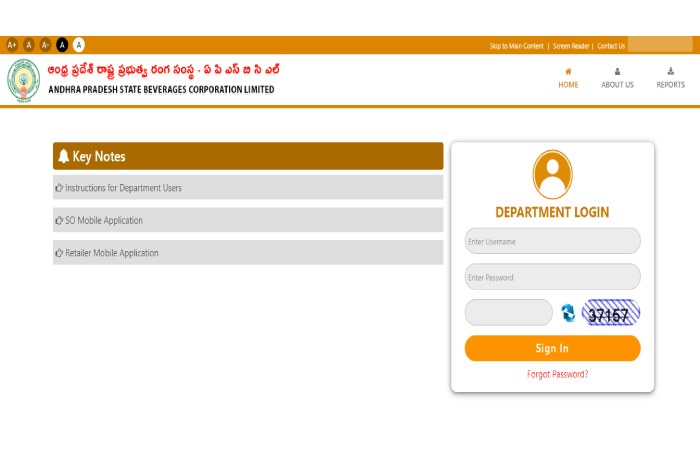
- When your application is approved, the government of Andhra Pradesh will e-mail you your APSBCL Retail Login credentials.
- Go to the APSBCL official website using this link: APSBCL Retailer Portal.
- Fill in your login details in the corresponding fields.
- Please enter the captcha code shown.
- Click “Sign In” to log in to your account through the web portal.
If the login page does not behave as expected, users should first check their internet connection and confirm that the credentials are being entered correctly. They should also check whether the portal is undergoing maintenance before repeatedly attempting to sign in.
Retailer Registration and Bidding Process for APSBCL
Retailers (applicants) can create logins once the Andhra Pradesh State Beverage Corporation Limited (APSBCL) approves their license.
- Following approval, retailers must complete an online registration to participate in the APSBCL auction.
- The corporation will then create an auction list based on the timetable and publish it on its website.
- All bids identify the specific year valid for the liquor store and its license number.
- The main purpose of APSBCL is to have an online mechanism for securely processing the depot, retailer, and department processes.
- The AP State Government verifies the bidders through bidding only online.
- The government seals the bid in two forms: a technical bid and a financial bid.
- Retailers apply for each separately on the official website, www.ap.gov.in.
An online bidding system can reduce the need for applicants to depend entirely on physical paperwork and makes it possible to access information through a centralized system. However, applicants should always follow the latest instructions and deadlines published by the relevant authority because tender requirements can change.
The Importance of Data in Retail Operations
Retailers need accurate information to make decisions about stock, sales, payments, and ordering. A digital retailer portal can bring several categories of information together, making it easier to monitor business activity.
The broader role of data in retail demonstrates why accurate and accessible information is becoming increasingly important to retailers. Data can help businesses understand sales patterns, inventory movement, demand, and operational performance.
For a retailer, accurate stock information can be particularly important. If inventory information is outdated, it becomes more difficult to determine what products are available and what needs to be replenished.
Digital records can also reduce the amount of repetitive manual work involved in maintaining business information.
Retailer Login and Omnichannel Operations
Retail operations are increasingly connected to multiple digital channels. Even businesses that operate physical outlets may rely on online systems for ordering, reporting, payments, communication, and inventory management.
The growth of e-commerce and omnichannel strategies shows why businesses need systems that connect different parts of their operations.
For retailers, the ability to access information digitally can make day-to-day administration easier. Instead of depending on separate records for every activity, retailers can use centralized systems to access information related to their operations.
The value of digital access becomes even more apparent as the number of transactions, products, and operational activities increases.
Resetting Password on the APSBCL Retailer Portal
If you have forgotten your password, use the steps below to recover it:
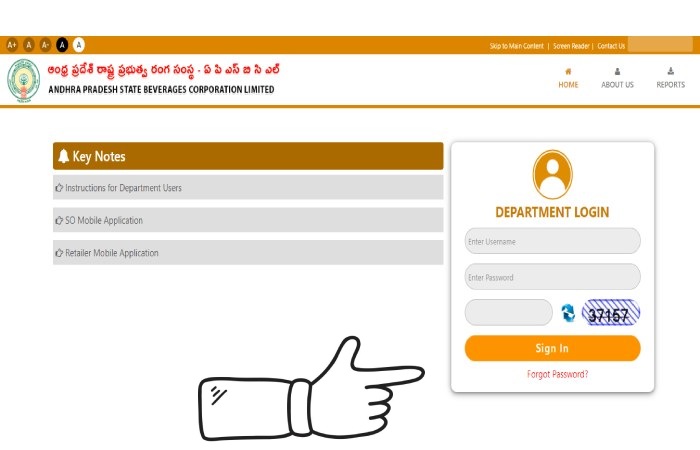
- Visit the APSBCL website.
- On the top, click the “Retailer Login” button.
- From the dropdown, select the “Forgot Password” option.
- Type your user ID and registered mobile number.
- An OTP will be sent to your mobile number.
- Type the OTP into the website portal.
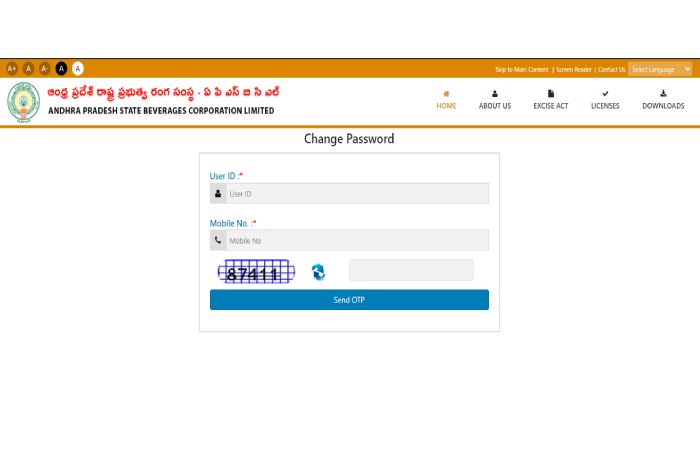
When resetting a password, retailers should make sure that the registered mobile number is available to receive the OTP. If the number is no longer active or the recovery process does not work, contacting the appropriate support or depot may be necessary.
Retailers should also avoid storing passwords in easily accessible locations or sharing them with employees who do not require account access.
APSBCL Retailer Portal Application Login
The Andhra Pradesh government has increased the facilities available to users with an application that allows retailers to access the APSBCL retailer login. The application makes the bidding process easier, and users can easily manage the bidding activity.
Retailers can easily download the APSBCL Depot Login app onto their devices through Google Play or the App Store.
Mobile access is particularly useful for retailers who need to check information while away from a desktop computer. However, users should install applications only from trusted sources and verify that the application is associated with the appropriate organization.
Mobile retail applications are part of the larger movement toward connected retail technology. Retailers increasingly use mobile devices to access sales information, inventory data, notifications, and other operational information.
POS Systems and Retail Sales
A retailer’s online portal is only one part of the overall technology environment. Point-of-sale systems are also important because they record transactions and provide information about sales activity.
A modern POS system can help increase retail sales by giving retailers access to useful transaction information and helping them manage sales more efficiently.
POS systems can also help reduce manual recordkeeping. When sales information is captured digitally, it can be used for reporting and analysis instead of requiring employees to maintain separate handwritten records.
The type of POS system required will vary depending on the business. Retailers can also explore considerations involved in choosing a POS system for a restaurant or retail business, particularly when deciding which features are important for daily operations.
Retail Analytics and APSBCL Data
Retailers generate large amounts of information through sales, inventory, transactions, and customer activity. Simply collecting information is not enough; businesses need to understand what the information means.
Retail analytics focuses on using retail data to understand performance and support business decisions.
For example, a retailer can use sales information to identify products that sell quickly, periods when demand increases, or locations where particular products perform differently.
For APSBCL retailers, access to sales and stock information can help create a clearer view of daily operations. The more accurate the underlying data, the more useful the resulting analysis can be.
APSBCL Liquor Sales Status of APSBCL
December 2024 saw a spurt in Andhra Pradesh’s liquor sales industry under the control of the Andhra Pradesh State Beverages Corporation Limited (APSBCL).
New Year’s Eve Sales Surge
On December 31, 2024, liquor sales in the state touched an all-time high of Rs. 200 crore. The retail outlets and bars procured alcohol worth Rs 219 crore from APSBCL on December 30 and another Rs 109 crore on December 31. However, actual consumer sales were unknown, as the company gave no specific statistics. Still, on a rough estimate, Excise officials opined that Rs.200 crore worth of liquor was sold through retail outlets and bars.
Because of the New Year celebrations, the Prohibition and Excise Department relaxed the timings of liquor outlets and bars by allowing retail liquor shops to open till midnight, and bars were allowed to 1:00 AM on December 31 and January 1.
Establishment of Premium Liquor Stores
The Andhra Pradesh government in December 2024 cleared the proposal to grant licenses for setting up 11 premium liquor stores in nine districts. The liquor outlets would come up in the municipal corporation limits of cities like Vijayawada, Visakhapatnam, Rajahmundry, Kakinada, Nellore, Kadapa, Anantapur, Kurnool, and Guntur.
The applications were accepted till December 31, 2024, and the licensing process will be completed by January 2025. The applicant had to pay a non-refundable amount of ₹15 lakh, and the licensees who will be selected have to pay an annual license fee of ₹1 crore with a 10% increase every year for five years.
Excise Policy Reforms
The state government approved a new excise policy on September 18, 2024, which has come into effect from October 1, 2024. The new policy aims to increase liquor sales and provisions for opening premium liquor stores to increase consumers’ access to high-quality alcoholic beverages.
Sales by Month
Detailed monthly sales reports of APSBCL, showing depot-wise sales figures, can be viewed on the official website. These reports provide insights into the quantity of liquor sold across various depots in Andhra Pradesh and offer an overall perspective of the state’s alcohol distribution and sales patterns.
December 2024 was a dynamic month for liquor sales in Andhra Pradesh, marked by significant consumer demand during the holiday season and strategic policy implementations to enhance the state’s excise revenue and consumer experience.
Using Computer Vision in Retail Operations
Retail technology is moving beyond basic transaction processing. Computer vision is another technology that can provide retailers with additional information about products, shelves, customers, and store operations.
The benefits of computer vision in retail businesses include applications that can help businesses understand physical retail environments.
For a retailer, technologies such as computer vision could eventually support activities such as monitoring shelves, identifying product availability, or improving store operations. These technologies can complement traditional POS and inventory systems.
However, retailers should consider privacy, security, implementation costs, and the actual business value before introducing advanced technologies.
Hyper-Personalization and Retail
Another major retail technology trend is personalization. Digital systems can use information about customer behavior and purchasing patterns to provide more relevant experiences.
The triumph of hyper-personalization in retail demonstrates how retailers are increasingly looking at ways to make customer interactions more relevant.
For an APSBCL retailer, the core requirement may be different from a typical ecommerce store, but the broader lesson remains useful: accurate data allows businesses to understand their operations and customers more effectively.
Personalization should always be handled responsibly, particularly when customer information is involved.
IoT and Connected Retail Systems
The Internet of Things is another technology area that can influence retail operations. Connected devices can collect information from equipment, stores, inventory, and other physical assets.
The transformation of retail business with IoT explains how connected devices can become part of modern retail infrastructure.
In the future, connected retail environments could make it easier to monitor stock conditions, equipment, store environments, and operational processes in real time.
The important consideration is integration. IoT devices are most useful when the information they collect can be connected with systems that employees already use.
AI and Smarter Retail Operations
Artificial intelligence is also becoming increasingly relevant to retail. AI can analyze large amounts of information and identify patterns that may be difficult to identify manually.
Retailers interested in AI for smarter pricing in retail can see how AI can be applied to pricing decisions by considering factors such as demand, inventory, competition, and customer behavior.
Although pricing may not be the only area where AI can help, the same principle can apply to other retail processes. AI can potentially support forecasting, inventory planning, customer analysis, and operational decision-making.
Retailers should nevertheless treat AI as a tool rather than a replacement for sound business processes. Good data, appropriate controls, and human oversight remain important.
FAQs
Q1: What happens if I forget my login information?
A: If you forget your login details, don’t hesitate to contact your nearest APSBCL depot so they can help you retrieve or reset your password.
Q2: Can I access the portal from my mobile phone?
A: Yes, you can access the portal through the APSBCL Mobile App, which allows limited access to features, including inventory management and the placing of orders.
Q3: Is there any training available for using the portal?
A: The APSBCL department conducts training for retailers periodically. Keep updated on upcoming dates and venues for such training through your local depot.
Q4: What if I encounter technical issues while using the portal?
A: In case of technical problems, use the helpdesk module in the portal or call the APSBCL helpline for immediate technical assistance.
Q5: Is there a fee for using the portal?
A: There is no charge to access and use the APSBCL retailer login portal for registered retailers.
Tips for Using the APSBCL Retailer Portal Safely
Retailers can take a few basic precautions when using an online government or corporate portal:
- Keep login credentials confidential.
- Avoid sharing OTPs with other people.
- Use a secure internet connection when accessing account information.
- Check the website address before entering credentials.
- Keep registered mobile information updated where applicable.
- Log out after using the portal on a shared computer.
- Do not install unknown applications claiming to provide retailer access.
- Keep screenshots or records of important transactions where appropriate.
- Contact the relevant support channel if an account appears to have been compromised.
These simple practices can reduce the risk of unauthorized access and help protect sensitive business information.
Why Digital Retail Systems Matter
The APSBCL retailer portal illustrates the broader movement toward digital retail administration. Retailers increasingly depend on technology to manage information that would previously have required separate paperwork or manual processes.
A centralized portal can make information easier to access, while POS systems can capture transaction information and analytics tools can help interpret that information.
When these systems are connected effectively, retailers can spend less time maintaining separate records and more time managing their actual business operations.
The future of retail will likely involve even greater integration between online portals, mobile applications, POS systems, inventory platforms, analytics, IoT devices, and AI-powered tools.
Conclusion
APSBCL designs the Retailer Login System to ensure transparency in its operations and compliance with state regulations. This helps the company policies reach the people of the state with ease. On accessing the retailer login, one can view a list of approved alcohol retailers in Andhra Pradesh with the brand name, contact details, and address for each retailer.
For retailers, understanding how to use the portal, protect login credentials, access relevant information, and make effective use of digital records can make everyday administration easier.
The wider retail technology environment is also changing rapidly. POS systems, analytics, computer vision, IoT, artificial intelligence, mobile applications, and connected ecommerce systems are increasingly becoming part of retail operations.
For APSBCL retailers, the most important starting point remains reliable access to the appropriate portal and accurate business information. As digital systems continue to develop, retailers who understand how to use these tools effectively can manage their operations with greater efficiency while keeping better track of sales, stock, and other relevant information.