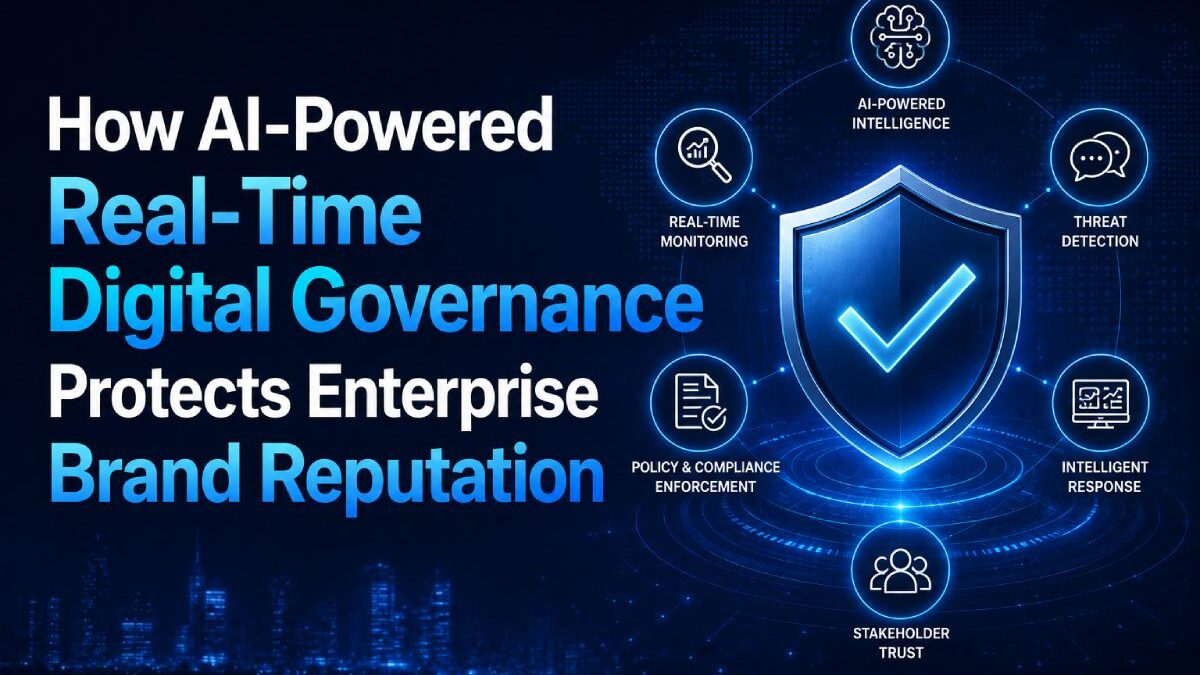

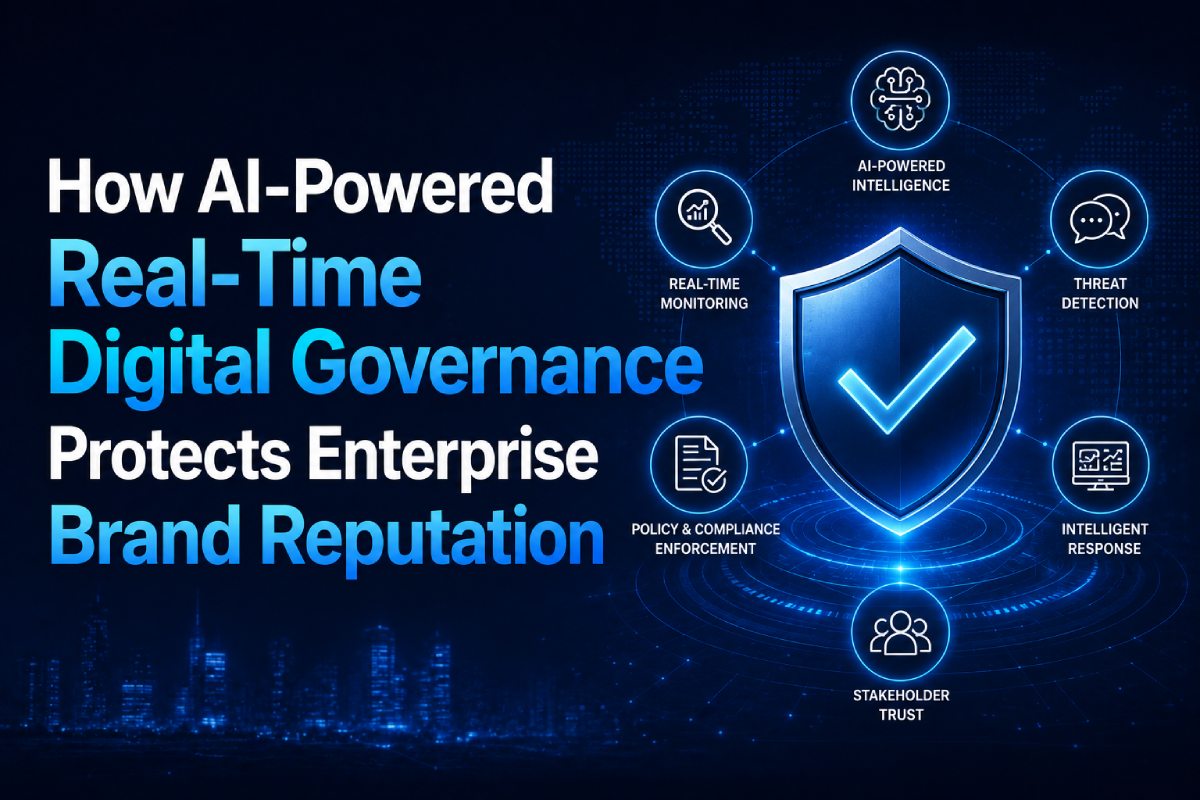
Real-Time Digital Governance Protects Enterprise Brand Reputation
In the modern digital landscape, the speed at which corporate crises unfold has accelerated dramatically. Traditional public relations strategies that relied on days of internal deliberation are no longer viable. Today, a single negative customer interaction, a regulatory misstep, or a viral piece of misinformation can escalate into a full-blown corporate crisis within minutes. When major airlines face high-profile incidents, they successfully minimise reputational damage by activating their enterprise social crisis protocols within one hour, deploying rapid updates to halt false narratives. This exemplifies why enterprise leaders are now prioritising real-time digital governance to protect their brand equity and maintain consumer trust in an always-on environment.
The Rising Cost of Delayed Responses
Corporate reputations are now built and broken on digital platforms. Because a chaotic situation can emerge instantly, having a dedicated framework for Monitoring, review, and community management has evolved from a basic marketing function into an essential element of enterprise governance. When digital teams actively oversee audience interactions around the clock, they can identify and isolate complaints before they gain viral momentum.
A recent industry survey revealed that 80 percent of consumers now learn about corporate controversies directly through social networks rather than traditional news outlets. This shift in information consumption has fundamentally changed consumer expectations. According to comprehensive data on crisis preparedness, the demand for rapid response protocols is more critical than ever, particularly because social media is the preferred news source for most Gen Z and millennials. When these demographic groups encounter negative brand narratives online, any delay in communication can cause immediate financial and reputational harm.
Data shows that nearly a third of consumers expect a direct message response from a brand within one hour. Furthermore, 73 percent report they will switch to a competitor entirely if a brand fails to address their digital outreach. Enterprise benchmarks advise that modern businesses must aim for a first-human reply to digital threats within that one-hour window to successfully control the narrative and mitigate commercial risk.
AI and the Evolution of Threat Detection
To meet these demanding modern response times, enterprises are increasingly relying on artificial intelligence and automated threat detection. These technologies convert digital chatter into mathematical models that learn normal audience behaviour, allowing systems to flag anomalous spikes in engagement autonomously. To facilitate this complex process, enterprises frequently deploy advanced social media software tools that continuously track online conversations, evaluate sentiment, and organise corporate communications efficiently before issues escalate.
The integration of automated oversight into digital governance offers several distinct advantages for enterprise risk mitigation. Consider the following structural benefits:
- Reduced detection times: AI-powered monitoring systems can decrease the time it takes to identify a digital threat by up to 73 percent compared to conventional manual methods.
- Intelligent triage: Industry analysts project that by 2029, automated triage systems will handle approximately 80 percent of standard tier-one customer service queries, making constant oversight an operational necessity.
- Omnichannel visibility: Connecting digital oversight directly to existing enterprise service workflows and customer relationship systems can improve overall satisfaction rates by nearly 40 percent.
- Proactive intervention: Advanced algorithms can detect the earliest stages of a spontaneously erupting chaos-driven crisis, giving public relations leaders critical time to halt misinformation.
Navigating Australian Regulatory Compliance
Beyond public relations and customer service, real-time digital governance is also a strict regulatory mandate. In Australia, the Australian Competition and Consumer Commission (ACCC) actively enforces the Australian Consumer Law against fake, manipulated, or incentivised online reviews. This stringent regulatory environment requires enterprises to maintain transparent and highly compliant digital communities at all times to avoid legal scrutiny.
Australian businesses face severe financial penalties for suppressing negative feedback or altering review ecosystems. A recent landmark decision saw a major property developer issued a three million dollar fine for review manipulation. The ACCC regularly conducts targeted digital sweeps of corporate websites and third-party platforms to identify patterns of misleading online behaviour. Consequently, enterprises must ensure that their moderation protocols are entirely compliant with national advertising and consumer protection standards, balancing risk management with complete transparency.
As digital interactions continue to define corporate success, the need for always-on oversight becomes undeniable. Traditional event-driven crises have been replaced by spontaneous digital events that require continuous monitoring to extinguish. By combining artificial intelligence with dedicated human oversight, modern enterprises can safeguard their brand reputation, maintain strict regulatory compliance, and foster lasting consumer trust in a rapidly changing digital economy.