
You’ve probably typed something like “67 inches to feet” into a search bar at least once. Maybe you were curious about your own height, or maybe you stumbled across someone’s stats online. Either way, converting inches to feet is one of those small, everyday things that sounds simple — and actually is — once you know what you’re doing.
But here’s what most people don’t realize: this kind of height conversion isn’t just a party trick. It’s quietly powering some of the most interesting technology around us right now — from fitness apps to AI systems that analyze celebrity body size for everything from wardrobe fitting to avatar creation.
Let’s get into it.
Table of Contents
So, How Tall Is 67 Inches in Feet?
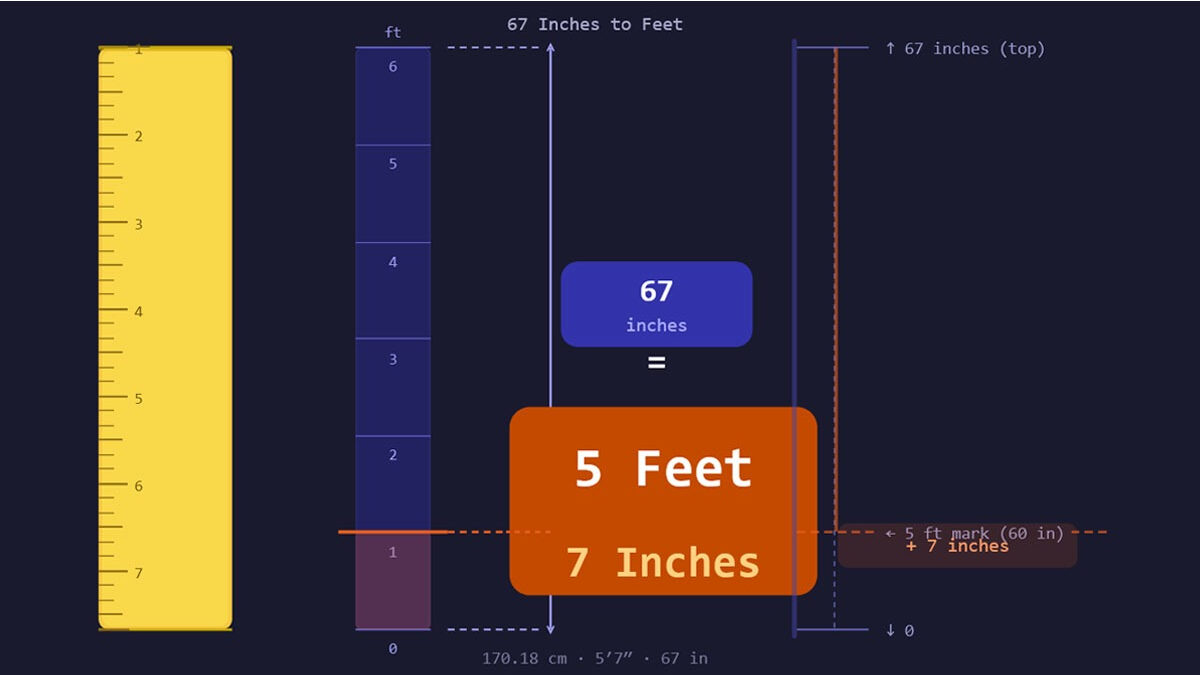
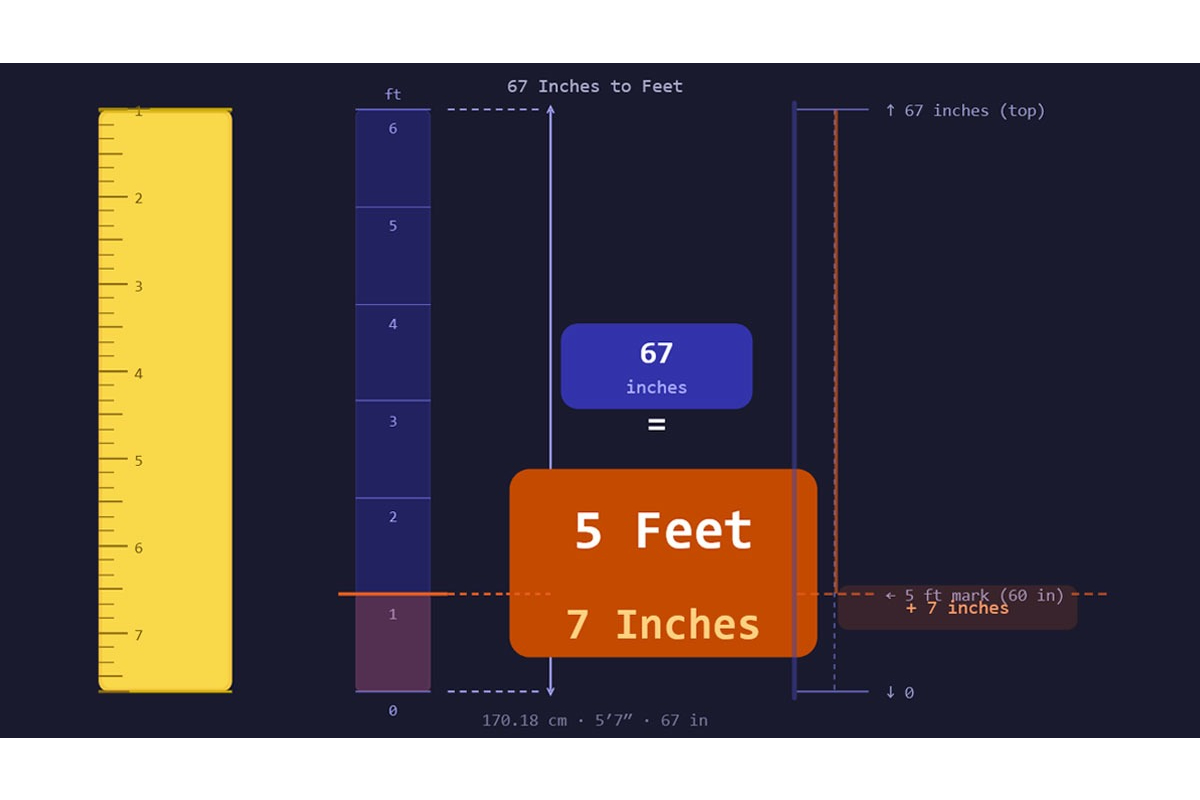
Short answer: 5 feet and 7 inches, or 5’7″.
The math is simple. There are 12 inches in a foot, so you divide:
67 ÷ 12 = 5 remainder 7
That gives you 5 feet, 7 inches. In metric, that’s approximately 170.2 centimeters.
In the US, 5’7″ is above average for women (whose average sits around 5’4″) and just slightly under average for men (who average around 5’9″). Globally, it’s considered a comfortable mid-range height — not short, not towering.
Now that the basics are out of the way, here’s where things get genuinely interesting.
Why Tech Cares So Much About Height Conversions
You might be wondering — why would a tech article care about something as old-school as inches and feet?
Because measurement is the foundation of a huge chunk of modern technology. Any system that works with the human body — whether that’s a health app, a sizing algorithm, a virtual fitting room, or an AI model — needs accurate, standardized height data. And since the world hasn’t fully agreed on one measurement system yet (the US still runs on imperial, most of the world uses metric), conversion is a constant challenge.
When a developer builds an app that tracks your fitness, recommends clothing sizes, or generates a 3D avatar, they need to handle inputs in both inches and centimeters — and convert cleanly between the two. A small error in that conversion doesn’t just give you the wrong answer. It breaks the whole experience.
Height Data in Fitness and Health Apps
Think about the last time you set up a fitness app. One of the first things it asked for was your height. That data isn’t just sitting there doing nothing — it’s actively driving calculations for your BMI, your basal metabolic rate, your calorie targets, and even your recommended workout intensity.
Apps like Apple Health, Google Fit, and dozens of others accept height in both feet/inches and centimeters, then convert internally to run their formulas. If you enter 67 inches, the app translates that to 170.18 cm before doing anything with it.
For that conversion, the formula is:
Inches × 2.54 = Centimeters
67 × 2.54 = 170.18 cm
It sounds basic, but this math runs millions of times a day across health platforms worldwide. Getting it right matters — not just for accuracy, but because health recommendations built on wrong height data can genuinely lead people in the wrong direction.
AI, Body Scanning, and Celebrity Body Size Analysis
Here’s where things get really fascinating. One of the fastest-growing areas in fashion and entertainment technology is celebrity body size analysis — using AI and computer vision to extract precise body measurements from photos, videos, and red carpet appearances.
Why? Because the fashion industry runs on it. Stylists, designers, and costume teams use this data to prepare outfits in advance. Streaming platforms use it to match actors with wardrobe digitally before a single fitting happens. E-commerce companies use it to train size recommendation engines — if you’re roughly the same build as a public figure, the algorithm can suggest what might fit you.
Height is always the anchor point in these systems. Everything else — shoulder width, inseam length, torso proportion — is calculated relative to total height. And since a lot of celebrity data is reported in feet and inches, the conversion step from 67 inches to feet (and back to centimeters for the algorithm) is baked into every single workflow.
Some platforms go even further. They use height-normalized body models, where a figure’s proportions are mapped onto a standard height baseline. This makes it possible to compare body shape across people of very different heights — a 5’3″ actress and a 5’11” model can have their silhouettes analyzed on the same scale.
Virtual Try-On and Avatar Technology
Another space where height precision is everything: virtual fitting rooms and digital avatars.
Several major retailers — including some of the biggest names in fashion — now offer tools where you input your height, weight, and a few other measurements, and a digital version of you tries on clothes. The entire 3D model is built around your height as the core variable.
If you enter 67 inches and the system misreads that as 67 centimeters (a very real bug that has happened in early builds of these tools), your avatar ends up the size of a toddler. Not great for selling jeans.
As these tools get smarter, they’re pulling on celebrity body size databases to improve fit accuracy. If a brand knows a dress fits a particular celebrity at a particular height perfectly, that data point trains the model to make better predictions for shoppers with similar measurements.
A Quick Reference: Heights Around 67 Inches
| Inches | Feet & Inches | Centimeters |
| 64″ | 5’4″ | 162.6 cm |
| 65″ | 5’5″ | 165.1 cm |
| 66″ | 5’6″ | 167.6 cm |
| 67″ | 5’7″ | 170.2 cm |
| 68″ | 5’8″ | 172.7 cm |
| 69″ | 5’9″ | 175.3 cm |
| 70″ | 5’10” | 177.8 cm |
The Unit Conversion Problem in Tech
It’s worth pausing on why the imperial vs. metric divide is still such a headache in 2026.
Most scientific and engineering fields have standardized on metric. But consumer technology — especially anything health or lifestyle-related — has to serve users in the US, UK, and other countries where people still think in feet, pounds, and Fahrenheit. So developers build dual-unit support into almost everything.
The Mars Climate Orbiter crash in 1999 is the most famous cautionary tale: a spacecraft was lost because one team used metric units and another used imperial, and nobody caught the mismatch. While your fitness app getting your height wrong won’t cause a spacecraft to burn up, the principle holds — unit conversion errors have real consequences.
Modern APIs and health data standards like HL7 FHIR (used in medical record systems) now specify that height should always be stored in centimeters internally, regardless of how the user enters it. So when you type in 67 inches to feet or just “67 inches” in a health platform, the system immediately converts and stores 170.18 cm behind the scenes.
Final Thoughts
67 inches to feet is 5’7″, or 170.2 cm — and that one simple number connects to a surprisingly large slice of modern technology. From the fitness app on your phone to AI systems mapping celebrity body size for virtual fashion, height conversion is a quiet but critical operation running constantly in the background.
The formula is easy. The math takes seconds. But the technology built on top of it? That’s where things get genuinely impressive.