
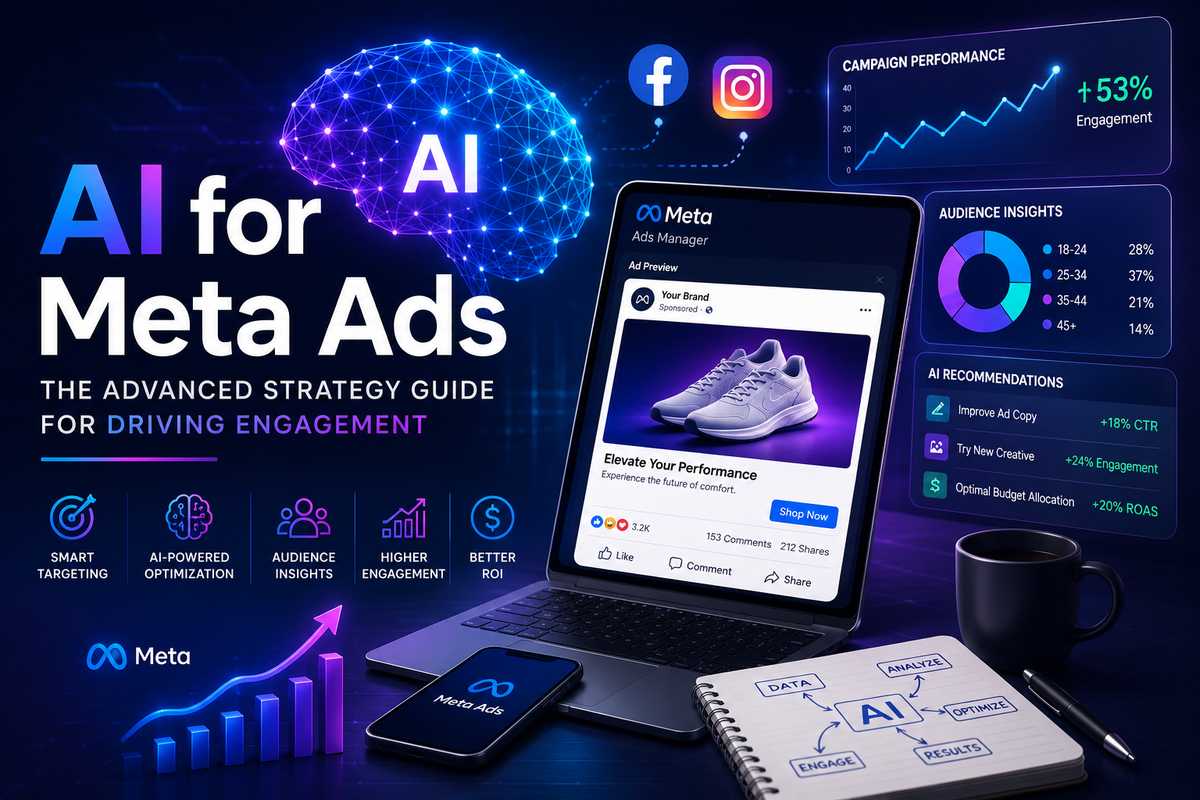
AI for Meta Ads
In the rapidly evolving landscape of digital marketing, businesses are increasingly turning to artificial intelligence (AI) to enhance their advertising strategies. Meta Ads, a staple in social media marketing, are no exception. The integration of AI into these ads can significantly boost engagement and optimize performance. This article delves into how AI can be harnessed to transform Meta Ads into powerful tools for driving customer interaction and achieving marketing goals.
Table of Contents
AI-Powered Strategies for Optimizing Meta Ads Performance

AI has revolutionized the way advertisers approach Meta Ads by enabling more effective management through advanced strategies. One critical aspect is the use of a MarTech Stack, which refers to the suite of marketing technologies that streamline operations. With AI, marketers can automate tasks and make data-driven decisions, improving efficiency and outcomes. For instance, AI algorithms can analyze vast amounts of data to determine the most effective times and platforms for ad placements, maximizing reach and engagement. Additionally, leveraging AI for Meta Ads can further enhance these strategies.
Another strategic advantage is AI’s role in Conversion Rate Optimization (CRO). By analyzing user behavior and interaction data, AI can suggest modifications to ad elements that enhance conversion rates. This process not only improves the quality of the leads generated but also optimizes the return on investment for marketing campaigns.
Moreover, AI facilitates the creation of Data-Driven Personas, allowing marketers to tailor their Meta Ads to specific audience segments. This personalization increases the likelihood of engagement, as ads resonate more strongly with targeted demographics. According to recent studies by Forrester, personalized ads can lead to a 20% increase in sales conversion rates.
Leveraging Machine Learning for Targeted Audience Engagement
Machine learning, a subset of AI, enhances Behavioral Targeting by analyzing patterns in user data to predict future behavior. This capability allows marketers to create Meta Ads that are not only relevant but also timely. By understanding the preferences and habits of users, businesses can craft messages that meet the immediate needs and interests of their audience.
Additionally, the use of Retargeting Pixels, small pieces of code embedded in websites, enables marketers to track user visits and interactions, facilitating the retargeting of potential customers who have shown interest in a product or service. This method of algorithmic media buying ensures that ads are displayed to users who are more likely to convert, thereby increasing the effectiveness of ad spend.
Furthermore, AI-driven Omnichannel Engagement strategies ensure that users receive a consistent brand message across multiple platforms. By integrating customer data from various sources, businesses can create cohesive campaigns that maintain user interest and encourage interaction across different channels.
Enhancing Creative Content with AI Tools for Meta Advertising
The creative aspect of Meta Ads can also benefit greatly from AI tools. These tools assist in the A/B Testing Framework, allowing marketers to test different ad variations to determine which performs best. AI can process these tests at a much faster rate than traditional methods, providing insights that help refine creative content to maximize engagement.
Moreover, AI tools can generate creative suggestions by analyzing successful ad campaigns. This feature is particularly useful for developing unique and compelling ad content that stands out in a crowded digital marketplace. By leveraging AI for Meta Ads, marketers can ensure that their creative strategies are both innovative and effective.
In addition, AI supports the integration of a Content Management System (CMS) with marketing strategies, ensuring that content is not only engaging but also aligned with brand objectives. This integration streamlines the content creation process, allowing for more strategic deployment of resources.
Measuring Success: Analyzing AI-Driven Meta Ad Campaigns
Analyzing the success of AI-driven Meta Ad campaigns is crucial for continuous improvement. A robust Attribution Model, which attributes the conversion to the correct touchpoint in the customer journey, is essential for understanding which elements of a campaign were most effective. This model helps in refining strategies and allocating budget effectively.
Additionally, the use of a Customer Data Platform (CDP) allows marketers to gather and analyze data from various sources to gain insights into customer preferences and behaviors. This comprehensive view aids in assessing the overall impact of AI-driven campaigns, ensuring that strategies are continually optimized for better performance.
Finally, measuring the impact of AI on demand generation is pivotal. By analyzing data on customer acquisition and retention, businesses can identify areas for improvement and growth. Recent reports by Marketing Land highlight that businesses adopting AI-driven demand generation strategies have seen a 30% increase in customer engagement.
Conclusion

AI has become an indispensable tool in optimizing Meta Ads for driving engagement and achieving marketing success. By leveraging AI-powered strategies, machine learning, and advanced analytics, businesses can enhance their advertising efforts and reach their desired outcomes. For businesses looking to elevate their advertising game, embracing AI-driven solutions provides a competitive edge in the ever-evolving digital marketing landscape.