
Advances in Electron Beam (E-Beam) Source Deposition Technology
Thin-film deposition demands precise energy delivery to evaporate dielectrics, metals, semiconductors, and complex optical materials compounds reliably. At the core of this capability is electron beam (E-beam) technology, which uses a directed beam of high-energy electron bombardment to achieve extreme temperatures without contaminating the evaporant or degrading substrate quality.
E-beam technology has evolved to meet the demands of reliable reproducibility of film composition, optimum spectral properties, and high density. Breakthroughs in sweep control, beam stability, emitter design, and multi-pocket hearth configurations have transformed these sources into highly reproducible, high-throughput tools for modern thin-film deposition systems. In this article, we explore the key advances driving modern electron beam sources and how they enable superior coating performance in demanding optical applications.
Table of Contents
Electron Beam Sources in Thin Film Deposition
E-beam sources enable thin film deposition by heating source materials with a highly focused stream of high-energy electrons. This energy transfer causes the source material to melt or sublime and evaporate, creating a vapor that subsequently condenses to a thin layer coating on the substrate.
This heating method is capable of evaporating a diverse array of materials that include compounds of oxides, fluorides, and metals. Such versatility makes it an ideal choice for manufacturing optical coatings, hard coatings, and specialty functional layers.
Key technical advantages of e-beam deposition include:
- Multiple material pocket capacity
- High deposition rates
- Dense, well-adhered films
- Compatibility with refractory materials that other methods cannot handle
- Precise control over deposition rate and energy
- Minimal contamination from the crucible or hearth
Due to production-friendly capabilities, e-beam deposition remains a trusted technique throughout precision coating applications. Its widespread use is further supported by the capacity to manage both low- and high-melting-point materials within a single configuration.
Improving Crucible Longevity and Beam Stability
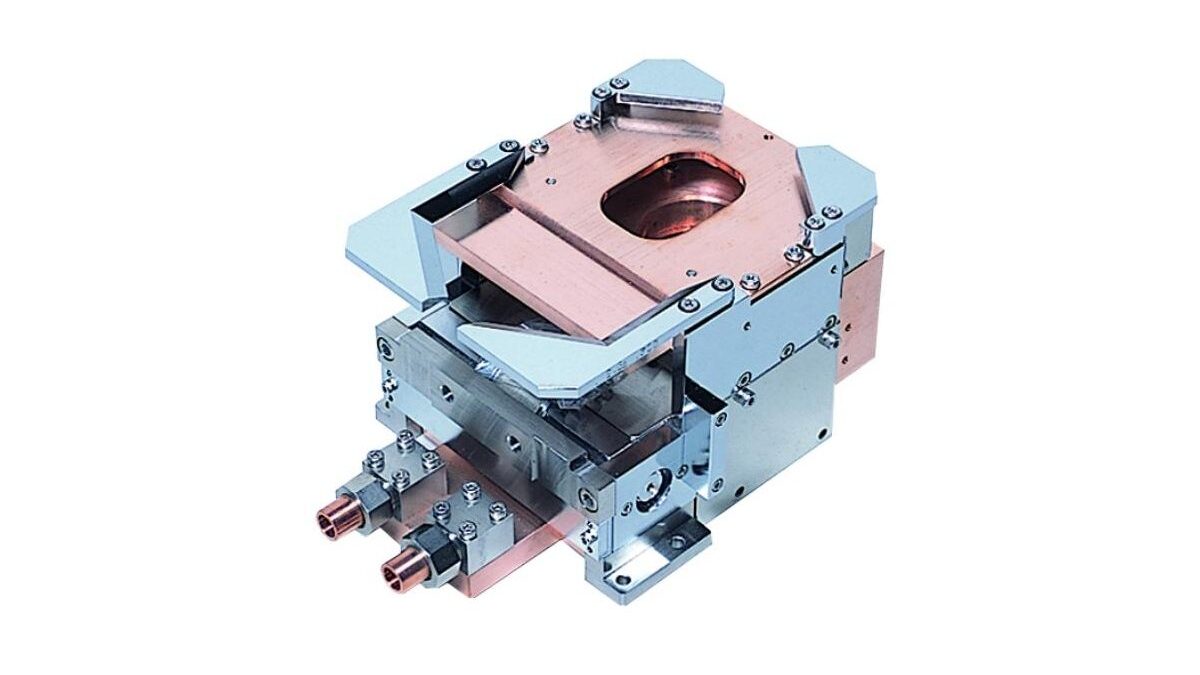
Water-cooled copper hearths remain the standard, but the variety available in liner technology now extends service intervals considerably. Ceramic and graphite liners resist cracking and unwanted material interaction at extreme temperatures.
Beam stability is equally important. Fluctuations in positioning or intensity lead to inconsistent evaporation rates. That inconsistency translates directly into thickness variation across the coating.
Newer e-beam power supplies incorporate closed-loop feedback control of power. This continuously monitors and adjusts beam parameters in real time. The result is a more uniform deposition profile across each run. For high-specification optical and defense components, this level of consistency is essential.
Multi-Pocket Systems for Complex Multilayer Stacks
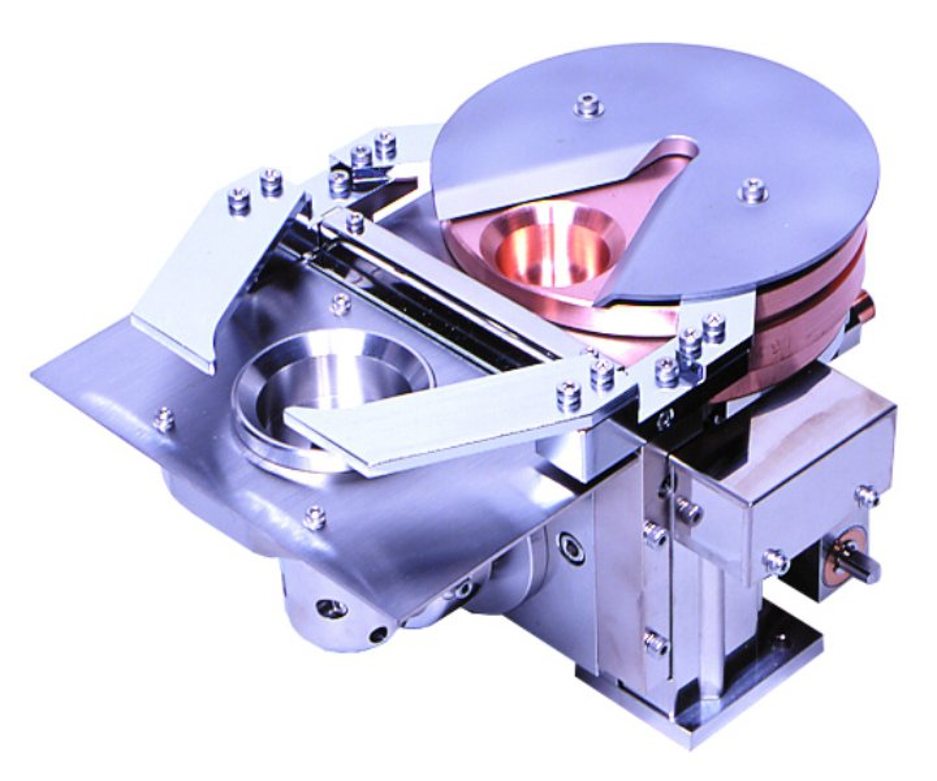
Multiple crucible pockets with specific liners to contain different materials are a major advantage of E-beam evaporators. The beam is then directed to each pocket in sequence. This eliminates the need to vent the chamber between material changes, thus providing the ability to deposit different materials as required in complex antireflection coatings, edge and bandpass filters, and laser mirror stacks.
With multi-pocket configurations, operators can:
- Alternately deposit multiple materials within a single vacuum cycle
- Reduce cycle time and contamination exposure
- Maintain layer-to-layer interface quality
- Program automated sequences for repeatable multilayer results
System Integration and Automation Advances
Contemporary vacuum coating platforms often pair e-beam sources with complementary deposition methods. Ion-assisted deposition (IAD) and Plasma Assisted Deposition (PAD) are two adjunct examples that increase film density and adhesion. Plasma pre-treatment can further refine substrate preparation.
In-situ monitoring tools, such as optical monitors and quartz crystal microbalances, can be coupled to control the deposition process through computer control. Together, these elements create a tightly integrated production environment. Recipe-driven software and programmable logic controllers now manage complex multi-step sequences with minimal operator intervention. That reduces human error and strengthens run-to-run reproducibility.
The ability to lock in and reproduce a validated workflow is fundamental to production tasks. Current e-beam platforms build thorough documentation and audit trails into the system precisely for this reason.
Invest in an Electron Beam System Built for Your Process
If your facility runs precision optical or environmentally durable coatings for demanding applications, your deposition equipment must be capable of meeting the challenges. At Tecport Optics, we design and build vacuum coating systems with advanced e-beam technology. Our platforms are engineered around the process architecture your work requires, not adapted from a generic setup.
Contact our team to evaluate your current configuration and identify where these developments can elevate your results.