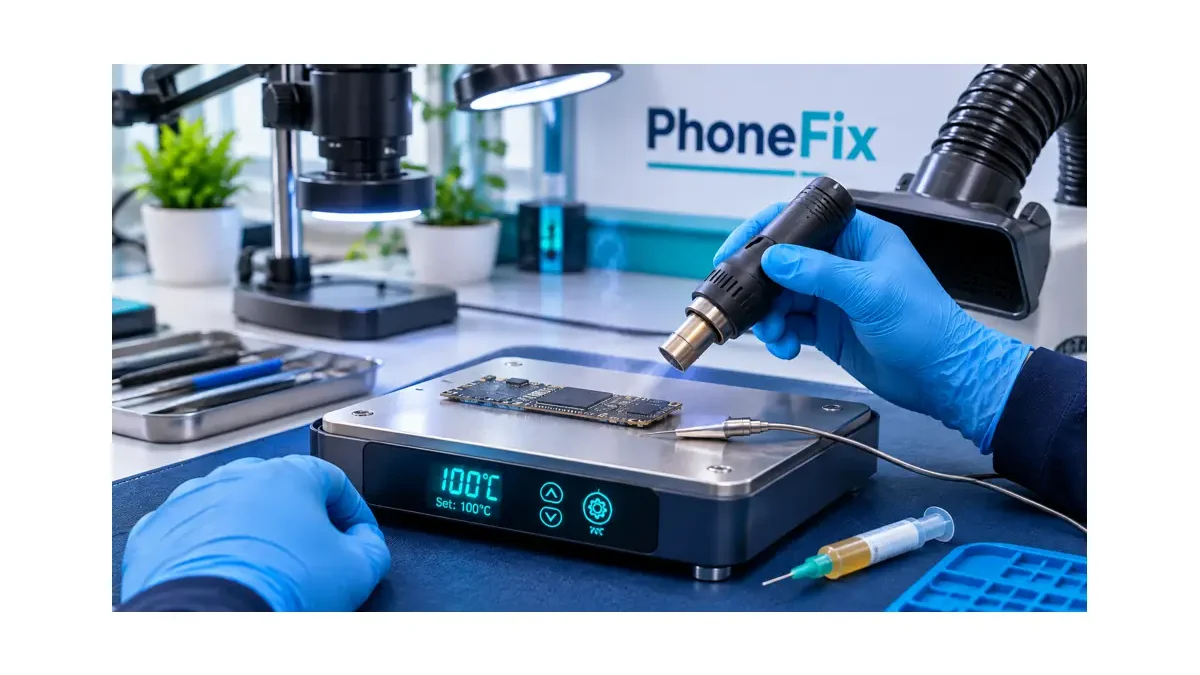

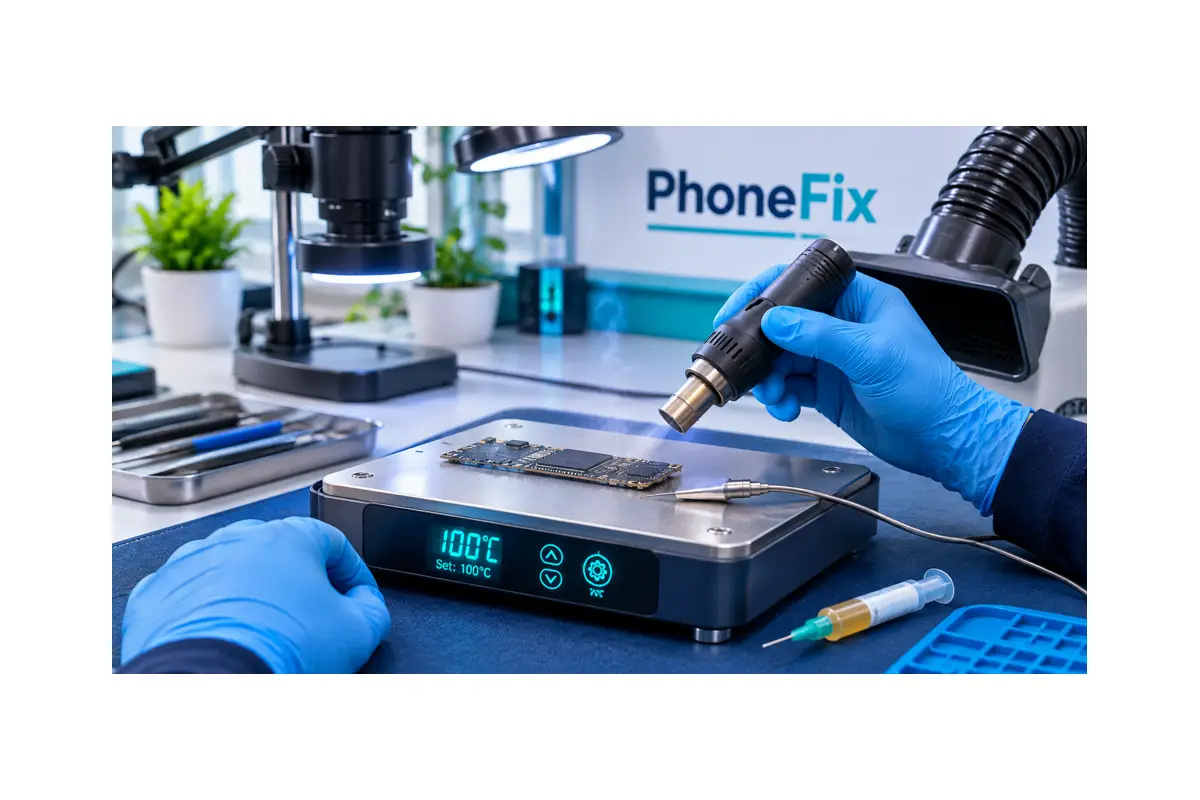
The technician blows hot air to remove the chip from the phone board, which causes the board to warp, a neighboring section to drop out, or a pad to break away. The chip otherwise was not to blame. It is a problem of an excessive amount of energy being applied over a cold board. A phone repair pre-heater can prevent such damage by heating the entire board slowly prior to the repair.
The guide details the operation of a preheater, discusses the features and safety of handling a preheater, and explains the types of preheaters. It also has a comparison of the major types so that you can choose the one that is appropriate to your bench.
Table of Contents
What Is a Phone Repair Preheater?
Preheaters are flat plates that heat the bottom of a circuit board during top surface work. A phone Pre-heating Station will typically consist of a digital thermostat and a ceramic or metal plate, but may also include a stand to keep your board in position. Some models include a timer, a built-in fan, or a hot air gun holder.
The goal is simple. First, you heat the board from the bottom and then bring the heat levels up with intense heat from above, rather than hitting it with a hot board. The hot air requires only an additional increment and the work proceeds quicker and, less stress.
Why Heating a Board Evenly Matters
A phone board consists of multiple layers of copper, glass fiber and solder. These materials are different when undergoing expansion as a result of their heating. When the board or a component pad warps due to a sudden burst of hot air, the flex can cause the board to bend, hot air to lift the pads or cause a miniature solder ball underneath the chip to crack.
Modern boards are very thin and compact. The Canon PowerShot is equipped with big chips with hundreds of connections underneath, which many iPhones and Android phones have as well. The less temperature difference between the top and bottom of the board, the less likely damage is to occur.
Understanding the hardware inside modern smartphones also helps explain why specialised repair techniques are necessary. Learn more about mobile phone components, features and technology and how these devices are designed.
A mobile repair preheater is also helpful with the solder used with lead-free, which is hotter than the old solder was. Preheating simplifies this to make the nearby components easier to run the risk of burning.
Main Benefits for a Repair Technician
A quality preheater lets you perform several attributes of the daily process differently. This decreases the risk of board warping—since the heat is distributed evenly. Provides less time for chip removal because the board is already hot, close to melting temperature. It also shields other components like capacitors and connectors from long-term exposure to heat.
Jobs such as chip removal, reballing and underfill removal require a more even base temperature to produce high-quality results. Adopting a preheater can be a benefit to the shop, and is thought to help reduce ruined boards in the shop, as well as help alleviate doubts among technicians.
Using appropriate repair tools can help technicians extend a smartphone’s usable life and avoid unnecessary replacements. Understanding whether to upgrade or repair a phone can help users make more informed decisions when their devices develop hardware problems.
Types of Preheaters
Different benches need different tools. The main groups are:
- Use preheaters that have a flat piece of metal to directly contact-heat the plate.
- Preheaters that heat the board from the bottom using infrared heat,
- Hybrid stations (which are equipped with a soldering iron, a preheating plate and hot air gun)
- Portable, small-scale units for mobile repair stations or in the field use.
Often, for telephones, the preferred model is the plate model. They are maintenance-free, simple, and low-cost. More even heat over larger surface areas than infrared models, but are more expensive. Hybrid stations conserve bench space for shops wishing to have everything in one station.
Key Features to Look For
Before you buy, check these points against your daily needs:
| Feature | What to look for |
| Temperature range | A wide, adjustable range with fine control |
| Plate size | Large enough for your biggest board, yet compact for your bench |
| Heating speed | Quick warm-up without large swings in temperature |
| Safety features | Automatic shutoff, overheat protection, and a stable base |
| Surface material | A flat, even plate that resists scratches and warping |
| Display | A clear digital readout that shows the real temperature |
Accuracy matters most. Some preheaters may indicate 150 degrees Fahrenheit but operate at 190, which can burn a board if it’s used initially. Test the actual surface temperature of a preheater with a separate thermometer when first set up.
How to Use a Phone Repair Preheater
Follow these pre-heater hints and tips, and don’t forget it’s a straightforward procedure. Use a fixture or thin cover to protect the plate, if applicable, in the interest of the manufacturer’s recommendations being in place. Heat the plate to the level that is suitable for the solder; begin to heat what you want to solder when the solder has been preheated and has arrived at the correct temperature.
Stick with the board for 1 minute or two, allowing heat to distribute evenly. Next, use the hot air gun at a lower temperature than you would when using a cold board. Look at the chip carefully when making this action, and DO NOT lift off the surface until the solder has fully flowed. Cool the board down slowly, after it is done, by placing it on the cooling plate with some cool, but not too cool, coping.
Remove all plate flux after use; it can be stuck on the plate as time goes on and can cause uneven heat distribution.
Safety Tips for the Workbench
Use the preheater responsibly, as it is hot. Rotate screws on the plate with hot tongs and be careful to keep fire-sensitive objects away from the plate. Keep working in a well-ventilated area, as flux fumes are bad for the eyes and lungs. Don’t leave a plate unattended and turn it off from the power supply when you’re done cooking.
But don’t forget the battery. If you ever overheat or use heat on the board or battery, lithium batteries can swell and/or catch fire.
Common Mistakes to Avoid
New users tend to set high temperatures for the desired quicker finish. This habit causes pads to burn and harm plastic connectors. A second mistake that is often made is moving the board once it is hot, which can crack the solder joints. Some of the technicians do not warm the board, so that it does not reach an even temperature.
Don’t use or treat the preheater as a process, but rather a shortcut. Use in conjunction with proper flux, a consistent hot air gun, and any good temperature logs for each model repair.
Conclusion
There are a number of beneficial additions for any serious repair bench, one of which is a phone repair pre-heater. It will help prevent the prints from deforming, increase the speed of chip work, and help with high-level work. Use a phone pre-heating station that is accurate, has a proper plate, and has strong protection measures. When setting up and using a clean plate, you’ll save your boarding areas, your customers and your reputation in just half a minute.
When deciding whether to repair an existing device or purchase another one, factors such as repair costs, performance and expected lifespan should also be considered. This smartphone buying guide offers additional considerations for choosing a replacement phone.
FAQs
What Is The Purpose Of A Phone Repair Preheater?
Heats the entire circuit board uniformly, and stress from hot air work is reduced.
Is the toaster oven used for anything other than re-warming freshly pressed bread or toast?
Wear it; it helps to reduce the risk of damage to boards when doing chip work.
When using a phone heating station, what is the proper temperature?
Have a moderate base setting relevant to the type of solder being used and check the actual temperature using a soldering iron thermometer.
Is a preheater an adequate substitute for a hot air gun?
No, the board gets heated by the preheater, and precise heating of the chip is done by the hot air gun.
Difference between a plate and an infrared preheater?
A contact plate heats up by transferring heat to it, or it is heated with radiant energy.