
4 Crucial Considerations of Choosing an Oil Pump
Choosing an Oil Pump – that one decision that quietly decides whether your engine lives a long, calm life… or dies young in a cloud of metal dust.
If you’re here, you’re probably stuck with the same worries I see every week:
“My oil pressure drops when it gets hot. Do I need a high-volume pump?”
“Everyone says more pressure is safer — but is it really?”
“I rebuilt my engine and now it sounds different. Did I choose the wrong oil pump?”
Let’s clear the noise. No myths. No marketing talk. Just the stuff that actually keeps bearings alive.
Table of Contents
Choosing an Oil Pump: Forget Everything You’ve Been Told About Pressure
Here’s the truth nobody explains clearly:
“Oil pumps create flow, not pressure“
Pressure is what happens when that flow hits resistance inside your engine.
Think garden hose.
Hose open → lots of flow, low pressure.
Thumb over hose → same pump, now pressure shoots up.
Your engine works the same way. The resistance comes from:
Bearing clearances
Oil viscosity
Oil temperature
Engine design
High pressure without flow is like blocked arteries. Looks strong on a gauge. Does nothing where it matters.
The Three Types That Actually Matter
Forget the 20 model numbers. Everything falls into three real categories:
| Pump Type | What It Changes | When It Makes Sense |
|---|---|---|
| Standard | Factory volume & pressure | Stock engines, tight clearances |
| High-Volume (HV) | Pumps more oil per revolution | Loose clearances, aluminum blocks, high RPM |
| High-Pressure (HP) | Stronger relief spring = higher PSI | Low-RPM racing, heavy loads, worn engines |
The street myth:
“High volume is always better”
Nope. That’s how you aerate oil and rob horsepower.
The Real Boss Is Bearing Clearance
Here’s the rule engine builders still swear by:
“0.001 inch of clearance for every 1 inch of crank journal diameter”
So a 2.5″ journal → ~0.0025″ clearance.
What happens when clearances grow?
Oil escapes faster.
Flow demand increases.
Pressure drops at idle and low RPM.
That’s when a high-volume oil pump finally makes sense.
Oil Viscosity Is the Hidden Lever
Oil thickness changes everything. Viscosity is another factor that indicates if your preferred Ancotech oil pump suits the intended application. Oil needs a pump that is designed to handle thick liquids. Each central lubrication system requires fluid to pump at a certain time frame and pressure, which influences the type of pump used.
| Oil Type | Cold Flow | Hot Protection |
|---|---|---|
| 5W-30 | Flows fast | Thins quickly |
| 10W-40 | Balanced | Stronger film |
| 20W-50 | Hard to move | Great for loose builds |
Think of it like drinks:
Soft drink → easy to sip
Milkshake → needs effort
Thicker oil needs more pump energy. That extra work:
Eats horsepower
Wears distributor gears
Raises oil temps
Why Aluminum Blocks Change the Rules
Aluminum expands more than iron. Way more.
What that means in real life:
Cold engine → tight clearances
Hot engine → clearances open up
That’s why LS aluminum engines often need a high-volume oil pump, even when factory spec looks fine.
Iron block SBC? Usually doesn’t.
High-Volume vs High-Pressure, Finally Settled
| Scenario | Correct Choice |
|---|---|
| Stock daily driver | Standard pump |
| Loose race clearances | High-Volume |
| Drag racing with low RPM launches | High-Pressure spring |
| Aluminum LS with AFM / VVT | High-Volume |
| Worn bearings, falling idle pressure | High-Pressure |
The Ford vs Chevy Gear Problem
Here’s a dirty secret.
High-volume pumps increase load on the distributor gear.
Chevy gears = big, strong
Ford gears = smaller, wear faster
That’s why Ford builders shred cam gears when they install HV pumps without thinking.
It’s not the pump. It’s the load.
The Kappa Ratio (This Is the Pro-Level Stuff)
Engineers don’t guess. They calculate.
The Kappa ratio (κ) tells you if your oil film is thick enough to stop metal contact.
κ < 1 → boundary lubrication (bad)
κ 2 to 4 → perfect hydrodynamic film
κ > 4 → wasting energy
Most street engines live blindly at κ ≈ 1.2 and wonder why bearings look tired.
Oversizing Can Kill Your Engine
Too much pump does this:
Sucks oil pan dry at high RPM
Creates foamy oil (aeration)
Raises oil temperature
Steals up to 20% mechanical power
More pump ≠ more protection.
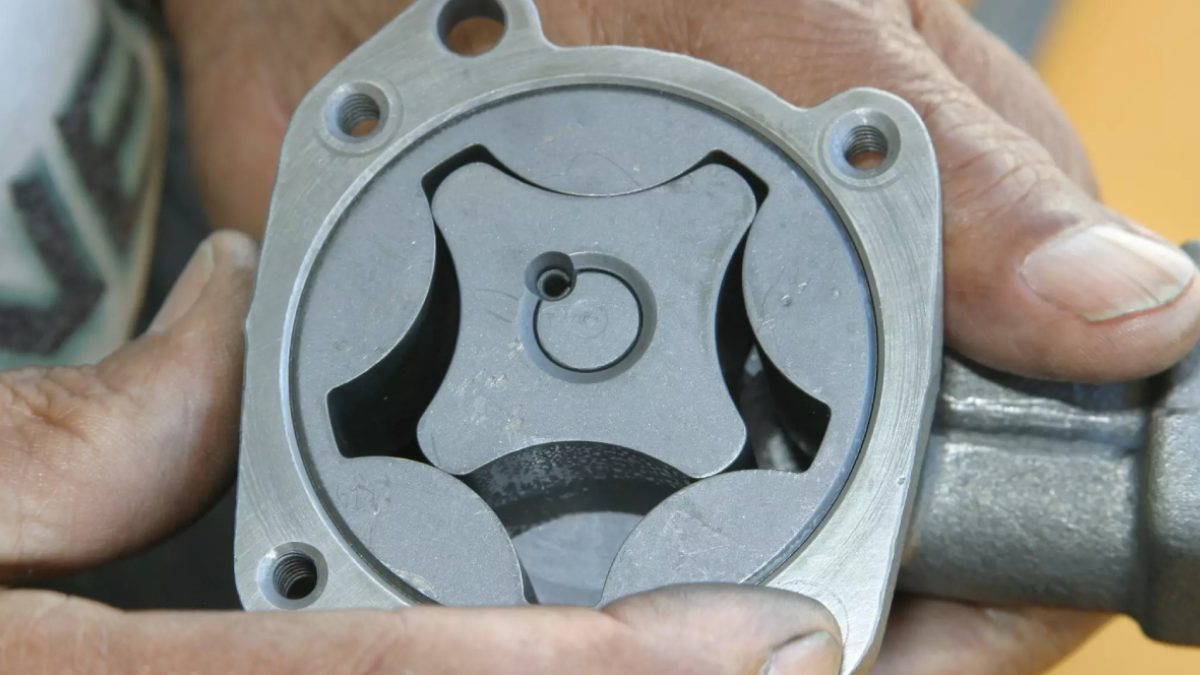
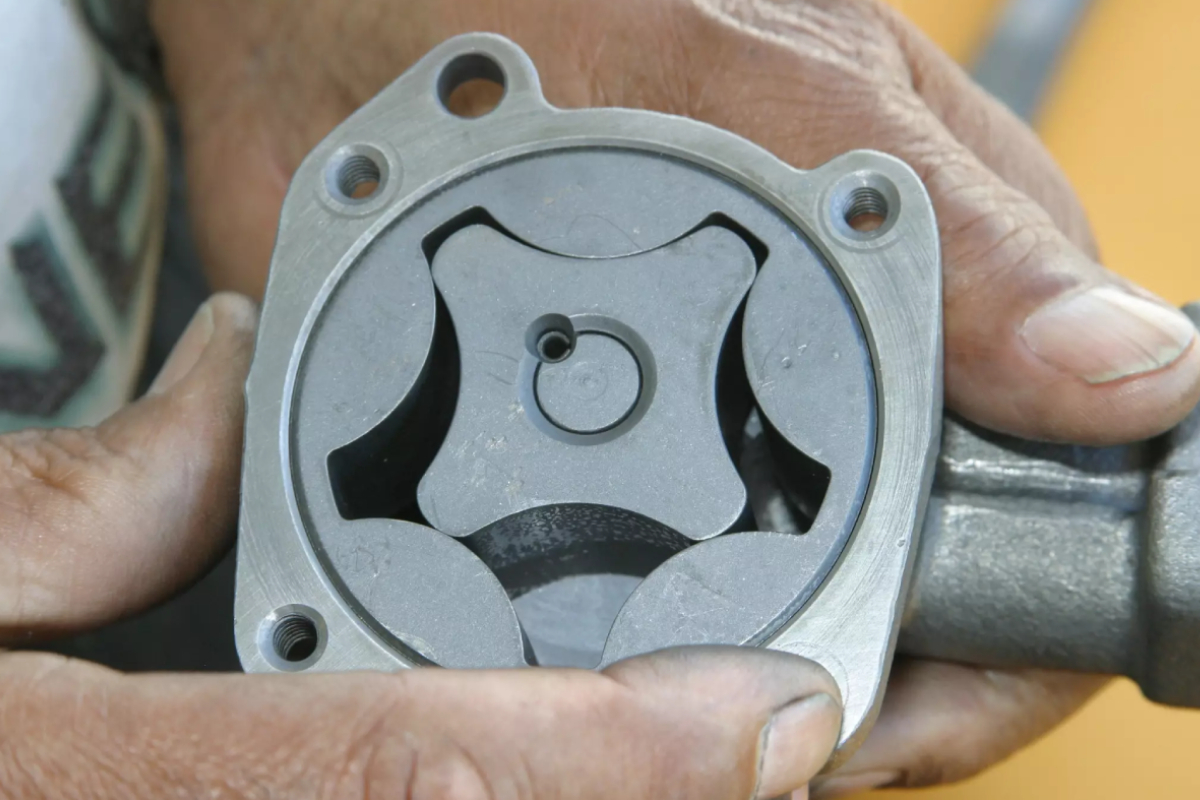
Choosing an Oil Pump – Gear Pump vs Gerotor
| Design | Strength | Weakness |
|---|---|---|
| Gear pump | Tough, simple | Less efficient at high RPM |
| Gerotor | Smooth flow, great at high RPM | Sensitive to debris |
Most modern engines use gerotor oil pumps for a reason — stable flow with less cavitation.
Choosing an Oil Pump – Installation Mistakes That Kill Builds
This part is non-negotiable.
Pickup tube clearance
Ideal: 1/4″ to 3/8″
Too close → starves pump
Too far → sucks air
Always prime
Dry start = bearing damage before oil even reaches the cam.
Quick Decision Guide
Stock engine, factory clearances → Standard
Aluminum block, modified → High-Volume
Drag engine, heavy loads → High-Pressure spring
Ford small block → Avoid HV unless absolutely needed
Final Thought
Oil pumps don’t make engines fast.
They make engines live.
- Pressure is a symptom.
- Flow is the cure.
- Clearances write the rules.
- Viscosity sets the mood.
Build around those, not the box label.