
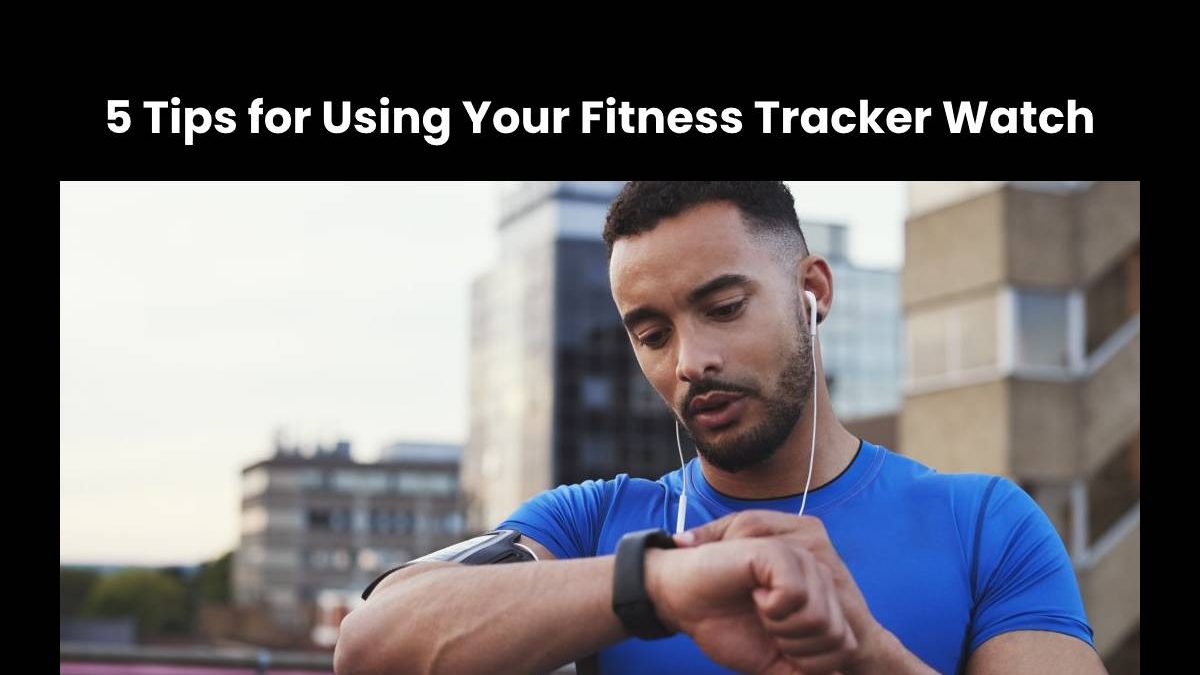

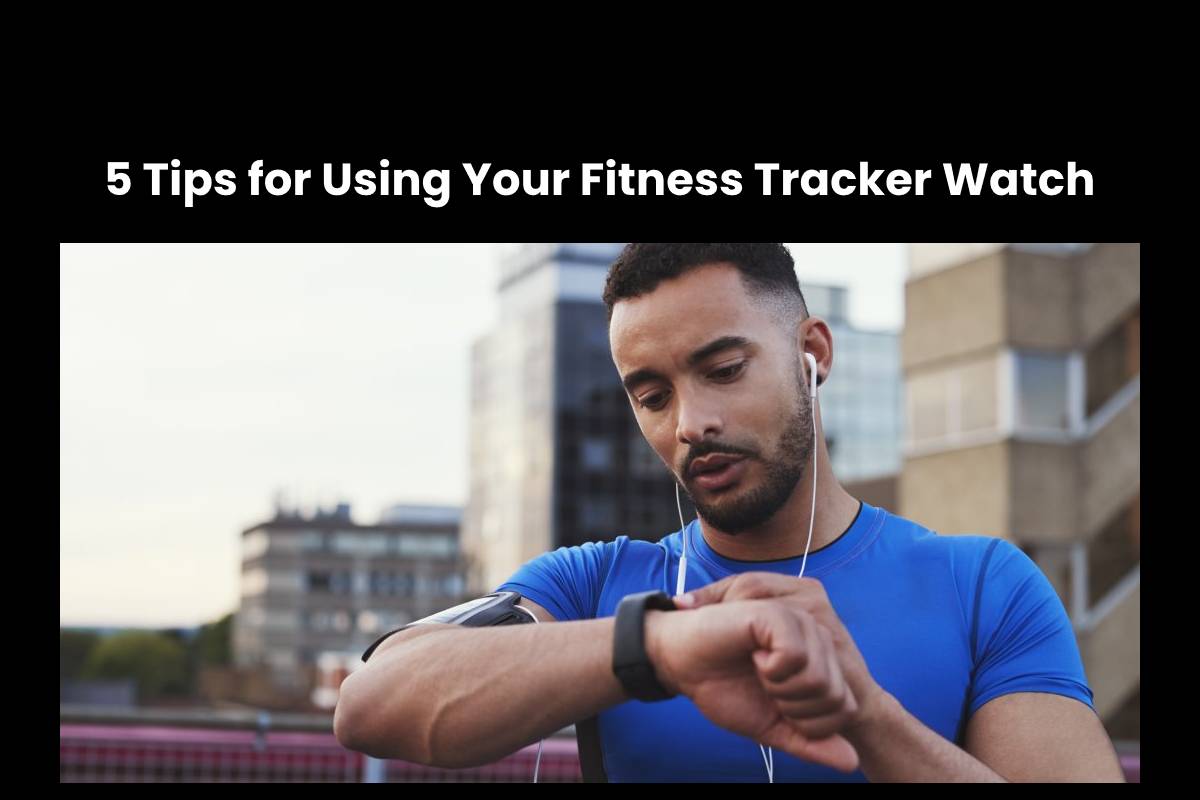
Tips for Using Your Fitness Tracker Watch – turn a gadget into a personal health lab
Ever looked at your watch after a workout and wondered, “Is this data even right?”
You ran hard, your lungs were on fire, yet the screen says you barely touched your training zone. Or your tracker swears you slept eight hours when you remember staring at the ceiling at 3 a.m.
That gap between what you feel and what the Smart watch shows is where most people quit using their tracker seriously.
This guide is about closing that gap. Not with fancy hacks or paid apps, but by learning how your body actually works and teaching your watch to read you — not a generic average human.
Think of your fitness tracker like a car dashboard. Resting heart rate is your engine at idle. VO₂ max is the engine at redline. HRV is the gearbox that decides how smoothly you move between stress and recovery. If the dashboard isn’t calibrated, you might think you’re cruising at 60 when you’re really crawling at 45.
Let’s fix that.
Table of Contents
Mastering the Setup: Calibrating for Distance & Heart Rate Precision
Why “220 minus age” is lying to you
Most trackers use the old formula:
Max HR = 220 – your age
It’s easy, but wildly inaccurate. For many people it’s off by 10–12 beats per minute, which means your training zones are wrong from day one.
The better method is the Karvonen Formula, which uses your Heart Rate Reserve (HRR).
Here’s how it works:
-
Measure your true resting heart rate
-
Take it first thing in the morning before getting out of bed.
-
-
Estimate or test your max heart rate (field test or lab).
-
Calculate HRR:
HRR = Max HR – Resting HR -
Training zone formula:
Target HR = (HRR × Intensity %) + Resting HR
Example:
Max HR = 190
Resting HR = 60
HRR = 130
For a 70% aerobic workout:
(130 × 0.7) + 60 = 151 bpm
That’s your real zone not whatever the default screen says.
This one fix alone can turn junk training into smart training.
Manual stride length calibration (the treadmill problem)
If your watch and treadmill never agree, this is why.
Fix it:
-
Go to a 400-meter track.
-
Walk or run normally for one lap.
-
Count your steps manually.
-
Divide 400 meters by your step count = your true stride length.
-
Enter it into your tracker’s advanced settings.
Now your indoor miles stop being guesses.
Sensor Optimization: The Science of Proper Watch Placement
Your tracker uses Photoplethysmography (PPG) — green LEDs that measure blood flow through your skin.
Bad placement = bad data.
The secret spot
Wear the watch one to two finger-widths above the wrist bone (ulnar styloid process).
Why?
-
Flatter surface
-
Better capillary contact
-
Less light leakage
-
Reduced motion noise
Fit rules
-
At rest: comfortable, not tight.
-
During workouts: snug — not cutting circulation, just no wobble.
This prevents cadence lock, where your watch mistakes foot strikes for heartbeats. That’s why some runners see their heart rate mysteriously stuck at 170 bpm — it’s not your heart, it’s your footsteps.
Decoding Recovery: Understanding HRV and Readiness
Your watch doesn’t measure stress emotions. It measures physiological stress via Heart Rate Variability (HRV) — the tiny variations between heartbeats.
-
High HRV: resilient nervous system, ready to train
-
Low HRV: your body is under load — from workouts, poor sleep, alcohol, illness, even heavy meals
Psychological stress can lower HRV, but so can dehydration and late-night Netflix.
Use HRV as a trend, not a verdict. One bad night means nothing. A 5-day downward drift means slow down or you’ll burn out.
VO₂ Max: Tracking the Sentinel Metric of Cardiovascular Health
VO₂ max is your aerobic horsepower how much oxygen your body can use at full effort.
It’s not just for athletes. Increasing aerobic fitness by just 1 MET is linked to about a 13% reduction in all-cause mortality risk.
Your watch won’t give lab-grade VO₂ max, but it gives something more valuable:
trends over time.
If your graph is climbing slowly over months, your heart is aging backward.
Technical Resilience: Maximizing Battery Life for Endurance and Travel
Nothing kills motivation faster than a dead watch mid-hike.
Battery survival checklist
-
Switch GPS to UltraTrac / Power Save mode
-
Reduce screen timeout
-
Disable Always-On Display
-
Turn off background syncing for social apps
-
Lower brightness
-
Kill Wi-Fi when outdoors
These tweaks can double your battery life without sacrificing core tracking.
Wear and Care: Maintenance Protocols for Skin Health and Accuracy
Here’s the part almost nobody talks about:
95% of wristbands harbor bacteria like E. coli and Staph.
Your band is basically a sweaty sponge glued to your skin.
Think of your watch like socks. You wouldn’t wear the same socks for a week of workouts, right?
Cleaning guide
| Band Type | How to Clean |
|---|---|
| Silicone | Warm water + mild soap, weekly |
| Leather | Damp cloth only, never soak |
| Woven / Nylon | Hand-wash, air dry |
| Watch Back | Alcohol wipe after workouts |
This prevents rashes, odor, and sensor interference.
Behavioral Science Integration: Turning Data into Habits
Your tracker is not a coach. It’s a physiological laboratory. You are the scientist.
Beat the “data paradox”
Tracking everything leads to paralysis by analysis. Some studies show performance drops up to 10% when athletes obsess over too many metrics.
Pick 2–3 metrics only based on your goal:
| Goal | Focus Metrics |
|---|---|
| Fat loss | Daily steps, resting HR |
| Injury recovery | Mileage, HRV |
| Endurance | VO₂ max trend, aerobic zone time |
Ignore vanity numbers you can’t act on.
The 2-minute microbreak habit
Sitting all day damages blood sugar control even if you exercise.
Use sedentary alerts to take a 2-minute walk every hour. That tiny habit beats one long gym session for metabolic health.
FAQs
Q1: How can I manually calibrate my tracker for more accurate indoor distance?
A: Measure a known distance like a 400-meter track, count steps, divide distance by steps, and enter the value into your advanced settings.
Q2: Where is the best spot to wear my tracker?
A: One to two finger-widths above the wrist bone for best heart rate accuracy.
Q3: What’s the difference between physiological and psychological stress?
A: Your watch measures physiological stress through HRV. It reflects physical load, illness, digestion, alcohol, and yes — mental anxiety too.
Q4: Why is “220 minus age” inaccurate?
A: It’s a population average and ignores your resting heart rate. The Karvonen formula personalizes your training zones.
Q5; How do I maximize battery life on long hikes?
A: Use UltraTrac GPS, lower brightness, shorten screen timeout, and disable background syncing.
Final thought
Modern wearables aren’t fancy step counters anymore. They’re personal physiological laboratories. But only if you teach them who you are.
Calibrate your heart rate with the Karvonen method. Measure your real stride. Wear your Super watch where it can actually read your blood. Clean it like you clean your socks. Focus on a few metrics that matter.
Do that, and your tracker stops being noise and starts becoming wisdom.
Tips for Using Your Fitness Tracker Watch