

Regulated sectors are rapidly embracing agentic AI. Healthcare providers are linking AI models with electronic health record systems, financial institutions are automating claims workflows using tool-enabled agents, and insurance companies are deploying MCP servers to support real-time policy quoting. The MCP ecosystem is projected to grow to $1.8 billion in 2025, with the strongest demand coming from healthcare, finance, and manufacturing.
Yet implementing MCP in regulated environments introduces strict compliance obligations that typical tool integrations cannot meet. The EU AI Act’s high-risk system provisions become fully enforceable in August 2026. HIPAA requires auditable records for every interaction involving protected health information. SOC 2 demands ongoing proof that security controls are functioning as intended. When autonomous agents interact with tools that handle sensitive data, each invocation must be authenticated, authorized, logged, and traceable.
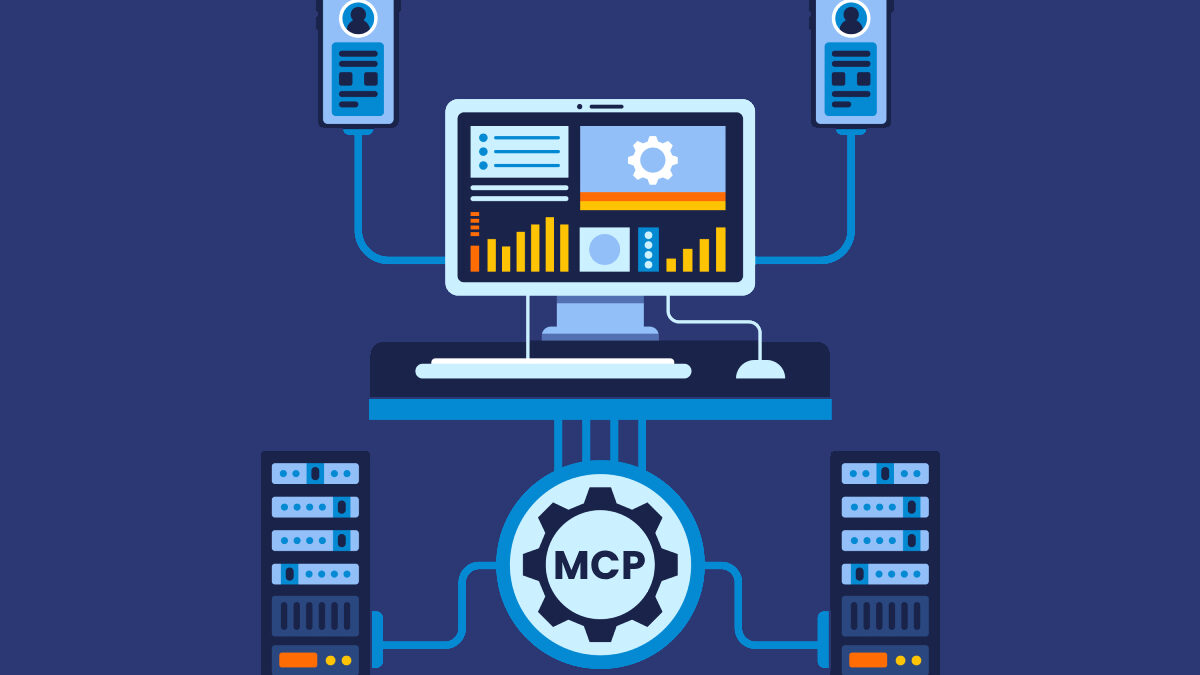
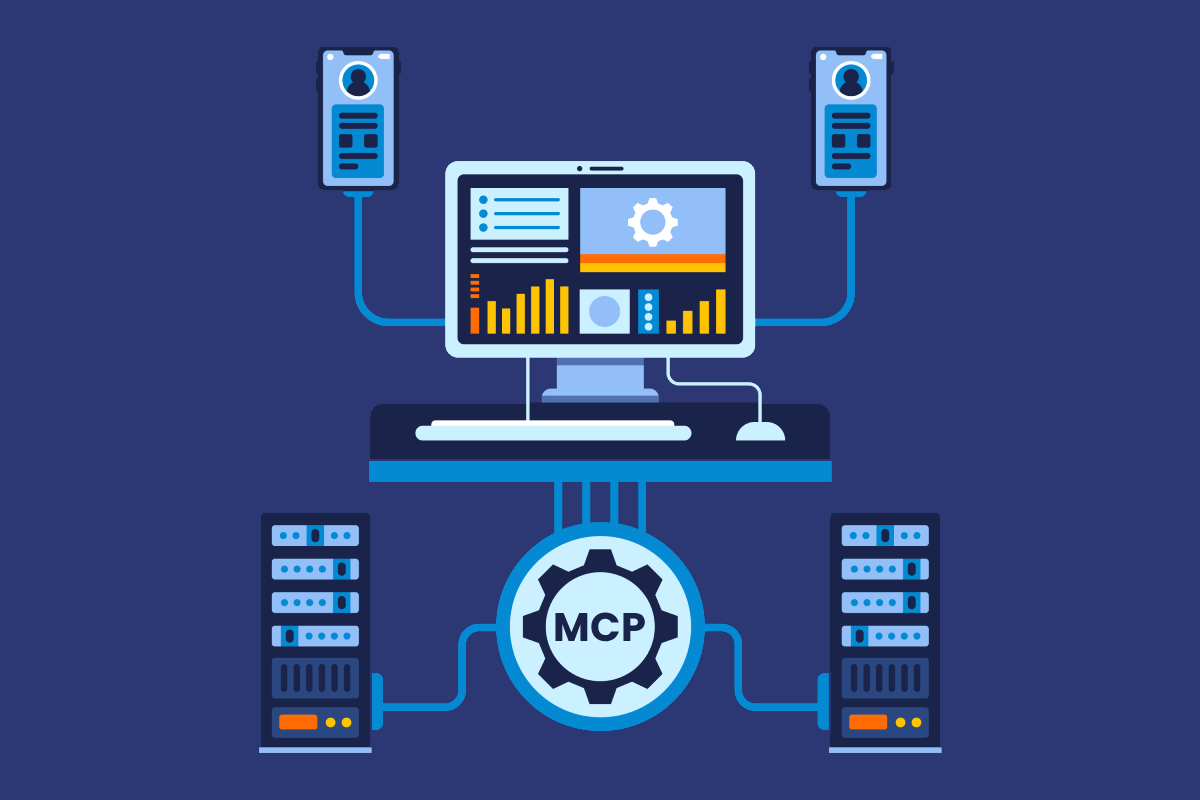
An MCP gateway acts as the centralized control layer that enables this level of oversight. This guide reviews the five leading MCP gateways designed for organizations operating under heavy regulatory requirements.
Table of Contents
What Regulated Industries Require From an MCP Gateway
Before comparing platforms, it helps to understand the governance requirements that most compliance frameworks enforce:
- Immutable audit trails: Every agent tool invocation must be recorded with timestamps, user identity, tool parameters, and execution results. Frameworks such as SOC 2, HIPAA, and ISO 27001 require this degree of traceability.
- Per-consumer access controls: Not every agent or user should have access to every tool. For example, a customer support agent should not execute database write operations, and a claims processing agent should not interact with tools outside its defined workflow. Role-based or key-based tool filtering is essential.
- Data residency and network isolation: Many regulated organizations require AI infrastructure to run inside their own VPC or private cloud environment. Sensitive data cannot pass through external networks or leave specific geographic regions.
- Secure credential management: API keys, OAuth tokens, and service credentials must be stored in enterprise vault systems such as HashiCorp Vault or AWS Secrets Manager, with rotation policies and full access logging.
- Federated authentication: Tool calls should run with user-level credentials so that each invocation respects the permissions of the authenticated user rather than relying on a shared service account.
- Human-in-the-loop controls: High-risk tool actions should require explicit approval workflows. Autonomous execution should only apply to pre-approved, low-risk tools.
Across regulated industries, security consistently ranks as the biggest adoption barrier. Surveys show that 53% to 62% of organizations cite security concerns as the primary challenge when implementing MCP.
1. Bifrost
Bifrost offers one of the most comprehensive MCP gateway solutions for regulated enterprises. Built in Go with just 11 microseconds of overhead at 5,000 requests per second, it functions as both an MCP client and MCP server. It aggregates tools from multiple upstream MCP servers and exposes them through a single governed endpoint.
Compliance and security capabilities
- Immutable audit logs: Every tool execution is recorded with full request and response metadata, supporting SOC 2, GDPR, HIPAA, and ISO 27001 audit requirements. Log exports allow automated delivery to external storage platforms and data lakes for long-term retention.
- Per-consumer tool filtering: Virtual Keys enforce strict allow-lists that determine which MCP clients and tools each consumer can access. For example, a billing support key might only access the check-status tool from the billing client, while a support key may access the full tool set. Restrictions always take precedence and override manual headers.
- In-VPC deployments: Deploy within private cloud environments with VPC isolation so that sensitive data remains inside your network boundary.
- Vault support: Native integrations with HashiCorp Vault, AWS Secrets Manager, Google Secret Manager, and Azure Key Vault enable secure credential storage and automated rotation.
- Security-first tool execution: Bifrost never automatically executes tool calls by default. Every execution requires an explicit API call, ensuring human oversight. Agent Mode allows configurable auto-approval only for selected low-risk tools.
- Federated authentication: Convert existing enterprise APIs into MCP tools without writing code. Bifrost passes user-level credentials directly to upstream APIs so each call runs with the authenticated user’s permissions. Credentials are never stored or cached by Bifrost.
- Enterprise identity integration: Supports OpenID Connect with Okta and Microsoft Entra ID, along with automatic user provisioning, role synchronization, and RBAC using custom roles.
- Clustering: Enables high availability deployments with automatic service discovery and zero-downtime upgrades.
- Code Mode: Reduces token usage by more than 50% when connecting to three or more MCP servers, lowering operational costs for complex agent workflows.
Bifrost also delivers the complete LLM gateway stack alongside MCP governance features, including fallbacks, load balancing, semantic caching, guardrails (integrating with AWS Bedrock, Azure Content Safety, and Patronus AI), and hierarchical budget controls. This unified approach removes the need to combine separate tools for LLM routing and MCP governance.
2. Lasso Security
Lasso Security is an open-source MCP gateway designed with a security-first philosophy. It uses a plugin-driven architecture to inspect traffic in real time and is particularly suited to organizations where threat detection is the top priority.
Key capabilities for regulated industries
- Real-time threat detection: A plugin layer connects to Lasso’s API to analyze traffic for prompt injection, command injection, and data exfiltration attempts, blocking malicious payloads before they reach agents or tools
- PII masking and redaction: Automatically detects and masks personally identifiable information and sensitive secrets in both requests and responses
- Open-source transparency: Full access to the codebase enables organizations to conduct their own security audits
- Defense-in-depth architecture: A triple-layer security model that independently protects the AI layer, MCP layer, and API layer
Lasso Security is particularly useful for teams that want advanced threat monitoring on top of their MCP infrastructure. However, its focus remains on security analysis rather than providing a complete gateway feature set such as routing, caching, or budget controls. Most organizations will need to combine it with additional infrastructure to run production LLM workloads.
3. Lunar.dev MCPX
Lunar.dev MCPX emphasizes enterprise governance with detailed tool-level role-based access control and strong audit logging capabilities.
Key capabilities for regulated industries
- Tool-level RBAC: Access permissions operate at the individual tool level rather than the server level. Administrators can allow read-only operations while blocking write operations within the same MCP server.
- Tool customization: Administrators can modify tool descriptions or lock parameters to prevent LLMs from invoking tools with unsafe configurations.
- On-premises deployment: Supports deployment on Lunar’s managed platform, within a customer’s own cloud environment, or fully on-premises.
- Immutable audit logs: Maintains a complete record of all access activity for compliance documentation.
- Low latency: Delivers approximately 4 ms p99 latency while maintaining governance controls.
MCPX is particularly suitable for organizations that require precise control over tool permissions and the ability to customize tool behavior to ensure safer LLM interactions. It supports both STDIO and remote HTTP/SSE MCP servers, making it compatible with hybrid environments.
4. Microsoft Azure MCP Gateway
Microsoft provides MCP gateway capabilities through both an open-source gateway for Azure Kubernetes Service (AKS) and integration with Azure API Management.
Key capabilities for regulated industries
- Azure Active Directory (Entra ID) integration: Native authentication and authorization through existing Microsoft identity infrastructure
- Azure Monitor and App Insights: Deep observability through Microsoft’s monitoring ecosystem
- Compliance inheritance: Organizations can leverage Azure’s existing compliance certifications including SOC 2, HIPAA BAA, and ISO 27001
- Open-source AKS option: Enables deployment inside customer-controlled Kubernetes clusters
The Azure MCP Gateway is an excellent choice for organizations deeply invested in the Microsoft ecosystem. However, it introduces strong vendor dependency on Azure services. Teams running multi-cloud or non-Azure infrastructure may find the integration advantages less significant.
5. Docker MCP Gateway
The Docker MCP Gateway applies container orchestration principles to MCP server management. It integrates with the Docker MCP Catalog, which provides hundreds of pre-built MCP servers.
Key capabilities for regulated industries
- Container isolation: CPU and memory limits reduce the risk of resource exhaustion attacks, while cryptographically signed images help protect the software supply chain
- Familiar deployment workflows: Docker Compose orchestration supports multi-server MCP deployments using standard DevOps practices
- Supply chain security: Container signing addresses the growing risk of supply chain attacks in the MCP ecosystem
- Infrastructure-as-code: MCP infrastructure can be defined using standard Docker configuration files
Docker’s MCP Gateway is well suited for organizations already standardized on container-based infrastructure and looking to secure MCP through isolation. The trade-offs include latency overhead of roughly 50 to 200 ms compared with purpose-built gateways, along with more limited governance and policy management features.
Selecting the Right MCP Gateway for Your Compliance Requirements
Selecting the right platform depends on your regulatory environment, infrastructure stack, and governance needs:
- For comprehensive compliance with full LLM gateway capabilities: Bifrost delivers the most complete feature set for regulated environments, combining MCP governance with audit logs, in-VPC deployment, vault integration, guardrails, and hierarchical budget controls in a single platform
- For advanced threat monitoring and security analysis: Lasso Security provides specialized real-time threat detection with PII redaction and open-source transparency
- For highly granular tool-level access control: Lunar.dev MCPX offers detailed RBAC and tool customization capabilities
- For Azure-native organizations: Microsoft’s MCP gateway integrates seamlessly with Entra ID and inherits Azure’s compliance certifications
- For container-focused teams: Docker MCP Gateway offers familiar deployment workflows along with strong supply chain protection
For many regulated enterprises, the key question is whether the gateway should only govern MCP traffic or also handle LLM routing, cost management, and content safety. Among the platforms listed here, Bifrost is the only solution that combines both capabilities in a single high-performance layer.