
Best SPF Flattening Tools
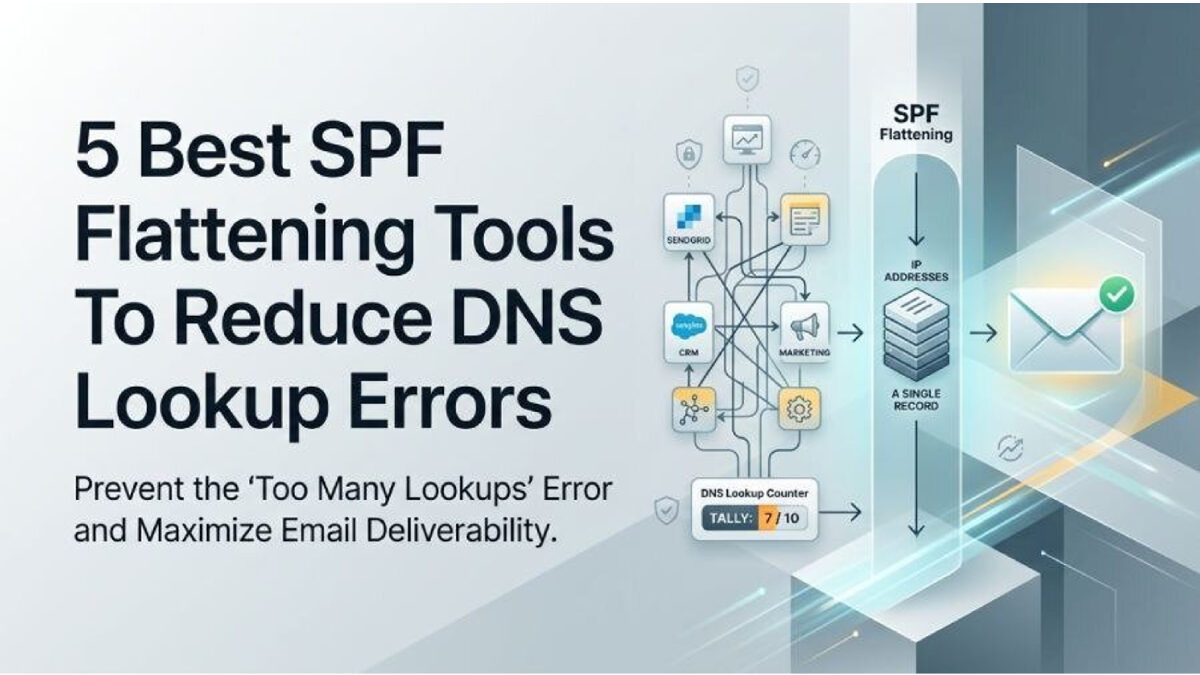
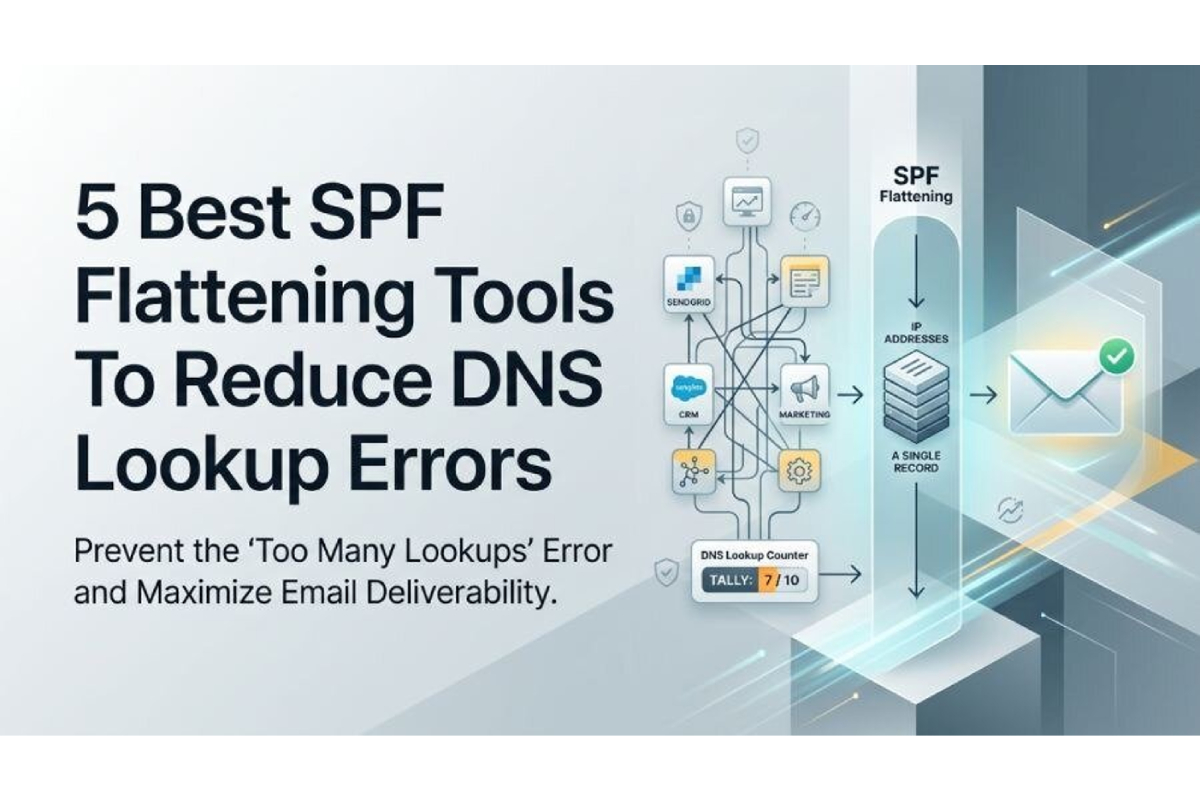
Managing SPF records is crucial for organizations seeking robust email authentication and improved deliverability. However, growing reliance on third-party senders, complex nested records, and expanding email streams increases the risk of exceeding the SPF mechanism limit as defined in RFC 7208. Surpassing 10 DNS lookups within a single SPF record can trigger the notorious “too many lookups” error, resulting in SPF failures, softfail or fail directives, degraded SPF pass rate, and ultimately, reduced email deliverability.
To overcome these SPF limitations, organizations are increasingly turning to automated SPF flattening solutions. Below, we assess the five best SPF flattening tools designed to reduce DNS lookup errors and enhance SPF authentication for modern email flows.
Table of Contents
Tool #1: AutoSPF — Automated SPF Flattening with Continuous DNS Monitoring
Effortless SPF Record Optimization for Dynamic Environments
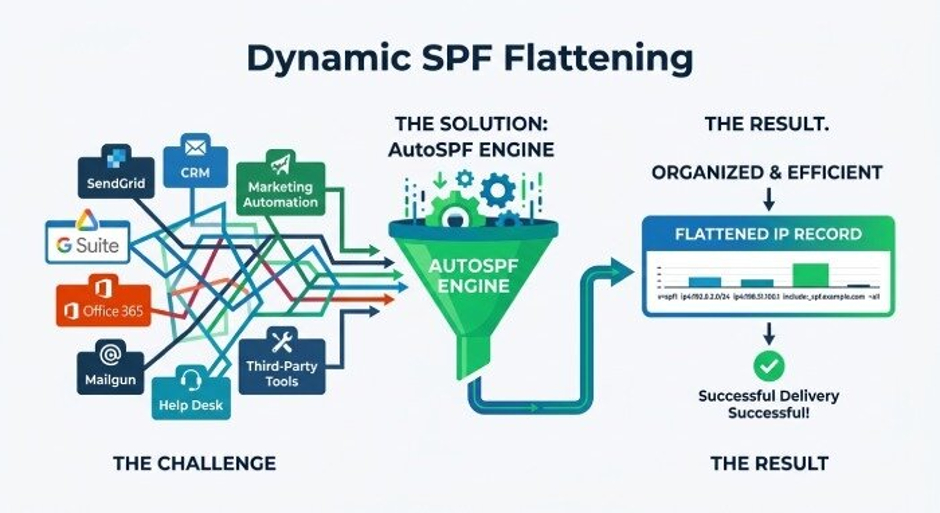
AutoSPF is a high-automation SPF flattening tool purpose-built to mitigate DNS lookup bloat. This platform streamlines spf record management by converting nested records and includes from third-party senders—like SendGrid, Marketing Automation, and CRMs—into a single flattened SPF record composed of their actual IP addresses. This reduction in DNS lookups ensures your domain remains within the SPF mechanism limit, minimizing spf overhead and eliminating the too many lookups error.
Key Features and Advantages
- Continuous DNS Monitoring: AutoSPF continuously and automatically monitors the DNS records and underlying IP addresses referenced by your spf entry, alerting you to changes and prompting smart spf record updates.
- Dynamic Flattening Algorithm: As third-party senders and customer-facing systems are added or removed, the tool dynamically adjusts the flattened spf record to preserve verified email sources and remove unused spf entries, keeping your configuration precise and compliant.
- SPF Best Practices and Compliance: Adheres to spf best practices, including prevention of duplicate senders, elimination of overlapping ip ranges, and compliance with both the 10-spf mechanism and 255-character length constraints.
Practical Benefits
AutoSPF’s intelligent SPF flattening service automatically transforms a cluttered or bloated spf record into an optimized version, vastly reducing your DNS lookup tally. This delivers maximum spf alignment and supports both DMARC and DKIM authentication initiatives.
Tool #2: PowerDMARC — Hosted SPF Flattening for Simplifying Complex Sender Records
Simplified Management for Complex Email Architectures
PowerDMARC’s hosted SPF flattening solution is especially valuable for organizations managing multifaceted spf configurations with a mix of internal and external (often SPF incapable) email sources, including Customer Support platforms and Order Fulfillment systems. PowerDMARC takes the guesswork out of spf mechanism management by offering a hosted, dynamically updated, and flattened spf record.
Standout Capabilities
- Centralized SPF Record Hosting: PowerDMARC’s flattening tool hosts and maintains your flattened spf record in the cloud. When you add or remove third-party senders or adjust subdomain segmentation, the system instantly updates your SPF record, preventing stale configurations.
- Built-In Lookup Monitoring: The tool automatically monitors SPF lookups and highlights when spf limitations could trigger lookup limit errors, providing recommended remediation before issues arise.
- Seamless Integration: Designed to work with DMARC adoption initiatives, strengthening the authentication of your mail from and return-path domains.
How PowerDMARC Addresses SPF Bloating
With its proactive management and automatically updated records, PowerDMARC ensures that nested records and includes for overlapping IP ranges do not result in excessive DNS lookups. This maximizes spf pass rate and simplifies ongoing sender verification.
Tool #3: EasyDMARC — Dynamic SPF Flattening with Visibility into Lookup Limits
Real-Time SPF Record Maintenance and Lookup Optimization
EasyDMARC stands out for its combination of dynamic SPF flattening and comprehensive dashboard insights. This SPF flattening tool automatically tracks all changes to your verified email sources, ensuring that your SPF domain maintains compliance with RFC 7208 and avoids fail directive consequences from excessive DNS lookups.
Features Promoting SPF Compliance
- Dynamic IP Address Resolution: EasyDMARC collects and resolves all include mechanisms and nested spf records—such as those from Office 365, Google, or Cloudflare—flattening them into a single updated SPF entry made up of explicit ip addresses.
- Real-Time Lookup Counter: The platform displays ongoing DNS lookup counts per spf record, so administrators are immediately alerted as spf capabilities approach the spf mechanism limit.
- SPF Clutter Management: Regular audits help remove duplicate spf mechanisms and outdated or unused spf entries, further reducing spf bloating and improving SPF pass rates.
Tool #4: DMARCLY — SPF Record Optimization and Flattening for DMARC-Focused Teams
Advanced SPF Record Management for Large Ecosystems
DMARCLY’s SPF Record Flattening Tool is well suited for organizations seeking tight spf alignment and rigorous dmarc adoption. DMARCLY excels in SPF record optimization by providing detailed analysis and actionable recommendations through its Detail Viewer and dmarc.io integrations.
Robust Solutions for Complex SPF Scenarios
- SPF Survey and Analysis: DMARCLY’s platform conducts a comprehensive spf survey to map and analyze all nested records, highlighting any configuration or spf experiment issues that may cause excessive spf lookups or too many lookups errors.
- Automated Flattening and Cleanup: After analysis, the service produces a fully flattened spf record, automatically removing duplicate senders, trimming overlapping ip ranges, and ensuring a deny all spf record is in place to block unauthorized sources.
- SPF Limit Monitoring: Ongoing spf monitoring ensures your configuration stays under the lookup threshold, adapting as new email streams or vendors are introduced.
Integration with External Tools
DMARCLY’s alignment with dmarcian, dmarc.io, and other ecosystem leaders supports wide-scale spf record management integration, aligned to DMARC, DKIM, and overall email authentication frameworks.
Tool #5: Red Sift OnDMARC — Dynamic SPF Management to Prevent Lookup-Limit Failures
Automated SPF Flattening Coupled with Policy Enforcement
Red Sift OnDMARC takes dynamic SPF management to another level by not only automating SPF flattening but also integrating with broader security and authentication controls. Their approach is unique: continuously adapting your SPF entry in live environments to address changing DNS configuration and email sources.
Key Attributes
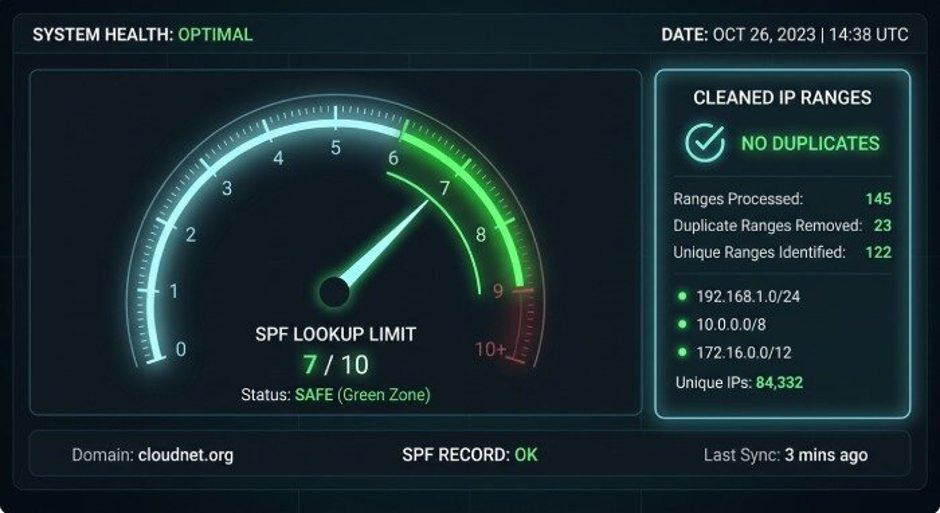
- Real-Time DNS Lookup Analysis: The system automatically detects spf lookup surges, spf bloating, or spf clutter that could trigger the spf mechanism limit.
- Instant Flattening and Update: When the risk of a too many lookups error is detected—often due to rapid onboarding of new marketing automation vendors or customer support platforms—OnDMARC instantly generates an updated, flattened spf record and pushes it to your DNS.
- Subdomain Segmentation and Alignment: The platform supports segmentation and ongoing sender verification across subdomains and return-path addresses, supporting advanced mail from and SPF authentication schemes.
Advanced SPF Flattening for the Enterprise
Red Sift OnDMARC is suited for enterprises with frequent changes to their email ecosystem, needing continuous spf monitoring and swift spf record update cycles to keep pace with operational demands and evolving third-party senders.
These SPF flattening tools bring automation, ongoing monitoring, and intelligent record management to the forefront of SPF record optimization. Whether your priority is DMARC adoption, scaling with third-party senders, or simplifying management of nested records and IP addresses, these tools can ensure your SPF configuration remains within limits, protects against authentication failures, and upholds industry-leading email deliverability.