
This article is part of our Laptops & Portable Computers resource section
5 Best Portable Monitors for Laptops
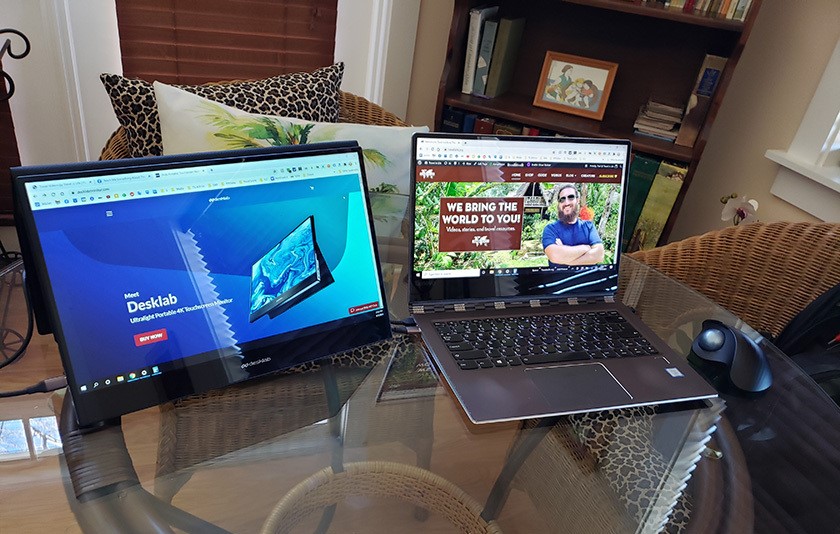
Things are changing really fast, and people are adapting by adopting better ways to work. If you travel for business, create content, or attend meetings frequently, a portable monitor for your laptop can make a real difference.
A second screen gives you more space for multitasking, comparing documents, editing content, and managing multiple applications. However, choosing between a laptop and a desktop setup depends on your needs. This guide to choosing between a laptop and desktop setup can help you consider the bigger picture before investing in additional equipment.
Shopping for electronics isn’t always easy. You need to make sure that a portable monitor offers the right connectivity, display quality, portability, and features for your work. In this review, we’ll look at five portable monitors and explain which use cases each one suits best.
Table of Contents
Why Trust Our Expertise?
Every consumer wants convenience and value before investing their hard-earned money in a gadget. We understand this, which is why we dedicate time to researching and evaluating products under different conditions.
We aim to recommend products based on their features, suitability, and intended use. We consider different budgets, requirements, and capabilities to help readers make informed decisions. Our approach is similar to the research involved in an expert laptop review, where specifications and real-world needs should both inform a buying decision.
Every feature and suitability claim should be checked against the manufacturer’s specifications and the user’s requirements.
How Did We Choose These Portable Monitors?
When selecting portable monitors for review, we consider several important factors. These include portability, connectivity, display quality, ease of use, and power requirements.
First, we look at portability, including weight, size, and durability. A portable monitor should be easy to carry in a laptop bag and convenient to set up when working away from home or the office.
Second, we check connectivity, including HDMI, USB-C, USB-A, and audio connections. Before buying, make sure your laptop supports the monitor’s connection type and the display modes it requires.
Third, we evaluate display resolution, refresh rate, colour reproduction, brightness, and eye-care features. These specifications can affect how comfortable the monitor is for office work, entertainment, and creative projects.
Finally, we consider practical features such as a kickstand, viewing angles, height adjustment, speakers, touchscreen support, and battery life.
These are the primary factors we consider when comparing portable monitors. The five options below offer different combinations of features for different types of users.
Top 5 Best Portable Monitors for Laptops
Now that we’ve covered the main factors to consider, let’s look at five portable monitors worth evaluating. Even if you have limited desk space, a portable monitor can provide a convenient second screen for everyday tasks.
Lepow Z1 Portable Monitor – Best for techy users
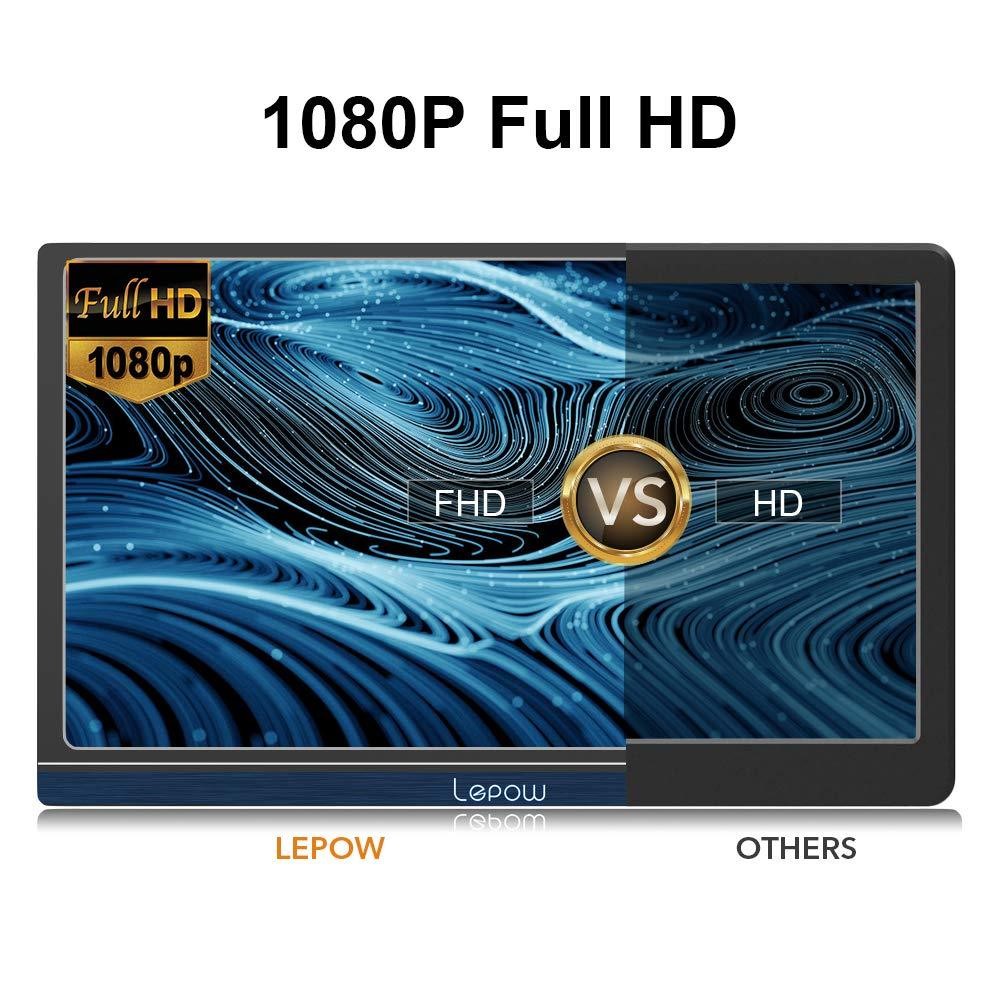
The Lepow Z1 portable monitor is a handy screen for different applications. It can serve as a second display for productivity, entertainment, and light gaming. However, users who need accurate colours may have to adjust its settings to achieve their preferred contrast and colour reproduction.
The Lepow Z1 is a budget-friendly monitor with a 1920 × 1080 resolution and a 15.6-inch screen. It has a 60 Hz refresh rate and offers useful reflection handling and brightness for everyday use.
The monitor includes a mini-HDMI port and a USB-C port. The USB-C connection supports DisplayPort Alt Mode, allowing compatible laptops to send video to the display. Depending on the device and cable, USB-C may also provide power.
The mini-HDMI port is useful for connecting compatible gaming consoles and other video sources. However, its 60 Hz refresh rate and response characteristics make it less suitable for users seeking a high-refresh-rate gaming display.
The monitor produces good colours and brightness for everyday viewing. Its contrast performance can be satisfactory, although calibration may be necessary for users who need more accurate colours.
Why Would Tech-Savvy Users Like the Lepow Z1?
Users who enjoy adjusting settings to suit their preferences may appreciate the Lepow Z1. Its display settings can be customised, making it possible to tune the image to individual requirements.
Its 60 Hz refresh rate is suitable for everyday computing and lighter gaming. However, users who prioritise competitive gaming should compare refresh rates and response times before buying.
Pros
- 15.6-inch display with 1920 × 1080 resolution.
- Mini-HDMI, USB-C, and 3.5 mm headphone connections.
- Anti-glare and flicker-free features for comfortable viewing.
- DisplayPort Alt Mode support.
- LED display technology.
- 16:9 aspect ratio.
- 60 Hz refresh rate for everyday use and light gaming.
Cons
- May require colour and contrast calibration.
- Speakers may produce limited bass.
Asus ZenScreen MB16ACV – Best Portable Monitor for Office Work
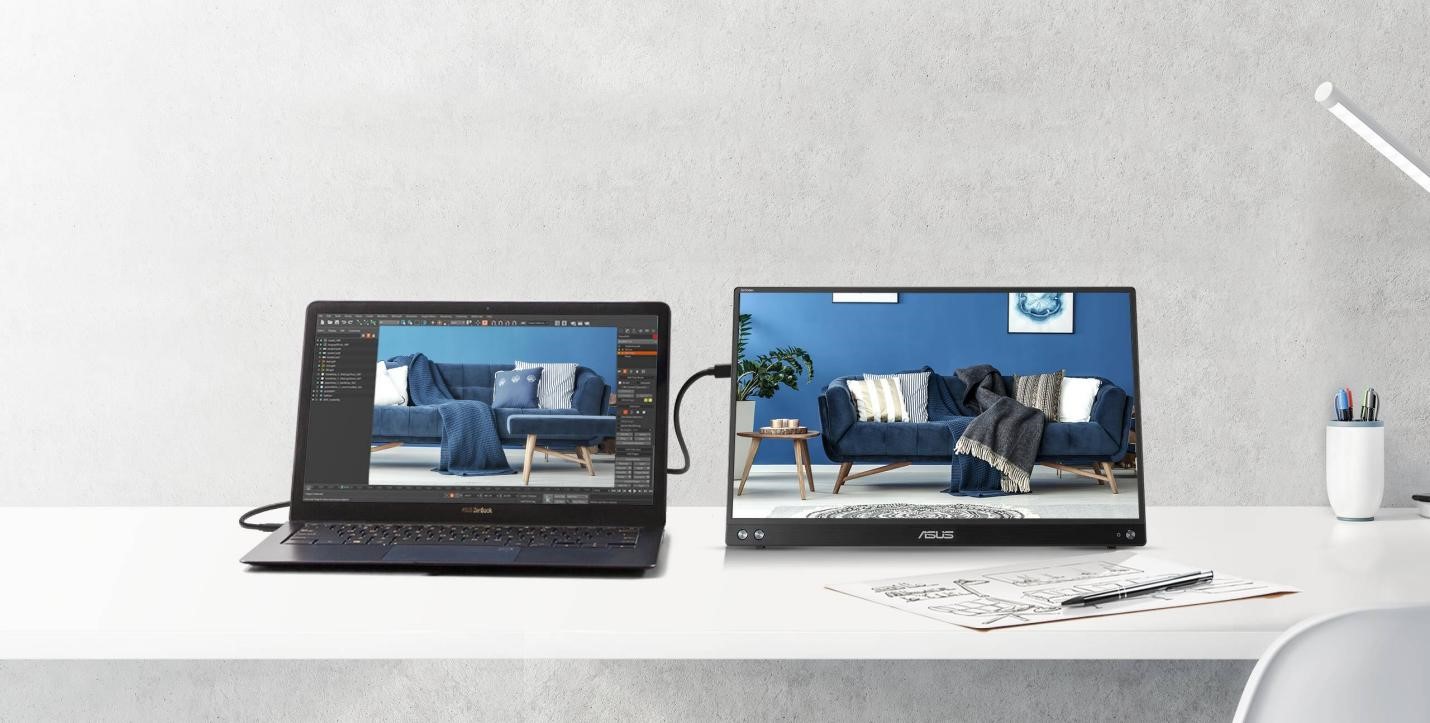
Asus is known for its range of computing devices, and the ZenScreen MB16ACV is designed to provide a convenient second screen. It is thin and lightweight, making it useful for office work, meetings, and travelling.
The Asus ZenScreen MB16ACV features a 15.6-inch IPS display with a resolution of 1920 × 1080. It offers good image quality for documents, presentations, and general productivity.
Its listed specifications include a 75 Hz refresh rate, a 5 ms response time, and an 800:1 contrast ratio. It also includes a kickstand that allows the monitor to be positioned vertically or horizontally.
The screen supports a wide viewing angle and offers 250-nit brightness. Its silver finish gives it a professional appearance, while its eye-care features are designed to make extended viewing more comfortable.
Connectivity includes USB-A, USB-C, and mini-HDMI. Check the exact model specifications and your laptop’s supported connections before purchasing, particularly if you plan to use a USB-C cable for both video and power.
This monitor can be a practical addition to a work laptop. If you’re buying a new computer specifically for productivity, compare the display and port requirements with those of the best laptops under ₹60,000 in India before deciding on a complete setup.
Why Is the Asus ZenScreen MB16ACV Suitable for Office Work?
The monitor does not have an internal battery, so it needs an appropriate power source. This is less of a concern in an office where power outlets are readily available.
Its lightweight design makes it convenient to carry in a briefcase or laptop bag. The kickstand helps position the display for document work and meetings.
The monitor’s display and eye-care features make it suitable for everyday office tasks. However, users who need highly accurate colours for professional photo or video editing should compare colour coverage and calibration results before buying.
Pros
- 15.6-inch display with 1920 × 1080 resolution.
- Mini-HDMI, USB-A, and USB-C connectivity.
- Asus Blue-light Filter.
- 75 Hz refresh rate.
- Wide viewing angle.
- Lightweight construction and slim profile.
- Professional-looking finish.
Cons
- Colours may appear less vivid than on some competing displays.
- No internal battery.
Asus ZenScreen MB16AMT – Portable Monitor for Travelers
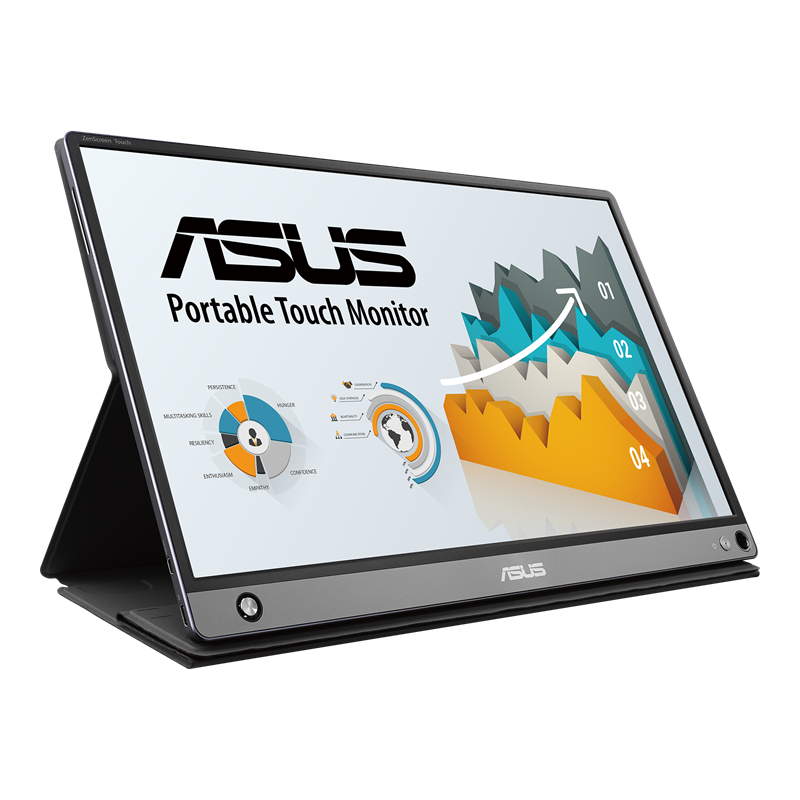
The Asus ZenScreen MB16AMT is similar to the MB16ACV but includes a built-in battery and touchscreen functionality. These features can be useful for people who travel between business meetings or need a second screen away from a desk.
It features a 15.6-inch display with 1920 × 1080 resolution and a 60 Hz refresh rate. The touchscreen can make certain tasks more convenient, depending on operating-system and application support.
The built-in 7800 mAh battery is rated to provide up to four hours of use under suitable conditions. QuickCharge 3.0 support is designed to help the battery recharge faster with a compatible charger.
The 1080p IPS screen offers a wide viewing angle. The monitor also includes connections for compatible devices, while automatic screen orientation is designed to switch between portrait and landscape modes on supported systems.
Before buying, confirm the exact port configuration, touchscreen compatibility, and operating-system requirements for your laptop. These details matter particularly when connecting a monitor to a compact or convertible computer.
For people who need flexibility beyond a conventional notebook, a mini laptop may also be worth considering. A small laptop and a portable monitor serve different purposes, but both can help people work in limited spaces.
Why Is the Asus ZenScreen MB16AMT Ideal for Travellers?
Portability is especially important when you are frequently moving between flights, offices, and meetings. A built-in battery can reduce reliance on a power outlet, although actual battery life depends on brightness, usage, and connected devices.
The foldable smart cover helps position the display at different angles. Its compact design makes it easier to carry alongside a laptop.
Pros
- 15.6-inch display with 1920 × 1080 resolution.
- Built-in 7800 mAh battery.
- USB and HDMI connectivity, subject to model specifications.
- 60 Hz refresh rate.
- Wide viewing angle.
- Flicker-free and blue-light filtering features.
- Automatic screen orientation on supported Windows devices.
Cons
- Battery life may vary with usage.
- Some features depend on operating-system compatibility.
- Check the exact model’s touchscreen and mounting features before buying.
UPERFECT Y Vertical Monitor – Best Versatile Portable Monitor
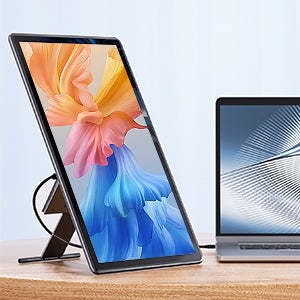
If your lifestyle combines work, travel, entertainment, and creative activities, the UPERFECT Y vertical monitor may be worth considering. It offers a display that can be used in portrait or landscape orientation, along with touchscreen functionality.
The monitor supports USB-A, USB-C, and HDMI connections, allowing compatible devices to connect to the display. Some configurations also allow a keyboard or mouse to be connected through the monitor, depending on the model’s ports and functionality.
It features a 15.6-inch display with 1920 × 1080 resolution and a 60 Hz refresh rate. The touchscreen supports multiple touch points, and the display can switch between portrait and landscape modes.
Its lightweight construction makes it suitable for carrying in a backpack or briefcase. The kickstand also helps provide a more organised setup without requiring a separate monitor stand.
A versatile monitor can be especially useful when paired with a convertible device. If you prefer a computer that can switch between laptop and tablet-style use, explore hybrid laptops and compare their screen sizes, hinges, ports, and operating-system support before choosing a setup.
Why Is the UPERFECT Y Vertical Monitor a Versatile Option?
The ability to change screen orientation makes the monitor useful for different tasks. Portrait mode can be convenient for reading long documents or viewing code, while landscape mode is suitable for presentations, video, and general productivity.
The touchscreen can add another way to interact with compatible applications. However, touch functionality depends on the connected device, cable, and operating system.
Although the monitor does not include an internal battery, it can still be useful as a second screen when power is available.
Pros
- USB-A, USB-C, and HDMI connectivity.
- Integrated stand for convenient positioning.
- 15.6-inch 1080p IPS touchscreen.
- Multitouch support.
- Portrait and landscape orientation.
- Wide viewing angle.
- 60 Hz refresh rate.
- Built-in speakers.
Cons
- No internal battery.
- May draw power from the connected laptop.
- Touch and orientation features depend on compatibility.
UPERFECT S 4K Portable Monitor – Best Portable Monitor Overall
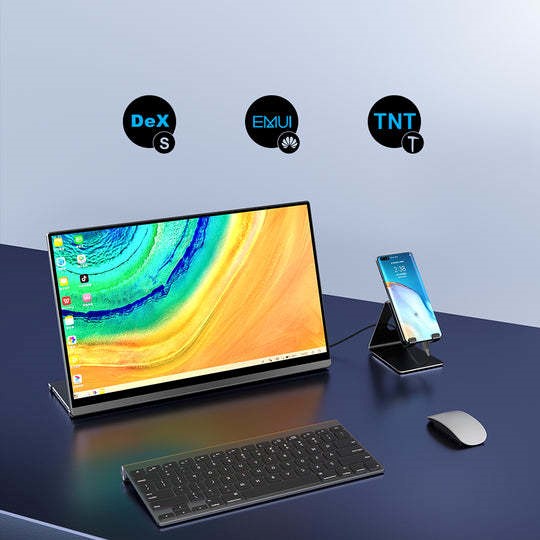
For users who want a higher-resolution portable display, the UPERFECT S 4K is an option to consider. It is designed to provide a larger, sharper viewing area for productivity, entertainment, and content creation.
The monitor offers a 4K resolution of 3840 × 2160 on an IPS display. The listed features include a 60 Hz refresh rate, multitouch support, and built-in speakers.
It also provides a wide viewing angle. Connectivity options include mini-HDMI, Micro USB OTG, a 3.5 mm AUX connection, and USB-C ports, although the exact arrangement should be verified for the model being purchased.
The high resolution can be useful for viewing detailed images, working with large documents, and editing content. However, a 4K display may consume more power and require more graphics performance than a Full HD monitor.
Why Is the UPERFECT S 4K Our Top Pick?
The UPERFECT S 4K offers a high-resolution display and a range of features that can suit users who want more screen detail. Its wide viewing angle and reported colour specifications make it worth considering for visual tasks, though professional creative work should involve checking independent colour-accuracy measurements.
The monitor is available in different configurations, so confirm the actual screen size, resolution, brightness, and ports before purchasing. Some product descriptions may list different measurements or features.
Its WLED backlighting is intended to reduce power consumption, but actual energy use depends on brightness and the content displayed.
Pros
- 4K IPS display.
- Multitouch support.
- Wide viewing angle.
- Multiple connectivity options.
- Built-in speakers.
- High-resolution viewing for detailed content.
- Portable design.
Cons
- No internal battery on the described configuration.
- Higher resolution can increase power demands.
- Specifications may vary by model.
Best Portable Monitors for Laptops: Buying Guide
Although we’ve reviewed five portable monitors, you should still do your own research before making a purchase. The right monitor should match your laptop’s capabilities, your budget, and the tasks you perform most often.
If your existing laptop struggles with your everyday workload, consider whether it needs an upgrade before spending money on accessories. This guide on when to get a new laptop can help you evaluate whether replacing the computer makes more sense than extending your current setup.
1. Port Connectivity
Connectivity is one of the first things to check. Without compatible ports and video-output support, you may not be able to connect the monitor as expected.
Check whether the monitor uses HDMI, mini-HDMI, USB-C, or another connection. USB-C is convenient, but not every USB-C port supports video output. Some setups may require an adapter, and some monitors need a separate power source.
If you use a Windows laptop, verify that the computer supports the monitor’s required display connection. You may also want to check which applications and utilities are available for your operating system using this guide to essential Windows 11 apps for laptops.
For Mac users, check the model’s supported external-display configurations and the number of screens it can drive. Also consider whether the monitor works with the Mac applications you use. This roundup of the best Mac apps may help you plan a productive Mac setup.
If you regularly move files between devices, connectivity extends beyond the monitor itself. For example, Apple’s AirDrop guide for transferring photos between an iPhone and Mac explains one way to move files between compatible Apple devices.
2. Power Source
If you plan to carry your monitor between locations, consider how it receives power. Some portable monitors draw power from the laptop, while others include rechargeable batteries or require a separate power adapter.
A battery-powered model can be useful when power outlets are unavailable. Check the rated battery capacity and expected runtime, and remember that actual performance depends on brightness and usage.
USB-powered monitors may be convenient, but they can drain your laptop battery more quickly. If battery life is important, compare the monitor’s power requirements with your laptop’s capacity.
3. Display Resolution and Quality
Portable monitors, like televisions and laptop displays, should provide sufficient resolution for their intended use.
A Full HD display is often adequate for office work, online meetings, documents, and everyday entertainment. A 4K display may be more appropriate for users who need greater detail, although the benefits depend on screen size, viewing distance, application support, and laptop performance.
Look beyond resolution alone. Brightness, contrast, colour coverage, refresh rate, viewing angles, and glare handling all affect the viewing experience.
If you plan to use the display for extended periods, consider brightness adjustment and eye-care features. A high-resolution display can be useful, but it should also fit your budget and practical requirements.
4. Size and Weight
Weight is an important measure of portability. The monitor should fit comfortably into your laptop bag without making your setup unnecessarily heavy.
The right size depends on your work. A business user may prefer a larger screen for presentations, while a student may prioritise a lightweight model that is easy to carry between classes.
Students shopping for a complete computer setup can also compare portable monitors with the recommendations in this guide to student laptops. Think about whether a second screen is genuinely useful for your studies before paying for one.
Portable monitor sizes commonly include 15.6-inch and 17.3-inch options. Larger screens can improve viewing space, but they may take up more room in a bag and can be less convenient for frequent travel.
5. Compatibility With Your Computer
Before purchasing, check that the monitor supports your laptop’s operating system, graphics output, and connection standards.
If you use a MacBook, confirm that the computer supports the external resolution and refresh rate you want. It can also be useful to understand your Mac’s available resources when running several applications and displays. This guide explains how to check RAM usage on a Mac.
If you use a smartphone or tablet as part of your mobile setup, confirm that the device supports external video output. Not every phone can connect directly to a portable monitor, even when the monitor has a USB-C port.
Some users also rely on tools to transfer files between Android devices and computers. The MacDroid review may be useful if you use a Mac and need to manage files between it and an Android device. Remember that file-transfer compatibility and external-display compatibility are separate requirements.
6. Warranty and Reliability
Every electronic device should have clear warranty terms. Before buying a portable monitor, check the seller’s warranty, return policy, and procedure for dealing with defective units.
Read reviews carefully and look for consistent information about build quality, connection reliability, screen defects, and customer support. Avoid relying exclusively on a manufacturer’s headline specifications.
7. Price and Overall Value
Price matters, but a more expensive monitor is not automatically the best option. Compare the features you need against the cost of each model.
Consider whether you need a 4K screen, touchscreen support, a built-in battery, or a high refresh rate. If your primary tasks involve writing, spreadsheets, and online meetings, a Full HD monitor may offer better value than a more expensive model.
Also consider the complete cost of your setup, including cables, adapters, protective covers, and any necessary stands.
8. Portability and Alternative Setups
A portable monitor is useful when you want additional screen space without carrying a full desktop setup. However, it is not the only way to improve productivity when travelling.
Depending on your needs, a convertible laptop or a compact laptop may offer a better balance between screen space and portability. If you prefer a computer that supports different working modes, you can compare options in this guide to 2-in-1 laptops for work and play.
Brand-specific options may also be worth comparing. For example, buyers evaluating a new computer can review this guide to Xiaomi laptops or explore the range of HP laptops and their prices.
If you already own a laptop, you may not need a replacement just to gain more workspace. A portable monitor can be a practical accessory, provided your existing computer supports it.
9. Using a Portable Monitor With a Mac
Mac users should check external-display compatibility, supported resolutions, and the available ports before choosing a monitor. It is also worth keeping the computer’s storage and software in good condition so it can handle everyday tasks efficiently.
If your Mac has accumulated unnecessary files, this guide on how to clean your Mac offers a starting point for routine maintenance.
Security matters, too, particularly if you travel with your laptop and use it in public places. Review these tips to keep your Mac safe when preparing your portable workstation.
If you plan to sell, recycle, or pass on an old computer, take care of your data before disposing of it. This guide to software for erasing hard drives and SSDs in PCs, laptops, and Mac devices discusses data-erasure tools for different types of computers.
Final Verdict
Portable monitors offer a convenient way to extend your screen, whether you’re working, studying, travelling, or creating content. Before buying one, consider how you plan to use it, which connections your computer supports, and whether you need features such as a battery, touchscreen, or 4K resolution.
The UPERFECT S 4K is worth considering if you want a high-resolution portable display, while the UPERFECT Y may suit users who value flexible portrait and landscape viewing. The Lepow Z1 and Asus ZenScreen models offer alternatives for different budgets and use cases. Always verify the exact specifications and current availability before making a purchase.
A portable monitor can improve your workspace, but it should fit your needs rather than simply add another device to your setup. Compare the options carefully and choose a monitor that offers the right balance of portability, performance, compatibility, and price.
Your ideal setup may also depend on whether you primarily use a laptop, desktop, or smartphone. This comparison of using a phone instead of a desktop or laptop explores another perspective on choosing the right device for everyday tasks.